One Loud Piece, Everything Else Quiet
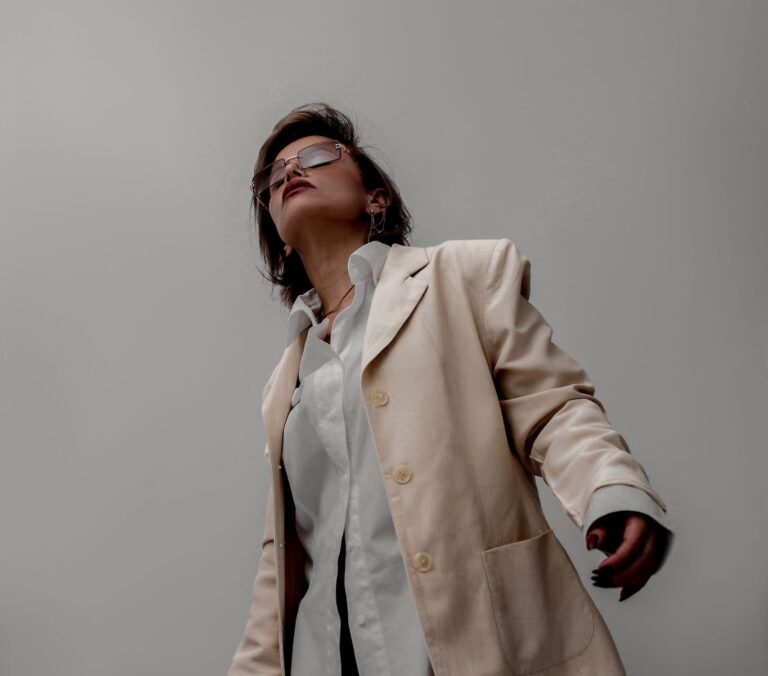
The crooked seam running down the left side of this $4 wool blazer isn’t a flaw, it’s the reason I grabbed it out of a bin at Goodwill on Halsted while two other shoppers reached past it for a North Face fleece. That seam pulls the lapel about a quarter-inch off center. Barely noticeable unless you’re staring. But it gives the jacket a slightly asymmetric drape that no retail blazer would ever have, because a retail blazer would’ve been flagged at quality control and tossed. Here, in a fluorescent-lit thrift store that smells like old paperbacks and someone’s lavender dryer sheets, that tiny defect made the piece mine.
I wore it last Thursday over a plain white Hanes tee, black Dickies, and beat-up Sambas. Nothing else. No layered necklaces, no hat, no bag that “ties it all together.” Just the blazer doing its one job: being the loudest thing in a quiet outfit. And three people asked me where I got it.
That’s high-contrast thrift styling in its simplest form. And it’s the only formula I trust anymore.
[IMAGE: The $4 Goodwill wool blazer worn over a white Hanes tee, black Dickies, and Adidas Sambas. Full-length shot showing the slightly asymmetric lapel drape and crooked seam detail. Alt text: Oversized thrifted wool blazer with crooked seam styled over a plain white tee and black pants for a high-contrast outfit.]
The Problem With Too Many Thrifted Statements
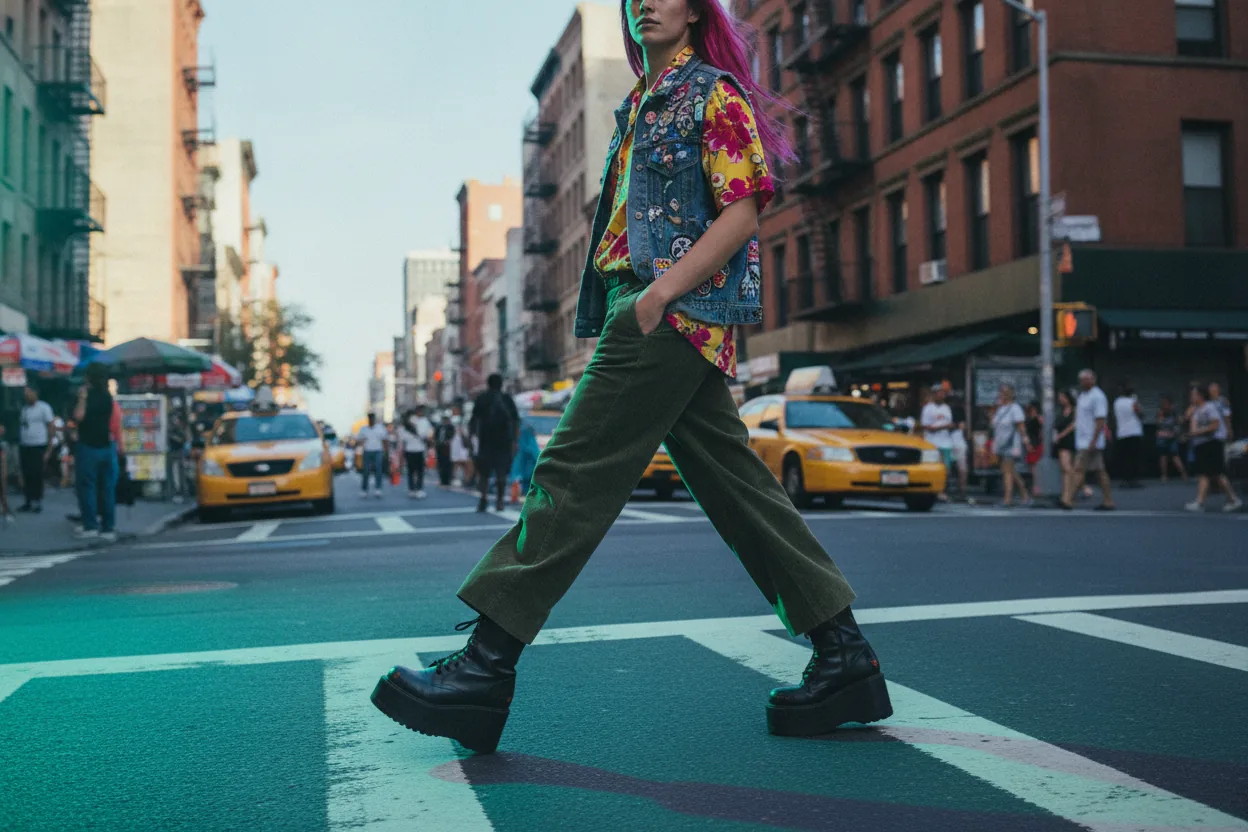
Here’s what happens when you go hard at a thrift store and come home with six loud pieces. You try to wear them all. A vintage Hawaiian shirt with a patched denim vest with wide-leg corduroys with platform boots. Each piece is great on its own. Together, they’re a costume. They compete. They cancel each other out. You look like you’re trying to prove you thrift, instead of looking like someone who just got dressed.
I’ve been there. I spent most of 2022 overdoing it, stacking secondhand finds into outfits that screamed “I raided every Salvation Army in a fifty-mile radius.” The clothes were interesting. The outfits weren’t. They had no anchor. No breathing room. No distance between the loud and the quiet.
The shift happened when I started watching how certain creators on TikTok and Depop were putting looks together. Not the ones doing costume-level vintage recreations, which have their own appeal, but the ones making thrifted pieces look like they could’ve come from anywhere. The ones whose followers would comment “where is that from?” and be genuinely surprised when the answer was a church rummage sale in suburban Ohio.
The pattern was always the same. One piece carried the weight. Everything else stayed out of its way.
What High-Contrast Styling Actually Means
Let’s get specific, because “high-contrast” sounds like a photography term, and I don’t want this to feel abstract.
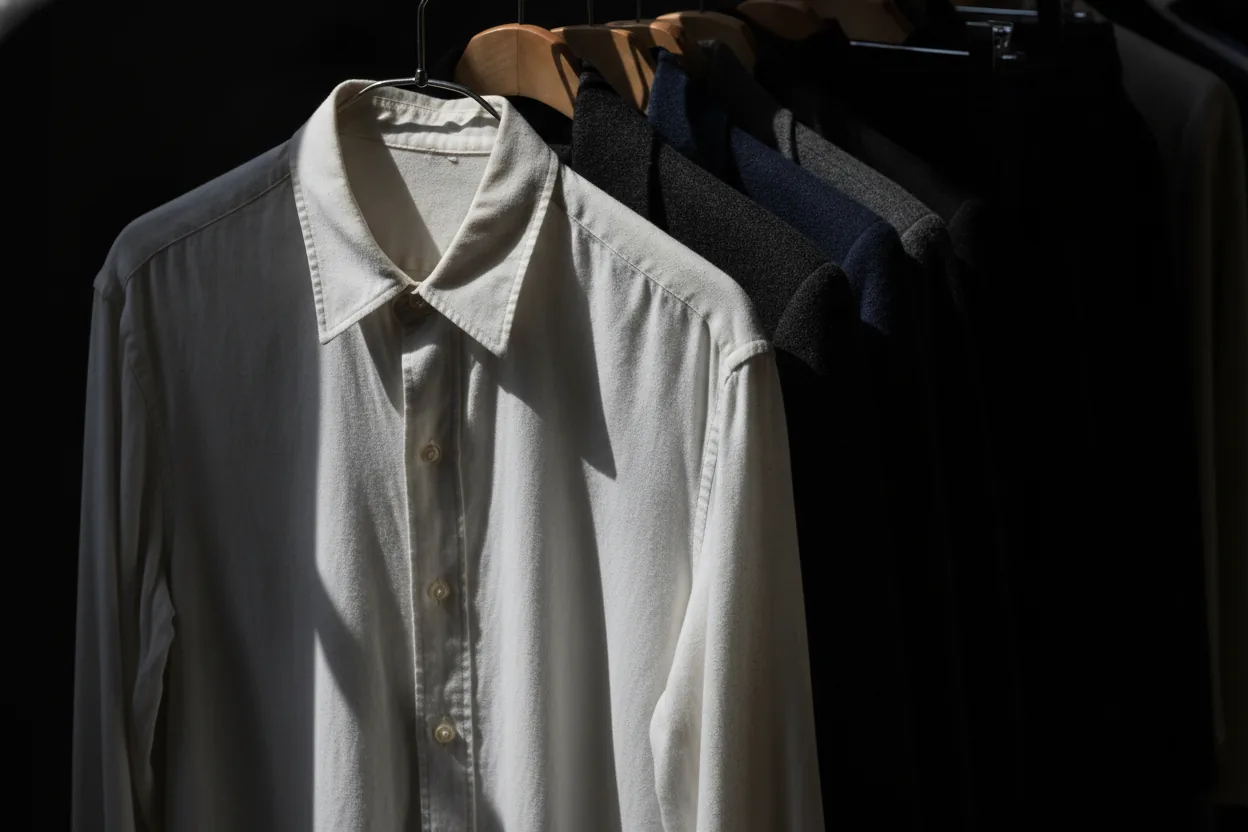
High-contrast thrift styling means you build an outfit where one element, just one, creates visual tension against everything else. That tension can come from structure, color, texture, era, or a single tailoring edit. The rest of the outfit is intentionally plain. Basic. The kind of stuff you already own or can find in any thrift store’s overstuffed basics section for a dollar.
Think of it like a sentence. If every word is bold, nothing stands out. But one bold word in a plain sentence? That’s emphasis. That’s what makes people stop and read.
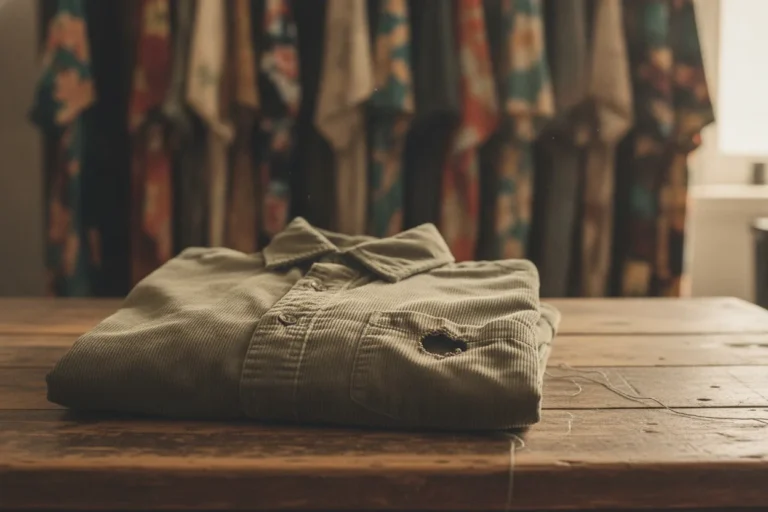
A concrete example. Last month I found a pair of high-waisted wool trousers at a Savers in Minneapolis. Gray. Wide leg. They had a small moth hole near the back pocket that I left alone. The fabric was thick, with real weight to it, probably from the late ’80s or early ’90s based on the cut and the union label inside. They cost $7.
I wore them with a black ribbed tank top from a three-pack I already had. Black leather belt. White sneakers. That’s it. The trousers did everything. Their shape, their drape, their slightly-too-long break over the shoes. They were the one loud thing. The tank top was the silence that made them louder.
That’s the formula. One hero. The rest: backup singers.
[IMAGE: The $7 Savers wool trousers styled with a black ribbed tank top, black belt, and white sneakers. Side-angle shot showing the wide-leg drape and trouser break over the shoes. Alt text: High-waisted thrifted wool trousers in gray styled with a plain black tank top and white sneakers, demonstrating the one-hero thrift styling formula.]
Sourcing Logic: What to Actually Look For in the Bin
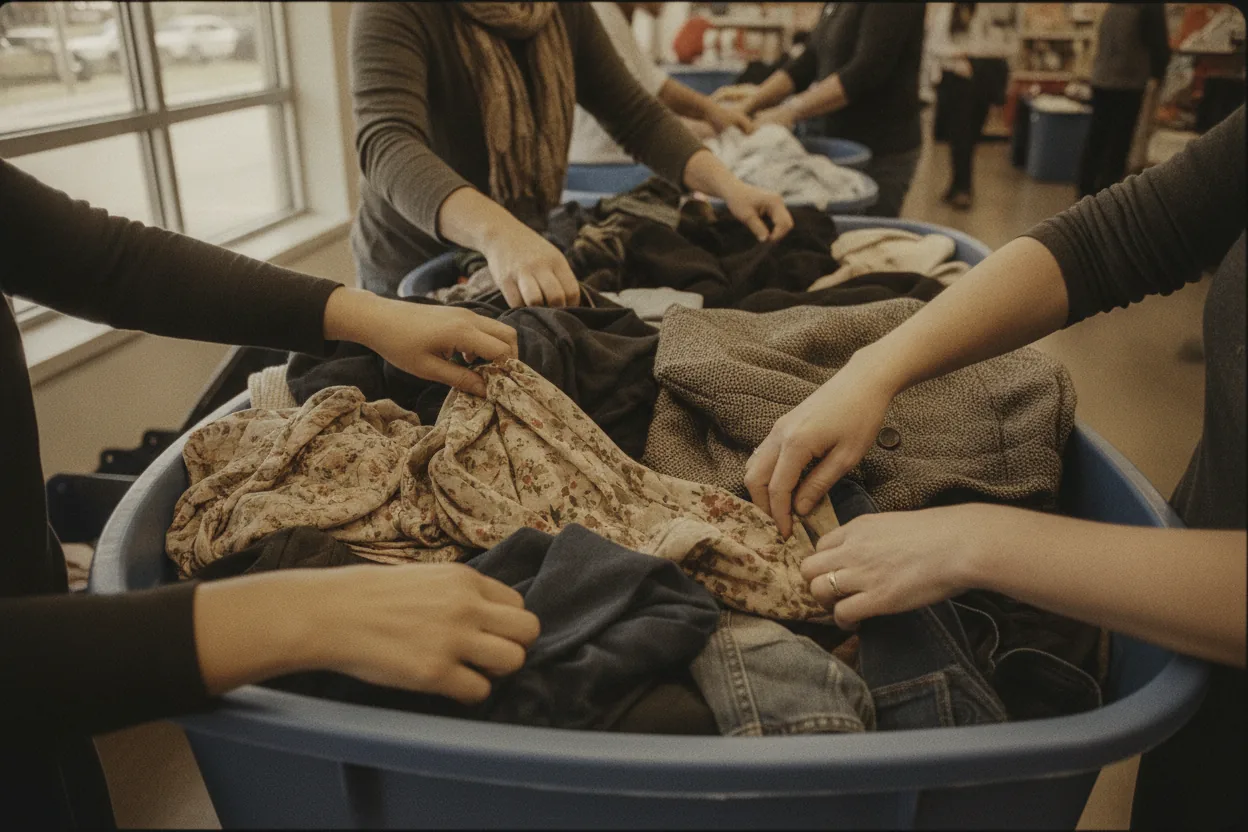
This is where most thrift content loses me. People show the finished outfit but skip the part where they explain why they grabbed that specific piece off the rack. What did they see? What were they feeling for? What made them stop?
I’ll tell you what I look for, and it’s not brand tags.
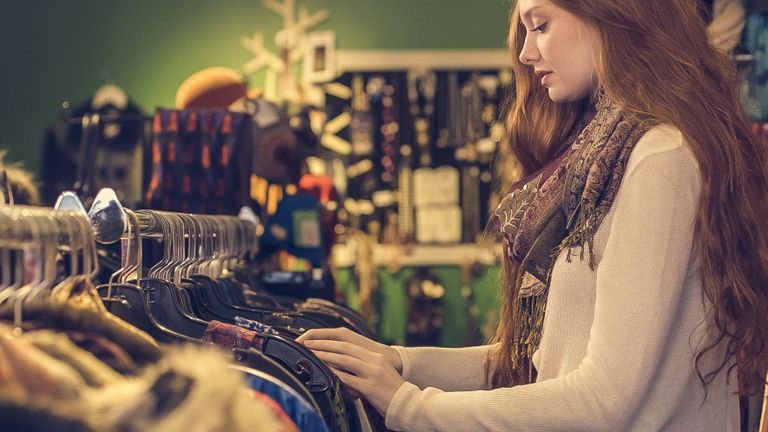
Fabric weight comes first. When I’m flipping through a rack or digging in a bin, my hands are doing most of the work before my eyes catch up. I’m feeling for density. Wool that has some body to it. Cotton that doesn’t feel like it’ll pill after one wash. Denim with stiffness, not that soft stretchy stuff that drapes like a dishrag. Heavy fabric holds structure, and structure is what makes a secondhand piece look intentional instead of limp.
That blazer from Goodwill? I felt it before I saw it. My fingers hit something dense and slightly scratchy in a pile of polyester blend jackets. I pulled it out and the weight of it told me before the label did — this was real wool, probably a wool-nylon blend based on how it moved. The lining inside was slippery, still intact, not pulling away at the seams the way cheap linings do after a few years. That weight is what gives it that drape. A polyester blazer the same size would’ve looked like a trash bag on me. This one looked like architecture.
Shoulder fit comes second. This is the one thing that’s hardest to alter cheaply. If a blazer or jacket fits you in the shoulders, almost everything else can be adjusted. Too big in the body? A tailor can take it in for fifteen bucks, or you can pin-tuck the back yourself with a sewing machine and a YouTube tutorial. But if the shoulders are off, the whole silhouette collapses. So I try things on in the store, or at least hold them up against my own shoulders to check the seam placement.
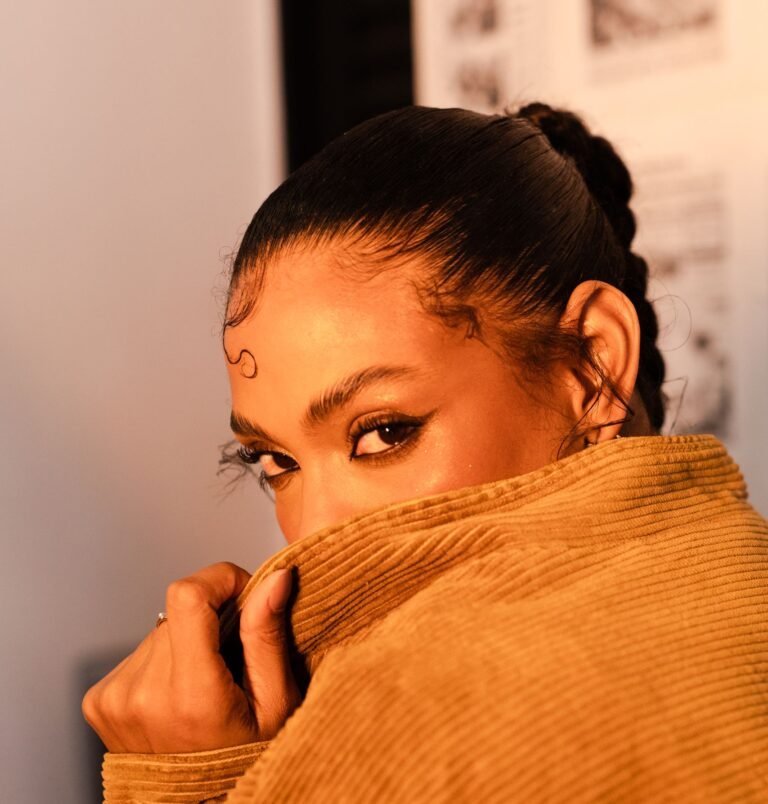
Then I look at color. Not whether I like the color, but whether it’ll create a gap against what I already wear. Most of my wardrobe is black, white, gray, and navy. So when I find a piece that breaks that palette — a rust-orange knit, a deep burgundy trouser, a mustard corduroy shirt — I know it’ll function as the hero piece without me having to overthink it. One color pop against a neutral base does all the work.
I picked up a pair of olive wide-leg chinos last month at a church rummage sale in Rogers Park for two dollars. The tag said Gap, probably mid-2000s based on the cut. They were wrinkled and shoved between a pair of cargo shorts and some sweatpants. But when I held them up, the leg width was perfect — that wide, straight column that makes everything above the waist look more intentional. And that olive against my usual black? It was enough distance to carry a whole outfit without screaming.
The last thing I check is potential. Not what the piece looks like right now, but what it could look like with one change. A dress that would work better as a top if I cut it at the waist. A men’s button-down that would drape differently with the sleeves rolled and the front tucked on one side. Trousers that would hit better if I hemmed them two inches shorter. I’m always shopping for the piece after the edit, not just the piece on the hanger.
The One-Edit Rule and Why Overworking Kills the Find
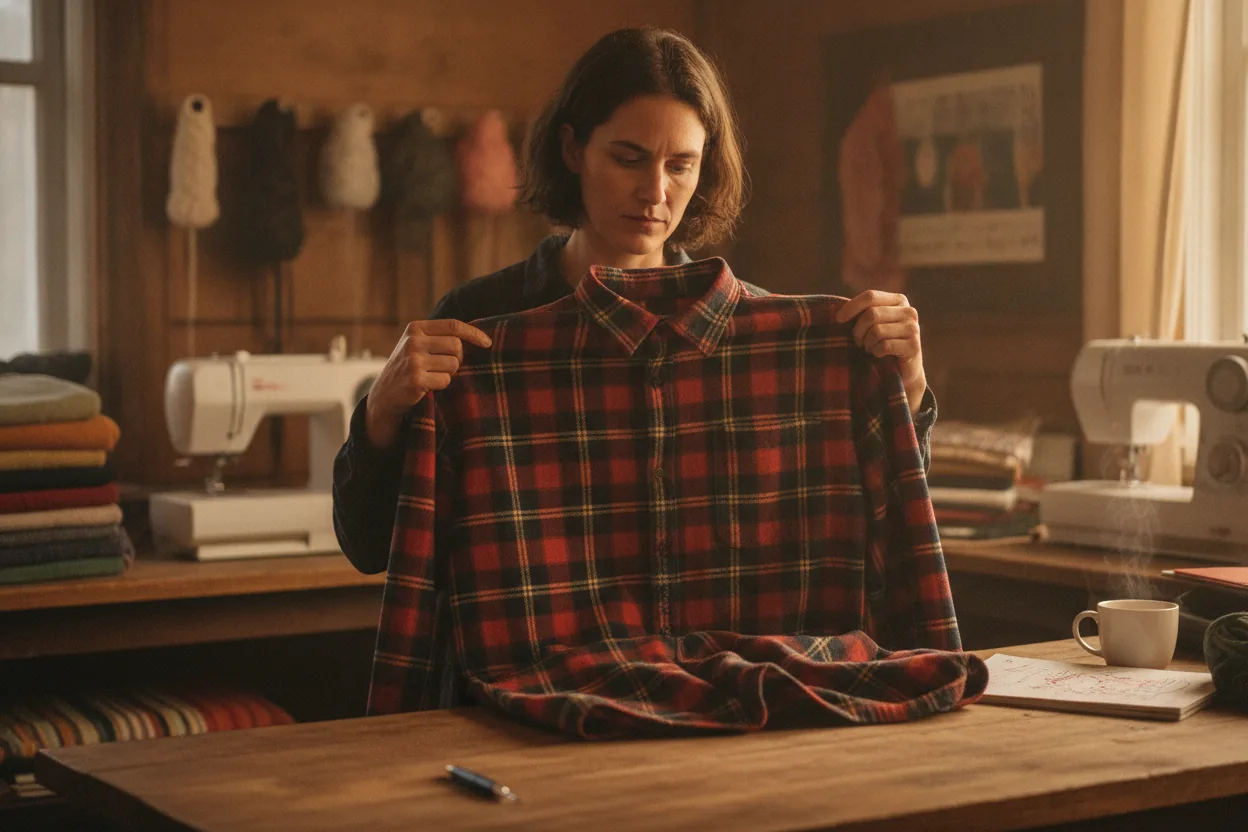
There’s a temptation in thrift-flip culture to go full Project Runway on every find. Cut it, dye it, add patches, remove the collar, reshape the sleeves, turn it inside out. And sometimes that’s the move. But more often, one decisive edit is enough to transform a piece from “someone’s donation” to “the reason this outfit works.”
I learned this the hard way with a men’s XL plaid flannel I found at a St. Vincent de Paul in Portland. Beautiful weight. Green, black, and cream. It fit like a tent, which was the point, but it also had this boxy drop that made me look like I was drowning. My first instinct was to take it in on both sides, reshape the hem, shorten the sleeves, and add darts in the back.
Instead, I did one thing. I cut about four inches off the bottom, left the raw edge unhemmed, and threw it in the wash to let the fraying happen naturally. That was it. The shorter length changed the entire proportion. It went from “dad at a barbecue” to something I could layer over a fitted black turtleneck with straight-leg jeans and it looked like I meant every inch of it.
One change. Not five. The flannel still has its original sleeves, its original collar, its original boxy cut through the body. But that raw hem, that four-inch adjustment, made it mine.
This is the principle I see the smartest thrift-flip creators following. They resist the urge to overwork. They find the one move that shifts the piece from its original context into their context. A sleeve swap on a sweater. A belt cinching an oversized coat at the waist. A crop on a tee that was too long. Shortening trouser legs to show ankle. These are small interventions with outsized impact, and they keep the garment’s original character intact instead of erasing it.
The Previous Owner’s Ghost and Why It Matters
That wool blazer I mentioned at the top? The one with the crooked seam? When I got home and checked the inside pocket, I found a folded receipt from a dry cleaner in Evanston, Illinois, dated March 2019. No name, just a ticket number. But it told me something. Whoever owned this blazer before me cared about it enough to have it professionally cleaned. They didn’t just throw it in the wash. They invested in its upkeep.
There’s something in that. I don’t want to get precious about it, because at the end of the day it’s a jacket and I paid four dollars for it. But knowing that someone else valued this piece, wore it enough to need it cleaned, and eventually let it go for whatever reason — that history is part of what makes wearing secondhand feel different from wearing something that rolled off a production line last month and has no story attached to it at all.
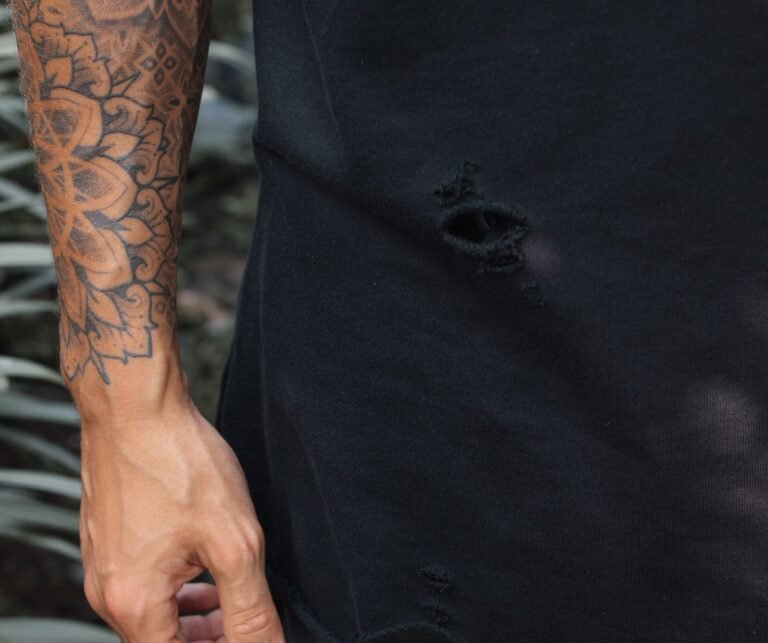
You can’t always find receipts in pockets. But you can read the signs. Wear patterns on elbows tell you someone leaned on desks in this jacket. A slightly stretched neckline means someone pulled this sweater on and off hundreds of times. A small repair stitch on a hem means someone once thought this piece was worth mending. These aren’t flaws. They’re evidence of a garment that mattered to someone. And now it gets to matter to someone else. That’s not a sustainability pitch. That’s just a fact about how clothes work when you let them have more than one life.
How to Build a Quiet-Loud Outfit From Scratch
Let me walk through the exact process I use, step by step, so you can take this into your next thrift run.
Start by looking at what you already own. Open your closet and identify your base. For most people, this is some combination of plain tees, simple denim, neutral sneakers or boots, and maybe a basic jacket. These are your backup singers. You don’t need to thrift these, though you can. The point is that they already exist in your rotation and they don’t call attention to themselves.
Now go thrift shopping with a single mission: find one piece that creates tension against that base. Not a piece that matches. Not a piece that blends in. A piece that interrupts. Something with an unexpected texture, like a velvet blazer against cotton and denim. Something with a strong color, like a rust-red wool coat when the rest of your wardrobe is monochrome. Something with a shape that breaks the lines of your usual silhouette, like wide-leg trousers when you normally wear slim fits. Something from a different era, like a ’70s leather vest when the rest of your look is contemporary and clean.
You’re not looking for the piece that goes with everything. You’re looking for the piece that goes against everything, just enough to create friction.
When you find it, try it on with the plainest mental outfit you can imagine. Black tee, dark jeans, simple shoes. Does the piece hold up as the focal point? Does it carry the outfit? Or does it need other loud pieces around it to make sense? If it can stand alone as the hero, it’s the right find. If it needs supporting characters, keep digging.
Then ask yourself: does this piece need one edit? Maybe it’s too long and would hit better cropped. Maybe the sleeves would look sharper cuffed or rolled. Maybe it needs to be worn open instead of buttoned, or tucked instead of untucked. Find the one adjustment that makes it sit right on your body and in your style. Make that change. Stop there.
[IMAGE: Example of an overdone thrift stack versus a one-hero outfit side by side. Left: multiple statement pieces competing (patterned shirt, patched vest, wide-leg corduroys, platform boots). Right: single thrifted hero piece against plain basics. Alt text: Side-by-side comparison showing an overdone thrift outfit with too many statement pieces versus a clean one-hero high-contrast thrift outfit.]
The Anti-Mall Logic Behind the Look
Here’s what I think gets lost in a lot of conversations about secondhand fashion. It’s not just about the environmental angle, though keeping clothes out of landfills is a straightforward good. And it’s not just about saving money, though spending $4 on a blazer that would’ve cost $200 new is objectively hilarious. It’s about the fact that when you dress from thrift stores, no algorithm picked your outfit. No trend report dictated what was on the rack. No marketing team decided what you’d want this season.
What was on the rack was random. Chaotic. A 1994 linen blazer next to a 2018 H&M blouse next to a hand-knit cardigan from god knows when. And out of that chaos, you found one thing. You saw something in it that no one else in the store saw. You made a call based on your own taste, your own body, your own wardrobe, your own instinct.
That’s the opposite of how mall shopping works. Mall shopping is designed to remove decision-making. Everything is pre-coordinated. The mannequins show you how to wear it. The lighting makes everything look better than it is. The sizing is standardized so you don’t have to think about fit as a creative variable.
Thrift shopping is all creative variables. And the one-hero formula is how you impose your own order on that chaos. You’re not just finding clothes. You’re building a visual language, one where the hero piece speaks and everything else listens.
Color Discipline: The Underrated Thrift Skill
I want to spend a moment on color because it’s the thing that separates a one-hero outfit that works from one that looks accidental.
The creators I follow who consistently nail this look tend to limit their outfit palette to two or three colors max. They’re not doing rainbow thrift hauls. They’re picking a lane. Black and cream. Navy and rust. Gray and olive. Then the hero piece is either the one element that introduces a new color, or it’s the same color family but in a texture or fabric that creates visual distance without adding noise.
Here’s the thing most people skip: you don’t need the hero piece to be a wild color. Sometimes the tension is just textural. A chunky cream cable-knit against a smooth cream tank and cream wide-legs — same color family, completely different feel. Your eye still goes to the knit because it’s the densest, most tactile thing in the frame. I did exactly this with a fisherman’s sweater I pulled out of a dollar bin at a Goodwill in Pilsen. It was yellowed slightly, which actually made it look warmer against the brighter whites I paired it with. Two-dollar sweater. Zero color planning needed. The texture did the talking.
I tested the color version of this with a burnt-orange turtleneck sweater I found at a Habitat for Humanity ReStore for $3. Merino wool, soft, no pills, no stains. It was a men’s medium, which on me meant slightly oversized but not ridiculous. I wore it with black straight-leg pants and black boots. Two colors total. The orange was the only thing your eye went to. It didn’t need accessories. It didn’t need a statement bag or an interesting hat. The color against all that black was enough.
If I’d worn that same sweater with patterned pants and a different-colored jacket, the orange would’ve gotten lost. It would’ve been one loud thing among several, and the outfit would’ve read as busy instead of intentional.
Color discipline isn’t about being boring. It’s about giving your hero piece room to work. You wouldn’t put a lead singer in front of a 30-piece orchestra playing at full volume. You’d give them a sparse arrangement so their voice cuts through.
Finding the Subculture in the Ordinary
Part of what makes the one-hero approach feel meaningful, and not just like a fashion hack, is how it connects ordinary pieces to specific eras and subcultures without turning you into a costume.
That wool blazer with the crooked seam? Its silhouette — slightly oversized, soft shoulder, single-button — is pure early ’90s. The kind of thing you’d see in a Sassy magazine editorial or on Winona Ryder doing press in 1993. But I’m not wearing it with a choker and combat boots and a slip dress trying to recreate that moment. I’m wearing it with a modern tee and clean pants, so the blazer carries just a whisper of that era. It references without replicating. It nods without cosplaying.
This is the difference between vintage appreciation and vintage imitation, and quiet-loud styling is what creates the gap. When your hero piece is the only element from a specific era, it reads as a deliberate choice. When everything in your outfit is from the same era, it reads as a Halloween costume. Unless you’re going for full-commitment vintage recreation, which is its own thing and I respect it, the one-hero approach lets you pull from any decade without being consumed by it.
You can wear a ’70s wide-collar shirt with modern slim trousers and it looks intentional. You can wear an ’80s power-shoulder blazer with relaxed jeans and sneakers and it looks confident instead of absurd. You can wear a 2000s velour zip-up, if you’re brave, with an otherwise minimal fit and it looks knowing instead of dated.
The key is always the same. One piece from there. Everything else from here.
Andrea Cheung’s [breakdown of era-mixing in secondhand outfits](https://www.thegoodtrade.com/features/how-to-thrift-like-a-stylist/) gets at this same idea — the goal isn’t historical accuracy, it’s using one era’s best move inside your own look.
The Real Flex Is Restraint
I’ll end where I started. With that blazer and that crooked seam and the three people who asked me where I got it.
None of them guessed thrift store. One thought it was vintage from a consignment shop. One thought I’d had it tailored. One asked if it was from a brand she didn’t recognize. And the answer to all of them was: Goodwill, four dollars, no alterations, I just wore it with stuff I already had.
That’s the real flex in secondhand fashion right now. Not the most dramatic transformation. Not the wildest haul. Not the most obscure vintage find. It’s the ability to take something ordinary, something that sat ignored in a bin, and make it look like the whole outfit was built around it. Because it was.
You don’t need to thrift harder. You don’t need to find rarer pieces. You don’t need to learn advanced sewing techniques or own a serger. You need one good eye, one good edit or zero edits, and the discipline to let one piece be the loudest thing you’re wearing.
The bins will always be chaotic. Your outfit doesn’t have to be.
So here’s your move for this weekend: go to your nearest thrift store, find one piece that your current wardrobe has no answer for, and wear it with the plainest stuff you own. Take a photo. See if someone asks where you got it. If they do, you’ve got it. If they don’t, dig deeper next time. Either way, you’re learning to see — and that’s the skill that no haul video can teach you.
If you’re still building your base wardrobe from scratch, [our guide to thrifting basics without overthinking it](/thrift-basics-without-overthinking/) covers how to find the plain stuff that makes the loud stuff work. And if you want to get better at the one-edit approach, [the raw hem flannel tutorial](/one-edit-thrift-flip-raw-hem/) walks through exactly how I did the cut on that St. Vincent de Paul find.