
My $6 Carhartt and the Line Between Flipping and Taking
Real talk: I’m not here to be fancy. I’m here because I bought a stained Carhartt jacket for $6 at a Goodwill in Dayton, Ohio, and I’ve worn it almost every week for three years. The collar’s fraying. There’s a bleach spot on the left pocket that I’ve tried to cover with a patch and failed. It fits weird in the shoulders. I love it more than anything hanging in a department store, and the thrift flipping ethics conversation is something I can’t ignore anymore because that same jacket, in that same condition, now goes for $45 on resale apps before I even get through the door.
I don’t resell clothes for profit. But I know people who do, and I’ve watched this conversation get louder and messier every year. So let’s get into it, because if secondhand fashion is your identity the way it’s mine, you owe it to yourself to think about who else is in the store, what they need, and whether your hustle is actually hurting them.
Thrift Flipping Started as Creative Reuse, Not a Business Model
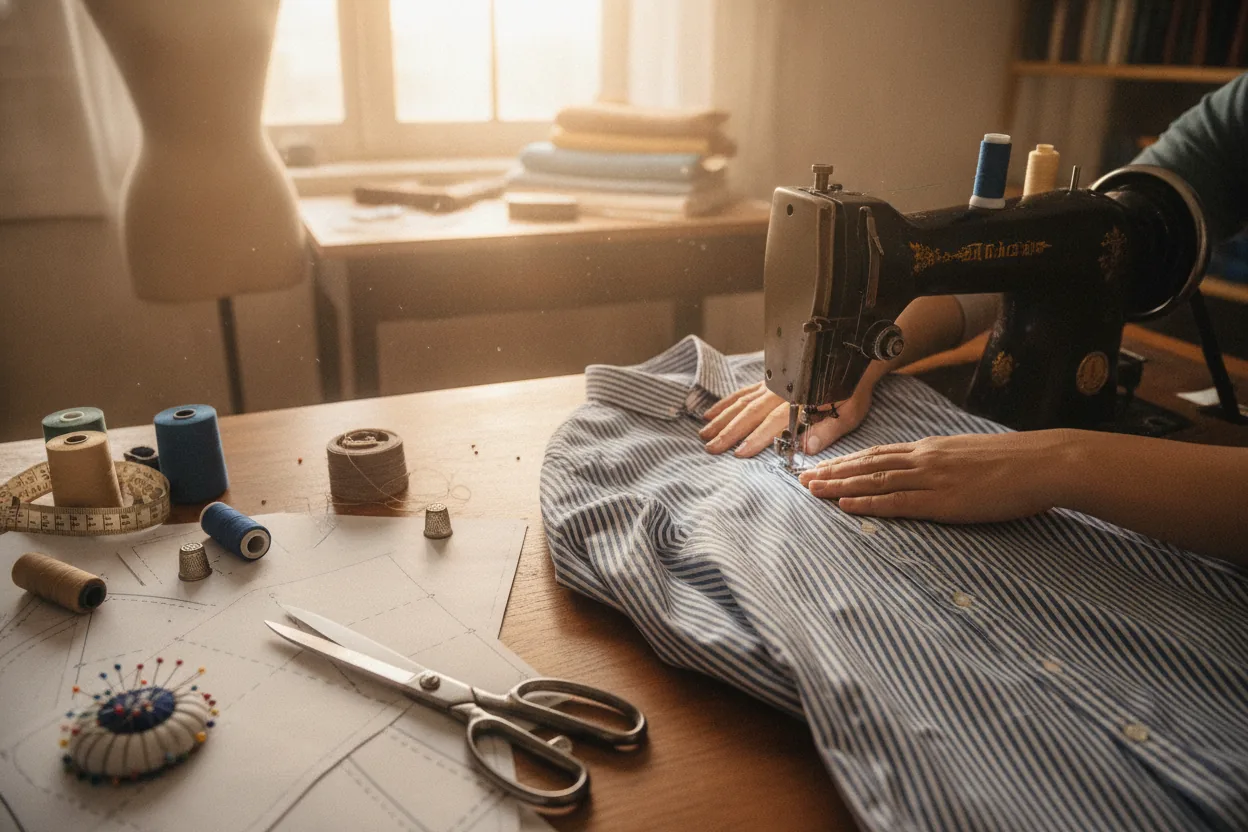
Let’s rewind. The original thrift flip wasn’t about margin. It was about transformation. You found a XXL men’s button-down at Salvation Army for $2.50, took it home, cut off the sleeves, cinched the waist with a belt or a few stitches, and turned it into something that looked intentional. The value you added was skill, vision, and time. Nobody was losing in that exchange. The shirt was sitting on a rack nobody wanted. You gave it a second act.
That kind of work still happens. Scroll #thriftflip on TikTok and you’ll find people turning dated bridesmaid dresses into corset tops, reworking dad jeans into carpenter skirts, bleaching old band tees into something new-to-you. That’s genuine craft. It extends the life of a garment that was heading toward a landfill or a textile bale shipped overseas. And yeah, if someone sells the finished product for $30 or $40, that tracks. They put in hours. They own a sewing machine. They developed the eye.
But somewhere along the way, the game split into two lanes. One lane is the person with a serger and a vision. The other lane is someone walking into a Goodwill with a barcode scanner app, pulling every Nike, Carhartt, and vintage graphic tee off the rack, then relisting them on Depop or Poshmark for five to ten times what they paid. No alteration. No rework. Just arbitrage.
And that second lane is where things get uncomfortable.
Thrift Store Gentrification Is Real and It’s Measurable
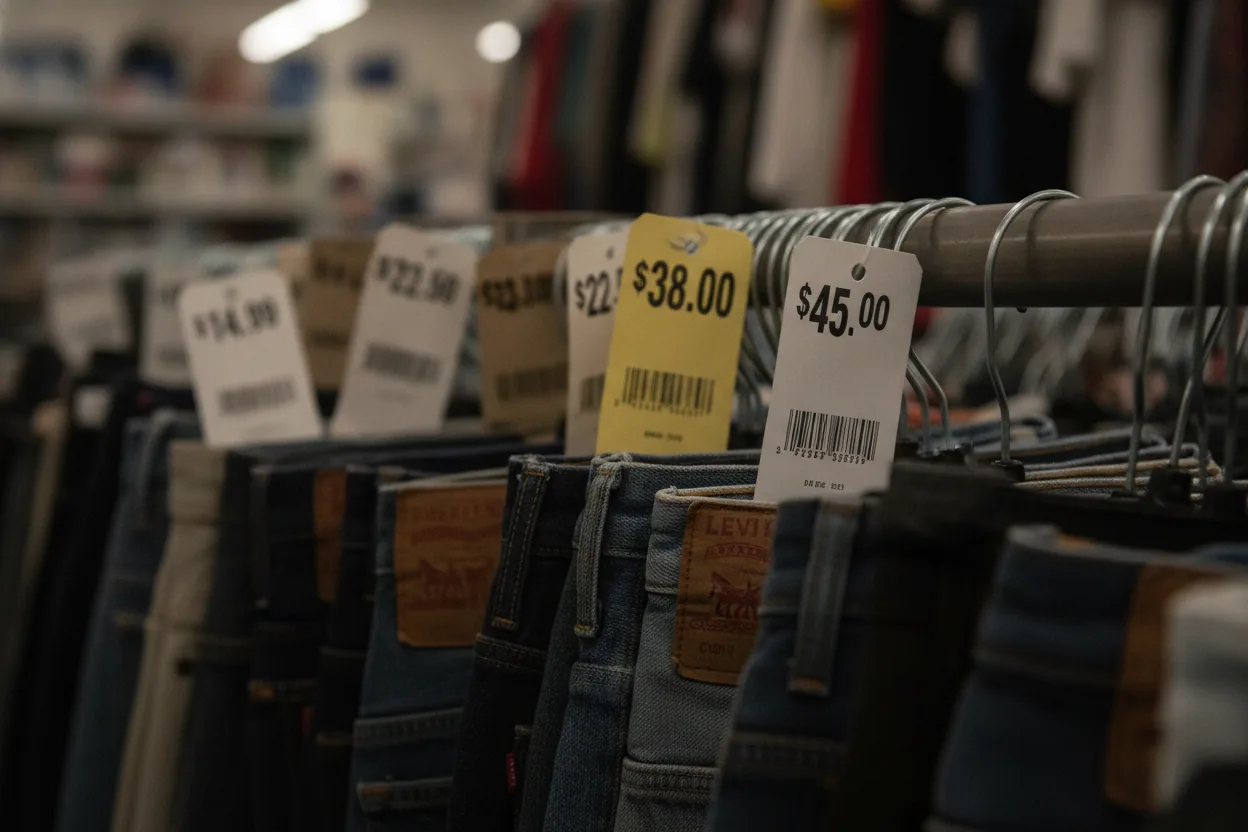
I hate the term “thrift store gentrification” a little because it sounds academic and preachy, but it describes something I’ve seen with my own eyes.
Prices at chain thrift stores have gone up. Not subtly. Goodwill’s pricing has shifted noticeably over the past five years — I used to reliably find jeans for $4.99, and now I see locations pricing Levi’s at $12.99 or $14.99 because they know the resale value. [NPR reported on this shift](https://www.npr.org/2021/10/06/1043785077/secondhand-stores-thrift-shopping-prices-up), and [HuffPost has covered how Goodwill’s pricing strategies have changed](https://www.huffpost.com/entry/thrift-store-prices-increasing_l_614a14dbe4b0efa77f89e3f0) in response to reseller demand. Some locations now have separate “boutique” sections with higher price points. The stores themselves are reacting to the money in the room.
That’s not paranoia. That’s economics. When a wave of buyers with more disposable income and better resale knowledge enters a market designed for people who need affordable clothing, prices adjust upward. The charity shop doesn’t care whether you’re buying that flannel to wear or to resell. It just sees volume and adjusts.
Here’s where it actually hits. The person working two jobs who comes in on a Tuesday afternoon looking for a winter coat for their kid? They’re not competing with other people in the same situation anymore. They’re competing with someone who got there at 7 AM on restock day, pulled every quality coat in kids’ sizes, and will relist them for $25 each by that evening. That’s not creative reuse. That’s extraction. Plain and simple.
Where You Source Changes the Ethics of Flipping Entirely
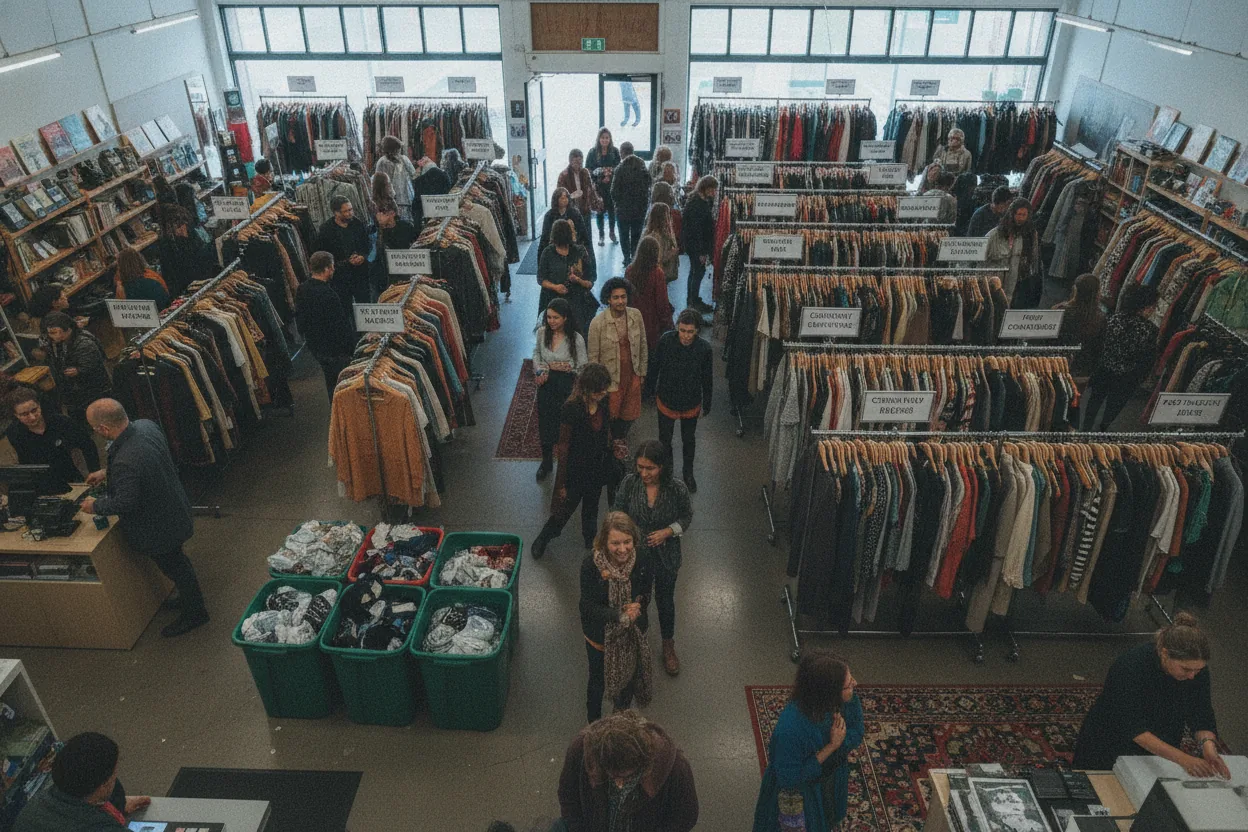
Not all secondhand sourcing is the same, and I think the conversation falls apart when people treat it like a monolith. So let’s break it down by where the clothes come from.
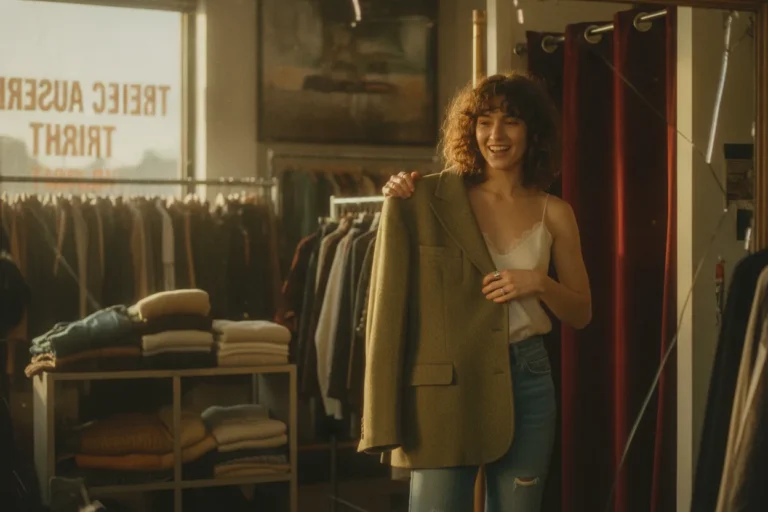
Regular charity shop floors are the most contested space. These are the racks at Goodwill, Salvation Army, Savers, Value Village, and independent charity shops. The inventory comes from community donations. The prices are set to be accessible. The mission, at least on paper, is to fund charitable programs and provide affordable goods. When you clear the best pieces off these racks to resell at markup, you’re directly reducing access for the shoppers those stores exist to serve.
Bins and outlet stores operate differently. Goodwill Outlet stores — sometimes called “the bins” — sell unsorted surplus by the pound. This is inventory that didn’t sell on the regular floor. It’s the last stop before textile recycling or landfill. Sourcing from bins has a genuinely different ethical weight because you’re pulling from a surplus stream, not competing with a mom looking for school clothes. The stuff in the bins was already passed over. You’re extending its life, period.
Estate sales, garage sales, and flea markets are another lane entirely. These are private sales where the seller sets the price and agrees to the transaction. There’s no charitable mission being undercut. If you find a 1970s Pendleton board shirt at a garage sale for $3 and resell it for $60, the original seller chose to part with it at that price. Nobody’s access to affordable clothing was reduced.
I learned some of this the hard way. Last fall I hit an estate sale in a suburb outside Columbus and found a bin — an actual cardboard box — of wool coats. Six of them. All in decent shape, all from the ’80s or early ’90s, all smelling like cedar and someone’s grandmother. The woman running the sale told me her mom had kept everything and she just wanted it gone. I bought three for $15 total. Nobody was undercut. Nobody lost access. The coats were leaving that house one way or another, and I happened to be there.
Compare that to a flea market vendor I talked to in Kentucky who told me, straight up, that she sources half her stock from Goodwill on discount days. She was honest about it — “I get there when they open, I fill two carts, and I price it up.” She wasn’t ashamed. She saw it as hustle. And honestly, I get the hustle. But when I asked whether she thought about the people shopping there on a budget, she just shrugged and said, “Everybody’s on a budget.” Which — fair, but also not the same budget.
Online sourcing from other resale platforms is the most neutral option from an access standpoint. If you buy something on eBay or Mercari and relist it elsewhere, you’re working within a market where everyone has equal access to the listing. The ethics there are mostly about honesty, not access.
So when people ask “is thrift flipping ethical?” the real answer is: it depends entirely on where you’re pulling from and what you’re pulling.
The Sizing Problem Nobody Wants to Talk About
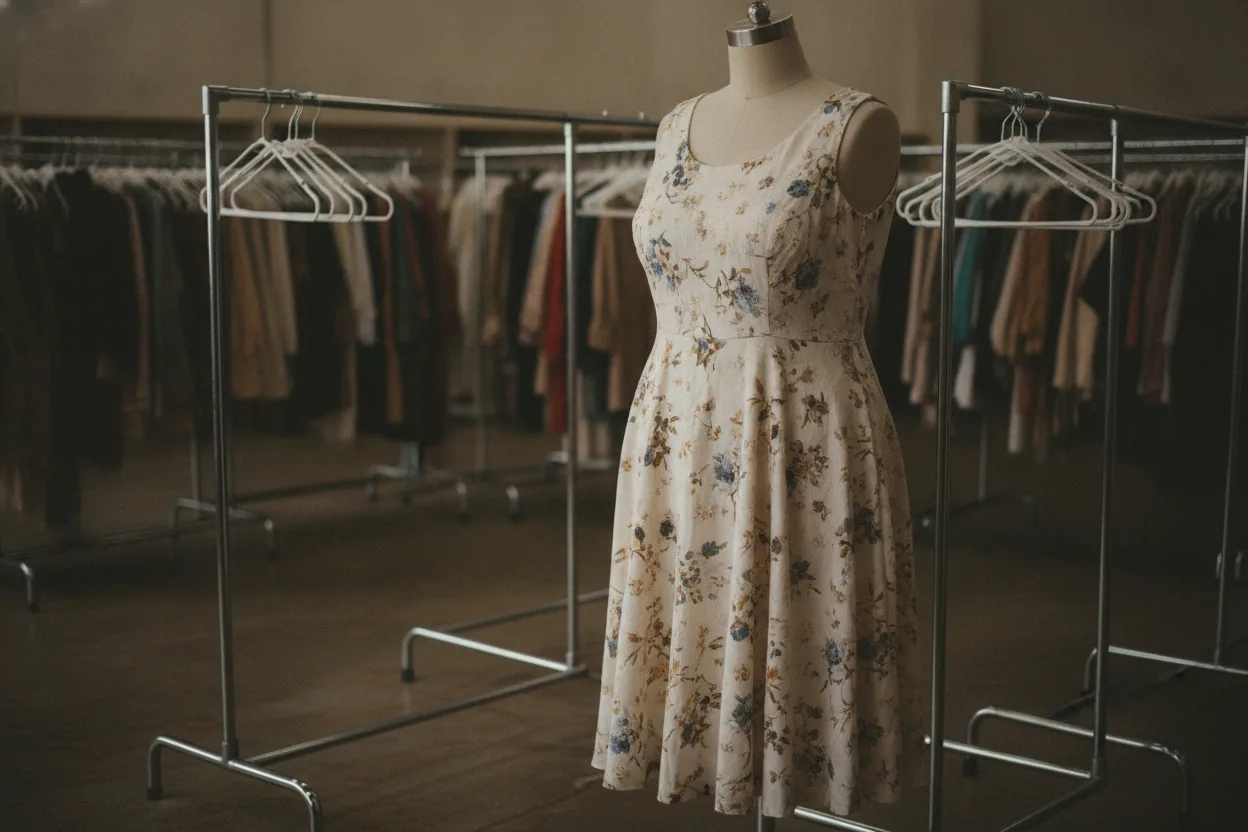
Here’s a specific thing that comes up in the community and deserves more attention. Plus-size and extended-size clothing is already underrepresented in thrift stores. The supply is smaller because the fashion industry produces less of it, and what does get donated gets grabbed faster because there’s less of it on the rack.
When resellers target larger sizes specifically because oversized fits are trendy or because they can be altered into something else, they’re reducing an already thin supply for people who actually need those sizes. A size 3X flannel that a reseller buys to chop into a cropped jacket is a size 3X flannel that someone who wears a 3X can’t buy to, you know, wear as a flannel.
I’m not saying nobody should alter clothes. I alter clothes constantly. But there’s a difference between finding a piece nobody’s going to buy — a surplus item, something damaged or outdated — and targeting functional basics in sizes that are already scarce because you see raw material instead of someone else’s wardrobe.
The same applies to winter coats, work boots, and basics like plain tees and jeans. These aren’t style pieces for most people shopping at charity shops. They’re necessities. If you’re reselling, skipping the essentials and focusing on the weird, the decorative, the damaged stuff you can actually transform? That’s a move that costs you nothing and protects somebody else’s access.
Identity-Driven Thrifting Can Reproduce What It Claims to Reject
This is the part that’s hardest to write because it’s the part that implicates me too. The “Depop girl” identity, the thrift flipper persona, the whole aesthetic of secondhand shopping as self-expression — it’s real and I live inside it. But I have to be honest about something: when thrifting becomes aspirational and identity-based, it starts mimicking the consumption patterns of the thing it’s supposed to replace.
Buying 30 items at a thrift store because each one was $3 isn’t fundamentally different from buying 30 items at Shein because each one was $5. The price point is low. The volume is high. The closet fills up. The dopamine cycle is identical. And if half of those thrifted pieces end up donated back six months later because you lost interest, you’re just spinning the wheel faster.
I’ve done this. I went through a phase where I was buying eight or ten things every time I hit a Savers, telling myself it was fine because it was secondhand. But I wasn’t wearing most of it. I was accumulating. I was performing the hunt more than I was building a wardrobe. And when I finally did a closet purge, I realized I’d spent about $200 over two months on stuff I didn’t need, didn’t love, and hadn’t altered or styled into anything meaningful.
The whole point of secondhand shopping, for me, is that it’s supposed to be slower and more intentional than retail. When it stops being that — when it becomes about volume and content and the next haul video — it’s just fast fashion wearing a vintage coat.
My $6 Jacket and the Case for Imperfect, Affordable Fashion
Let me go back to that Carhartt jacket because it’s the center of everything I believe about this stuff.
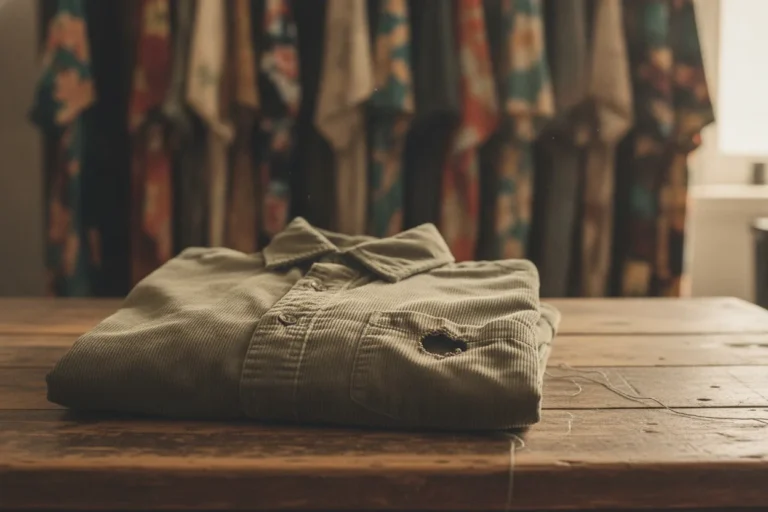
I found it in Dayton at a Goodwill on Wayne Avenue. It was hanging in the men’s section, shoved between two XXL polo shirts, half falling off the hanger. The bleach spot was immediately visible. The zipper pull was missing, replaced with a paperclip that someone had bent into a loop. The lining inside the left pocket was torn. It was priced at $5.99.
I tried it on and it was big in the shoulders but perfect in the length. I zipped it up with the paperclip. I looked at the bleach spot. I thought about whether I could cover it. I bought it without deciding.
At home I sewed a patch over the bleach spot — a piece of canvas I cut from a tote bag I’d gotten free at some event. The patch looked terrible. It was crooked, the stitches were uneven, and it didn’t match the jacket’s color at all. I loved it. I replaced the paperclip with a small carabiner clip I had on my keychain. I wore it the next day.
That jacket is not flippable. Nobody on Depop wants a stained, patched, wrong-size Carhartt with a carabiner for a zipper pull. That’s exactly why it’s mine. It’s not a commodity. It’s not content. It’s a jacket I fixed badly and wear constantly and will keep wearing until it falls apart.
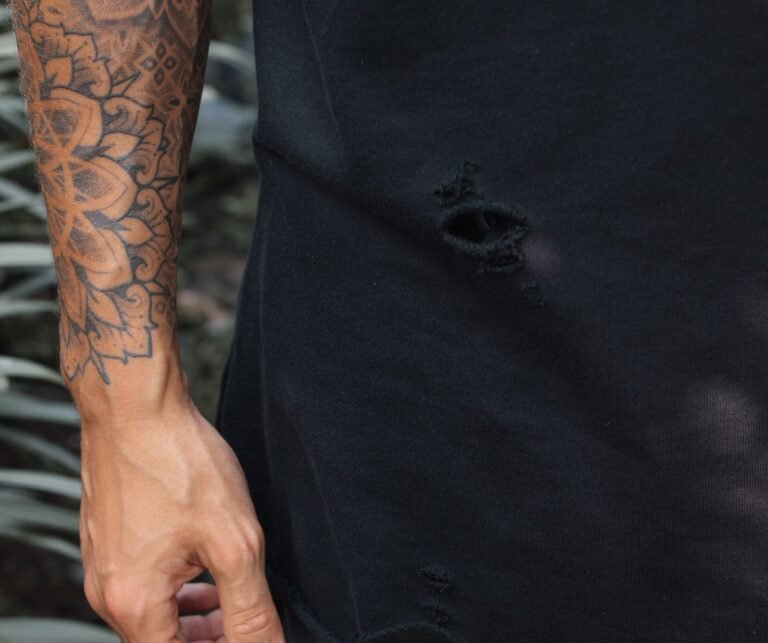
The imperfection is the whole point. Secondhand fashion that matters to you, that becomes part of your identity, is almost never the pristine vintage score that photographs well. It’s the thing with the flaw that you decided to live with or work around. The $3 sweater with the pulled thread. The boots with the scuffed toe that you hit with shoe polish every few months. The jeans with the blown-out knee that you patched with fabric from another pair of jeans that also blew out.
These pieces don’t have resale value. They have personal value. And that distinction is the whole ethical line we’re trying to draw.
Practical Sourcing Rules (No Moral Philosophy Degree Required)
I don’t think reselling is inherently wrong. I think it can be done in ways that don’t undercut community access. Here’s what I’ve landed on after thinking about this way too much.
Source from bins and surplus outlets whenever possible. The stuff there was already rejected by the regular retail floor. You’re not taking it from anyone. You’re literally rescuing it from the waste stream, and whatever you do with it after that — wear it, alter it, sell it — you’ve already done the good part by diverting it.
Skip the essentials. If you’re reselling, leave the plain white tees, the work pants, the winter coats, the kids’ basics. Go for the weird stuff. The vintage graphic pieces, the strange prints, the items that need work. The stuff that’s going to sit on the rack because it doesn’t serve a practical need for someone shopping on a tight budget.
Add real value before you resell. If you’re buying a $4 shirt and listing it for $30 with nothing changed except better photos and a trendy description, that’s pure arbitrage off a charitable supply chain. If you’re tailoring it, dyeing it, reconstructing it into something new, you’ve earned the markup because you put in labor and skill.
Be honest about your volume. If you’re buying 50 pieces a week from charity shops to feed a resale business, you’re operating at a scale that impacts inventory and pricing for other shoppers. That’s just true regardless of how you feel about it. Consider diversifying your sourcing to estate sales, garage sales, online wholesale lots, and bins so you’re not draining a single community resource.
Think about who shops where you shop. This one’s simple but it matters. If the Goodwill you’re hitting serves a low-income neighborhood, if it’s the only affordable clothing option within miles for the people who live there, maybe don’t treat it as your personal warehouse. Find a different sourcing spot. Drive to a suburban location where the donation quality is higher and the need is lower. It’s not a perfect solution but it’s a conscious one.
The Real Case Against New Includes Overconsumption in Any Form
The case against new clothes has always been clear to me. The environmental cost is staggering. The labor practices are often horrific. The quality is garbage. And honestly? Trend cycles exist to keep you buying — they’re built so you always feel like you’re one purchase behind. Buying secondhand sidesteps most of that. But it doesn’t automatically make you ethical. It just changes the arena.
If you’re thrifting at a volume that mirrors fast-fashion consumption, you’re still overconsuming. If you’re reselling in ways that raise prices and reduce access at charity shops, you’re reproducing inequality in a space that was designed to counter it. If your identity as a thrifter is built on constant acquisition and content creation rather than on wearing, repairing, and loving what you find, you’ve swapped one treadmill for another.
The jacket with the bleach spot and the carabiner zipper isn’t impressive. It’s not going to get likes. It’s not a score anyone would film for a haul. But it’s the most honest piece of clothing I own because I chose it knowing it was flawed, I made it worse with my bad sewing, and I kept it anyway. That’s the version of secondhand fashion I want to protect. The unpretentious version. The version where a $6 jacket with a paperclip zipper pull is the whole point, and nobody’s trying to resell it because its value only exists to the person wearing it.
Thrift flipping can be creative, skilled, and genuinely useful when it pulls from surplus streams and adds real transformation. It crosses a line when it treats community charity shops as free inventory for a markup business, when it targets essentials and scarce sizes, and when it drives up prices in spaces built for people who can’t afford to shop anywhere else.
You don’t need a perfect ethical framework to navigate this. You just need to ask one question every time you pick something up: am I taking this from someone who needs it more than I want it? If the answer is yes, put it back. If the answer is no, take it home, wear it, patch it badly, and let it become yours. That’s the win. The cheap, flawed, unpretentious win that no mall and no resale markup can touch.