Your Thrift Hunt Playbook Starts at the Collar
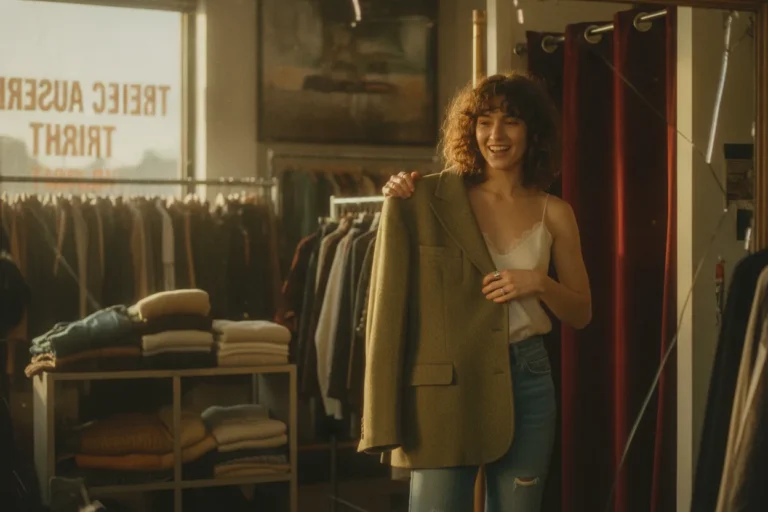
This $3 wool blazer was crammed between two polyester nightgowns at a Goodwill in Columbus — the kind of nightgowns that make you wonder if someone’s grandma just got really into Marie Kondo. The blazer had a cigarette burn on the left cuff, a missing button, and a lining that smelled like it had been keeping company with a cedar chest since Carter was president. I almost passed it. Then I flipped the collar, saw the hand-stitched buttonholes, felt the weight of the fabric between my fingers, and realized I was holding something from the late ’70s that someone had clearly worn to actual places that mattered to them. That blazer became the anchor of my fall rotation for two years. The burn? I patched it with a scrap of Liberty print cotton I’d been hoarding like it was currency. The missing button? Replaced all four with mismatched brass ones from a jar at an estate sale. A jar that also contained two wooden toggles, a suspiciously large number of anchor-shaped buttons, and what I think was a cufflink from a Shriner’s uniform. The blazer looked better broken than it ever could have looked whole.
That find didn’t happen by accident. It happened because I walked into that store knowing exactly what I was looking for, where to look, and what to touch. And it happened because I’d stopped treating small damage as a dealbreaker and started treating it as an invitation.
Here’s the thing. The thrift-hunt playbook has changed. Not because the stores have changed, but because the people digging through them have gotten sharper. The old approach of wandering every aisle and hoping something catches your eye still works sometimes. But the people pulling genuinely unusual, well-made, one-of-one pieces out of bins and racks? They’re not wandering. They’re running a search algorithm in their heads, and it starts way before they touch a hanger.
Why Searching by Era Changes Everything at the Thrift Store
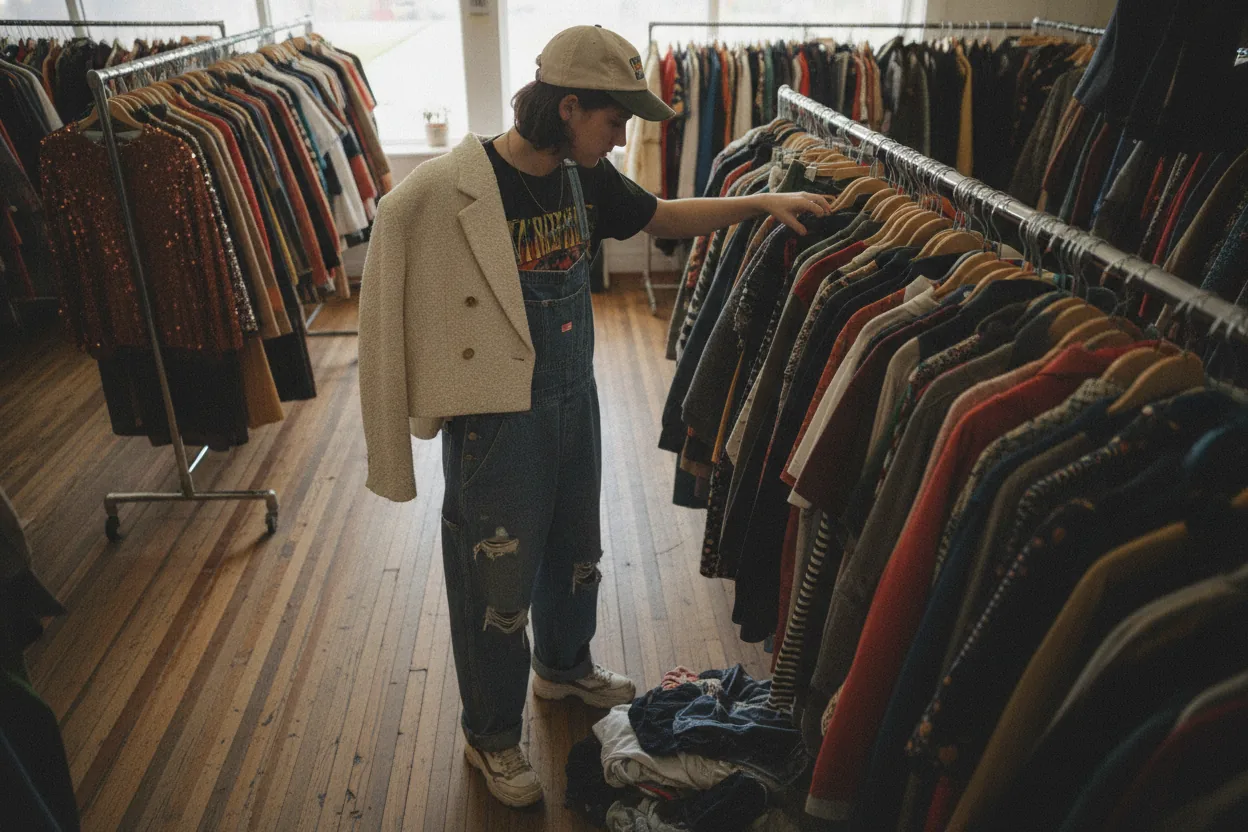
The single biggest shift I’ve noticed in how serious thrifters talk about their process is specificity. Not “I’m looking for a jacket” but “I’m looking for a ’90s cropped jacket with a notch lapel in a mid-weight wool or wool blend, probably in the men’s section.” That’s not being picky. That’s being efficient.
Think about how you search Depop or eBay. You don’t type “shirt.” You type “70s western pearl snap” or “90s oversized rugby stripe.” You use filters for era, color, size, fabric. You’ve trained yourself to search with intention online. The question is whether you bring that same energy into a physical store.
Most people don’t. They walk into a Salvation Army with a vague feeling and leave an hour later with sore feet and nothing. But the people posting those wild #thrifttok hauls — the ones pulling out a ’60s mod shift dress or a perfectly sun-faded ’80s raglan — they walked in with a target. Era plus style plus item type. That’s the formula.
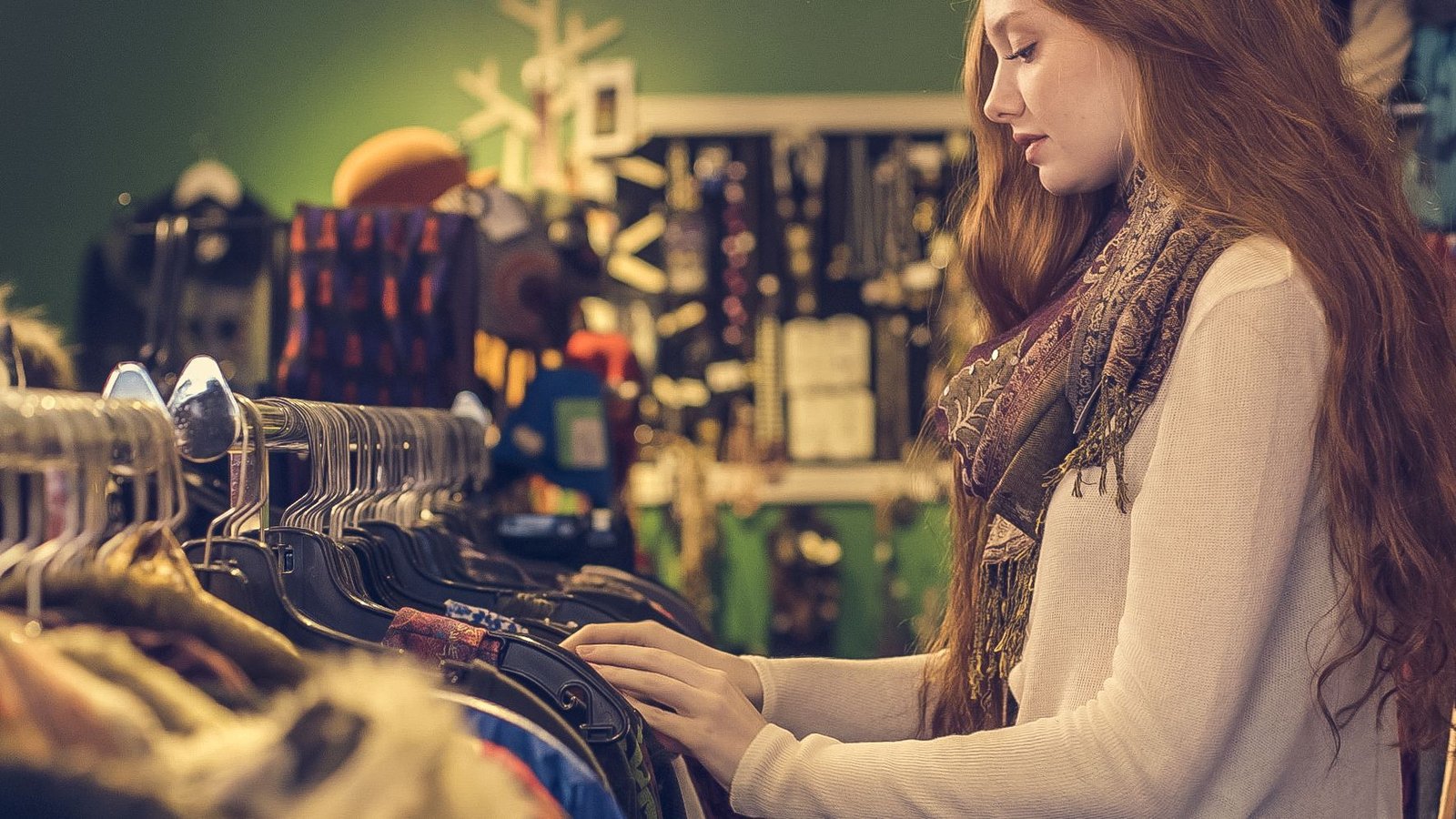
Say you’re into the ’70s bohemian thing. You don’t browse randomly. You head straight for the long skirts, the suede, the earth tones. You check the shoe section for boots with a stacked heel. You run your hand across the rack and stop only when the fabric feels like something that existed before fast fashion figured out how to make everything feel like the same thin nothing. You’re filtering in real time, and the period is your first filter.
This works because every era has signatures. The ’70s give you wide collars, natural fibers, warm palettes. The ’80s hand you power shoulders, bold color blocking, heavier knits. The ’90s are all about oversized fits, washed-out denim, minimal hardware. When you know what you’re hunting for, your eyes and hands move faster. You skip entire sections of the rack without guilt. You zero in.
How Fabric and Collar Shape Beat Generic Browsing
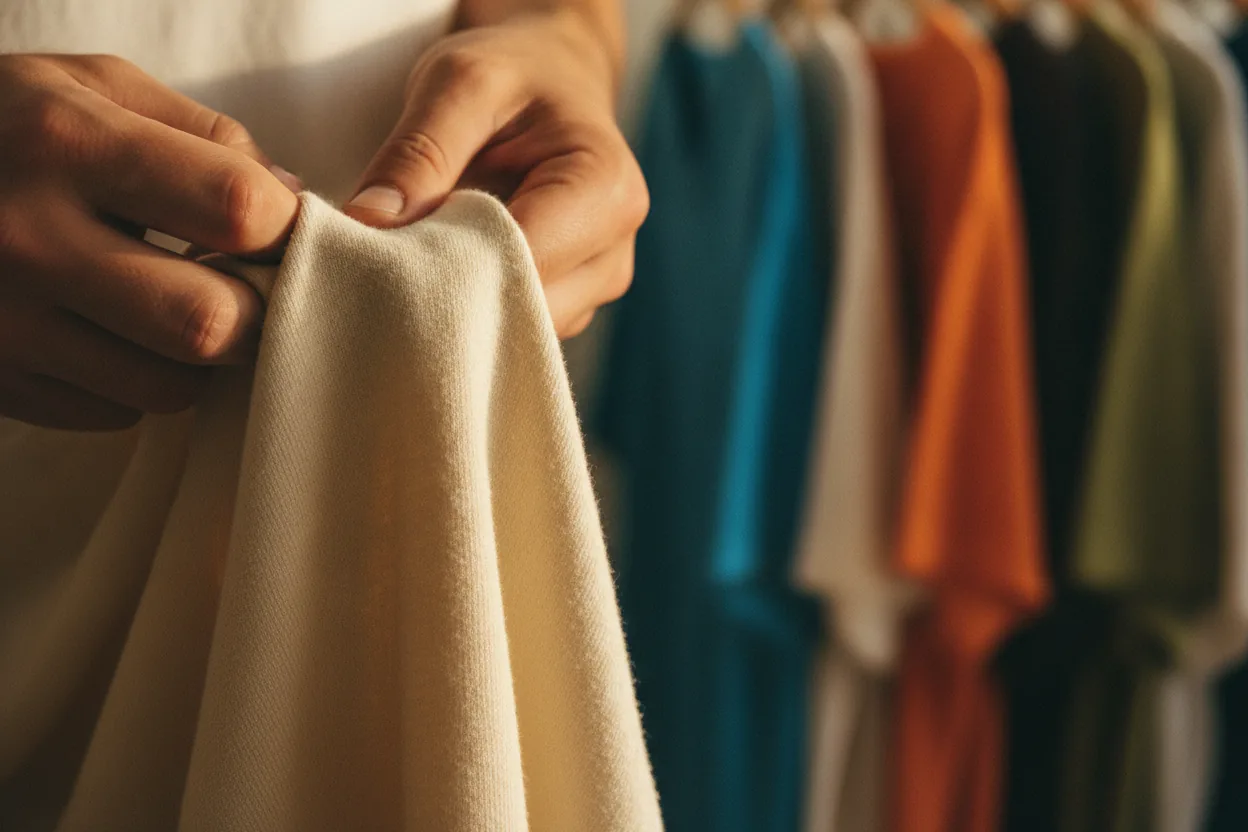
Here’s where it gets even more specific. Once you’ve got an era in mind, the next filter is fabric. This is the one that separates casual browsers from people who consistently find pieces that feel different when you put them on.
Cotton jersey all feels roughly the same after about 2010. But a heavyweight cotton tee from the early ’90s? The fabric has a density to it. It drapes instead of clinging. It holds dye differently. You can feel the difference without looking at a tag. Wool gabardine from the ’60s has a structure that modern wool blends can’t touch. Silk from the ’80s, even wrinkled and a little stained, moves in a way that polyester charmeuse never will. It catches light like it’s doing it on purpose. Polyester catches light like it’s having an accident.
So when you’re flipping through a rack, you’re not reading every label. You’re touching. You’re letting your fingers do the first edit. Anything that feels thin, synthetic, or forgettable — you skip. Anything that has weight, texture, a slight irregularity in the weave — you pull it out and look closer.
Collar shape is the other underrated filter. This sounds nerdy, and it is, but it works. A camp collar tells you one story. A point collar with long, wide wings tells you another. A band collar, a shawl collar, a Peter Pan collar — these are all era-specific signals. If you know that ’70s dress shirts had longer, wider collar points and ’90s ones went smaller and more minimal, you can date a piece from across the rack without even checking the tag. You’re not guessing anymore. You’re reading.
I’ve started telling friends to search by collar shape on Depop and Poshmark when they can’t find what they want through generic terms. Type “camp collar rayon” instead of “Hawaiian shirt.” Type “spread collar linen” instead of “dress shirt.” The results get tighter. The pieces get better. The same logic applies in a physical store, just with your hands instead of a search bar.
Targeting the Right Rails for Hidden Thrift Value
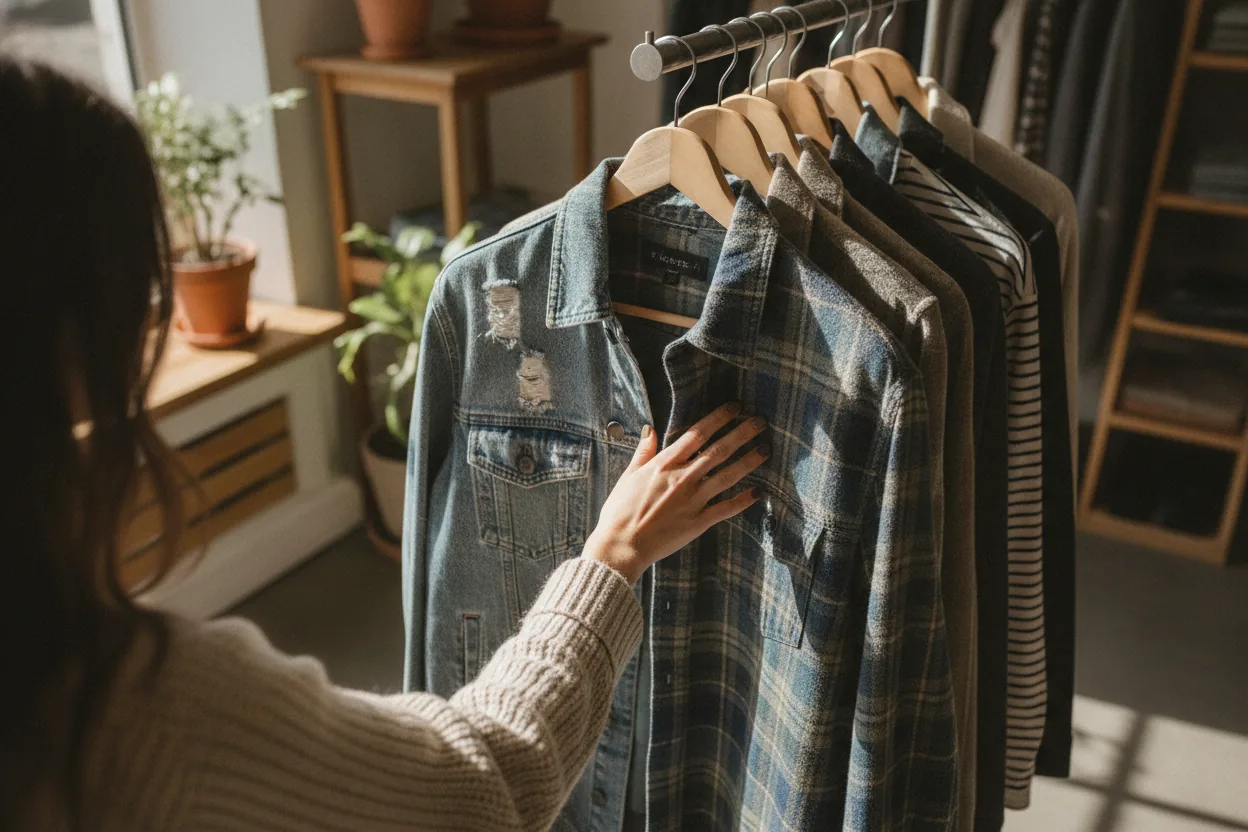
Not all sections of a secondhand shop are created equal. This is obvious once you hear it, but most people still shop every section the same way, giving equal time to the blouses and the athletic wear and the formal section. That’s a mistake.
The men’s rail is the single most undervalued section in any Goodwill or Salvation Army for people who aren’t men. Oversized button-downs, heavyweight flannels, broken-in chinos, graphic tees with actual heft to them. The men’s section tends to hold older, sturdier pieces because men, on average, hold onto clothes longer before donating. That means the average age and average quality of what’s on the men’s rack skews higher. If you wear a small or medium in women’s, a men’s small or even a men’s medium can give you that oversized, borrowed-from-someone look that no brand can manufacture on purpose.
The other underrated section? Outerwear. People donate coats and jackets less frequently, which means the pieces that do show up have often been held onto for years, sometimes for entire generations. A well-made trench, a leather jacket with patina, a wool overcoat with real shoulder construction — these are the pieces that anchor entire wardrobes, and they’re sitting on the outerwear rack between puffer vests and windbreakers.
I also want to make a case for the accessories wall or case. Belts, scarves, and bags get overlooked because they’re small and jumbled. But a good leather belt from the ’80s — one with solid brass hardware and a patina that took 40 years to develop — will outlast anything you can find new. Same with silk scarves. A vintage silk scarf tied as a headband, a bag strap, or a belt can shift the whole energy of whatever you’re wearing. And they’re usually under $5.
Styling Around Imperfection Instead of Avoiding It
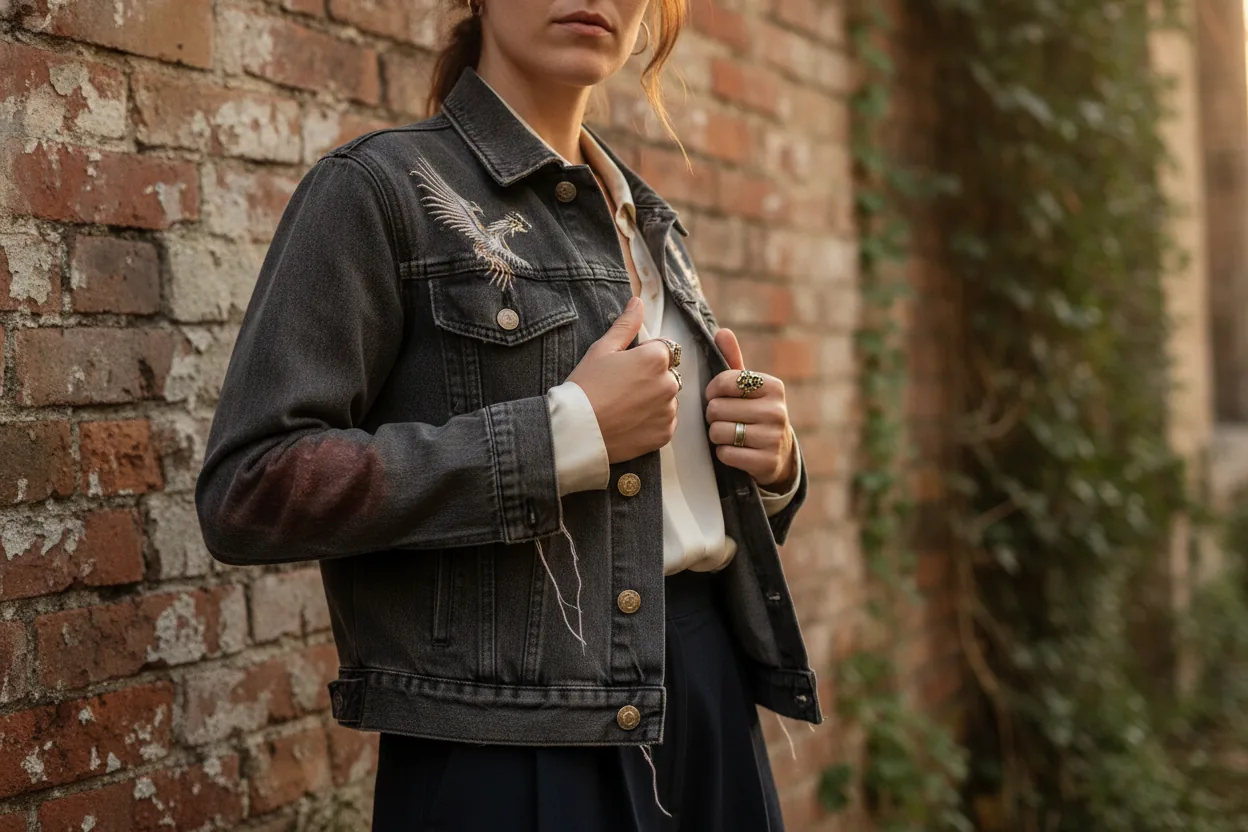
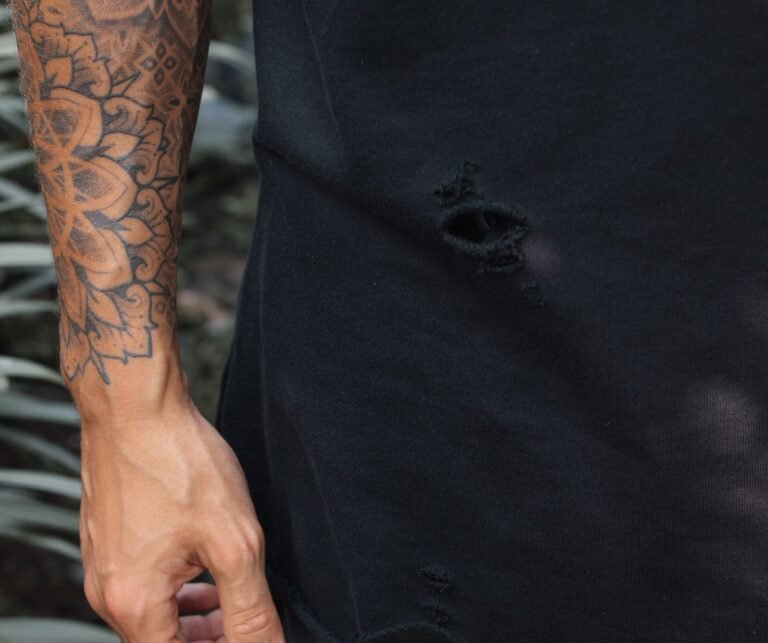
We’ve been trained to reject anything with a flaw. A small stain, a pulled thread, a missing button, a hem that’s come undone. Retail taught us that clothes should arrive perfect and stay perfect, and that any deviation means the piece is done. That mindset is the biggest barrier between you and the best stuff on any rack.
The best stuff often has something wrong with it. That’s why it’s still there. Other people passed it. They saw the cigarette burn, the bleach spot, the fraying pocket edge, and they kept moving. But what if the flaw is actually the starting point for something better?
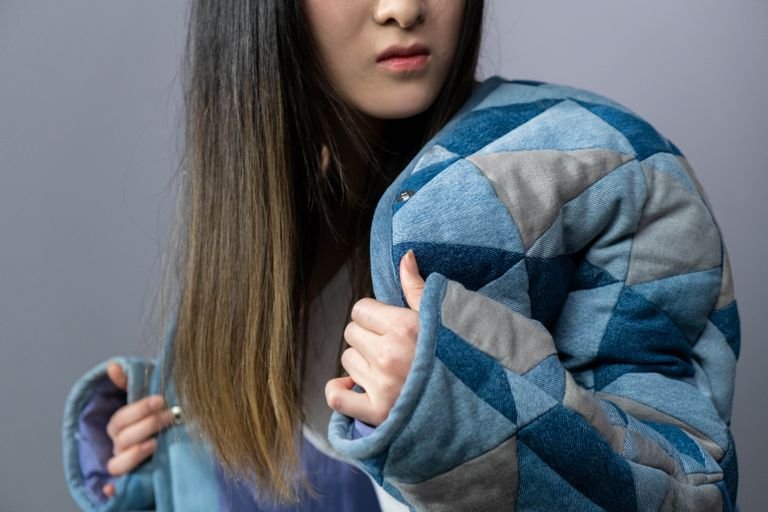
Visible mending has been all over thrift communities for the past few years, and for good reason. A sashiko stitch over a tear doesn’t just fix the piece. It adds a layer of intention and identity that the piece never had before. An embroidered patch over a stain turns damage into decoration. Replacing all the buttons on a blazer with mismatched vintage ones, or cutting a stained crew neck tee into a cropped tank — these are acts of creative problem-solving that make a piece yours in a way that buying something off a rack never can.
I picked up a white cotton oxford last spring from a church rummage sale for $2. It had a rust-colored stain on the front placket that wouldn’t come out no matter what I tried. Oxiclean, hydrogen peroxide, lemon juice, sunlight. Nothing. So I leaned into it. I tea-dyed the whole shirt to an uneven warm ivory, and the stain disappeared into the overall tone. The shirt looks like it’s been living in someone’s beach house for 30 years. It’s one of my most complimented pieces, and nobody knows it started as a laundry failure.
The point isn’t that every flaw can be fixed. Some can’t. A giant moth hole in the chest of a cashmere sweater might be beyond what you want to deal with. But a lot of flaws are smaller than they look, and a lot of them become features if you’re willing to work with them instead of against them.
Reading Vintage Construction as a Value Signal
This is where the real knowledge gap lives. Anyone can learn to search by era or fabric. But learning to read construction — the actual stitching, seaming, and finishing of a piece — that’s what separates someone who finds nice things from someone who finds legitimately rare things.
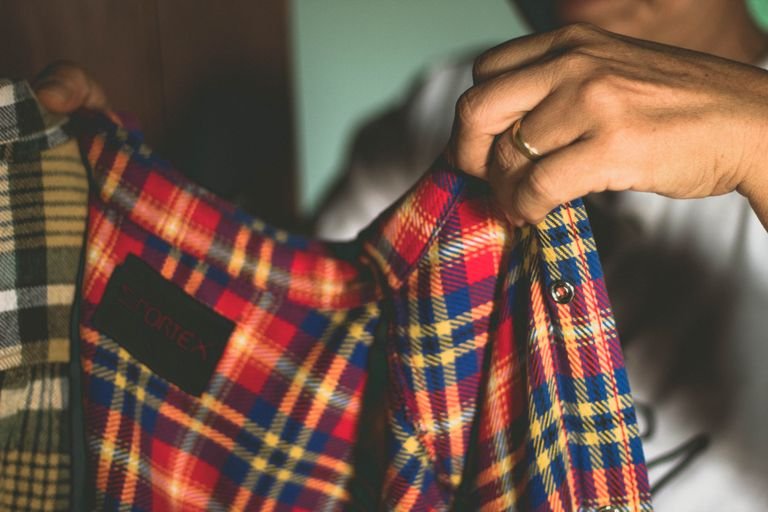
Start with the collar. On a vintage tee, the collar ribbing tells you a lot. Tighter, narrower ribbing with a denser knit usually means an older piece, pre-2000s for sure, sometimes much earlier. A single-stitched collar and sleeve hem is a classic sign of a pre-’90s tee. Double-stitching became the standard later. If you see a single stitch on the hem and sleeves of a basic cotton tee, you’re probably looking at something from the ’80s or earlier, and it might be worth more than the $3 price tag suggests.
Seams are the next thing to check. Flat-felled seams — the kind where the raw edge is folded and stitched down — are a sign of quality construction regardless of era. You see them on good denim, on military surplus, on workwear. If a pair of pants or a jacket has flat-felled seams throughout, someone spent more time and thread making it than the average garment today gets.
Zipper brands matter too. A YKK zipper is standard and fine. But a Talon zipper, or a Crown, or a Conmar — those are older and often indicate a piece from the mid-century or earlier. If you see one, look more carefully at the rest of the garment. It might be worth pulling out and inspecting.
Buttonholes are another giveaway. Machine-made buttonholes are uniform and a little sterile. Hand-stitched buttonholes, where you can see slight irregularities in the thread spacing, suggest either a very old piece or a custom-made one. Either way, someone cared about this garment enough to finish it by hand.
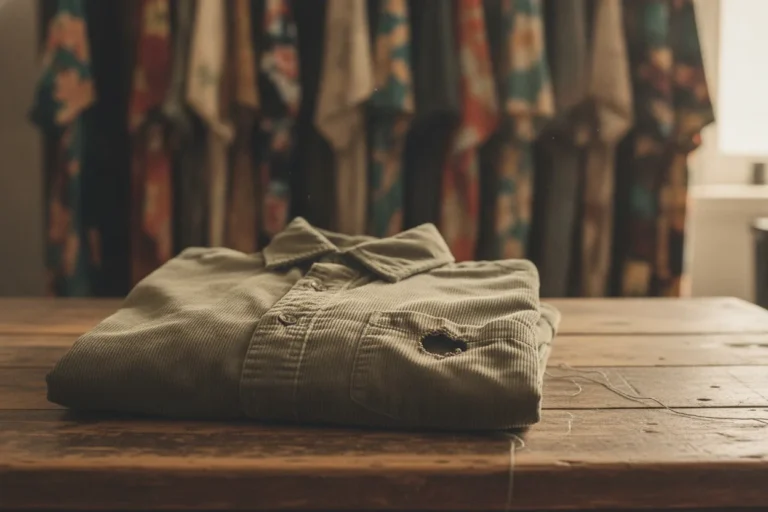
A reader named Dani sent me a message last fall about a corduroy chore coat she found at a bins store in Portland. She almost left it — it was dusty, oversized, and had a torn pocket. But she noticed the buttonholes were hand-stitched and the seams were flat-felled throughout. She looked up the label when she got home: a small French workwear brand that stopped production in the early ’80s. She paid $1.50 by weight. Similar coats were selling online for over $200. She didn’t know the brand. She knew the stitching.
I don’t want to turn this into a full authentication guide. That’s a deeper topic. But the core idea is that construction details are free information. They’re right there in your hands every time you pick something up. The more you train yourself to notice them, the better your finds get. It’s a muscle, and it builds fast.
Mixing Eras Beats Dressing Like a Costume
One of the traps in searching by era is dressing head-to-toe in one period. Full ’70s from the platforms to the flares to the paisley blouse. It can work, but it can also tip into costume territory fast. The people who do this best — who make vintage pieces feel current and personal — are the ones who mix.
A ’70s suede vest over a plain modern white tee and straight-leg jeans. An ’80s power blazer with the sleeves pushed up over a ’90s band tee and modern sneakers. A ’50s full skirt with a distressed denim jacket and beat-up Converse. The contrast between eras is what makes it feel like a choice, not a tribute act.
This is also where your personal palette comes in. Not every piece from your favorite era is going to work with your skin tone, your hair color, your vibe. A mustard ’70s blouse might be perfect if you’re warm-toned and love earth colors, but it might wash you out completely if you’re cool-toned and lean toward blues and blacks. Knowing your palette — even loosely, even just “I look better in cool muted tones than warm saturated ones” — helps you edit faster at the rack and avoid bringing home pieces that looked great on the hanger but never leave your closet.
The goal isn’t to replicate an era. It’s to pull the parts that work for you and drop them into your existing world. A vintage find becomes current through contrast, fit, and the specific way you put it with everything else. That’s why the same ’80s leather jacket looks completely different on five different people. The jacket didn’t change. The context did.
The Hunt Is the Point, Not the Purchase
There’s a version of this playbook that turns thrifting into another form of consumption — just a cheaper one. Another haul, another pile, another closet full of stuff you bought because it was a good deal rather than because you actually wanted it.
The best thrifters I know buy less than you’d think. They go out often but come home empty-handed more than half the time. They enjoy the searching, the touching, the reading of a garment, even when they don’t find anything worth taking home. The process itself is the reward. The moment when you flip a collar and feel tight vintage ribbing, or spot a flat-felled seam on a pair of trousers someone priced at $4 — that’s the thrill. Whether or not you buy it is almost secondary.
So here’s my nudge. Next time you walk into a secondhand shop, don’t go in blank. Pick an era. Pick a fabric. Pick a silhouette. Head to a specific section. Touch everything with intention. And when you find something with a flaw, don’t put it back. Hold it. Turn it over. Ask yourself what it could become if you gave it another chance.
That $3 wool blazer with the cigarette burn is still in my closet. The Liberty print patch is fraying a little now, which honestly makes it better. I don’t know who wore it before me. I don’t know where the burn came from or why they gave it up. But I know it fits my shoulders like it was waiting for me to figure out what it needed. The brass buttons don’t match each other, and they don’t match the blazer, and that’s exactly why it works. Sometimes the best piece in the store is the one nobody else wanted. You just have to know what you’re looking for — and be willing to love the damage.