Same Blazer, Different Story: Class and Thrift Culture
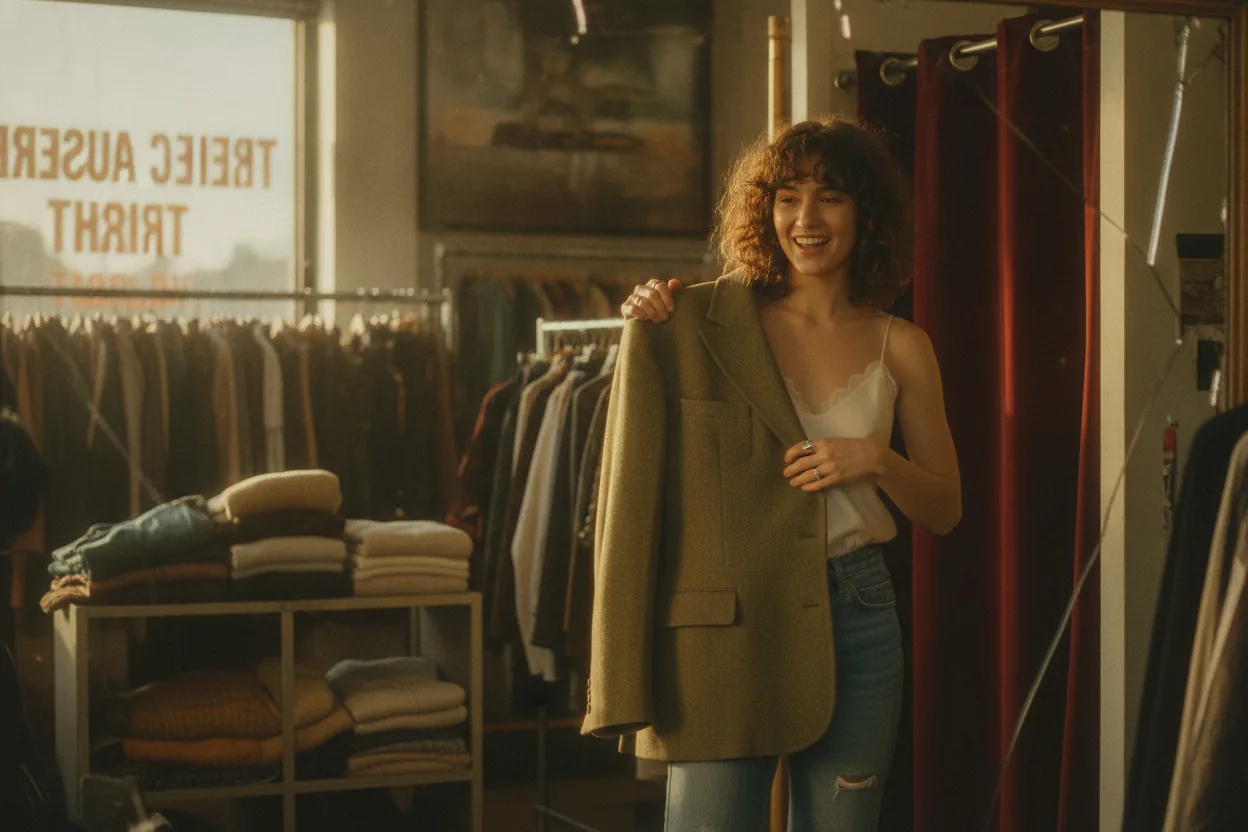
I was three hours deep into a Salvation Army in Southeast Portland when I pulled a cropped wool blazer off a rack wedged between a broken umbrella and a plastic bag of someone’s old curtains. It was boxy, unlined, had a faded dry-cleaning tag from a place in Lake Oswego, and cost $6.49. I threw it on over a tank top, checked myself in the cracked mirror by the fitting rooms, and thought: this changes everything about how I dress this fall.
Thrifting originality isn’t about the price tag — it’s about who gets to claim it.
Then I posted it. And the first comment was from someone I didn’t know: “omg the styling, you have such an eye.” And the second was from someone I did know, a friend who grew up shopping at that same Salvation Army because her family couldn’t afford anywhere else: “lol I used to hate having to go there.”
That moment stuck with me. Same store, same rack, same blazer. Totally different meaning depending on who’s holding it. And that gap, the one between thrifting as identity play and thrifting as economic reality, is the thing I keep circling back to every time I scroll through used-clothing content online. It’s the thing nobody in thrift culture talks about enough.
Thrifted style doesn’t mean one thing
Here’s what I’ve committed to: I buy secondhand. Almost exclusively. Not because I’m performing something, but because it’s how I learned to dress, it’s how I find pieces that actually feel like mine, and honestly, it’s how I afford the wardrobe I want. That cropped blazer is proof. Six bucks, wool, fits like it was made for someone with my exact shoulder width in 1994. I couldn’t find that new if I tried. I wouldn’t want to.
But I’d be lying if I said my version of thrifting is the same as everyone else’s. It isn’t. And pretending it is flattens something real about how used clothing works in different people’s lives.
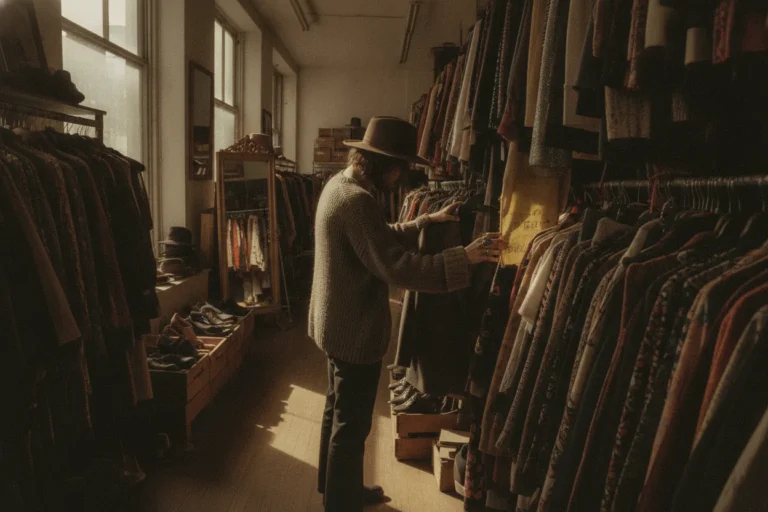
When I say “thrift,” I mean something specific. I mean the hunt. The digging. The feeling of pulling something out of a pile and knowing exactly what it could become. But for a lot of people, thrift doesn’t mean a hunt at all. It means this is what’s available. It means my mom got my school clothes here. It means I didn’t choose this store, I just ended up in it because nowhere else was in the budget.
Both of those realities exist. They overlap. And the tension between them shapes everything about how pre-owned style gets recognized, celebrated, and sometimes co-opted.
The Instagram thrift scene rewards a specific kind of eye
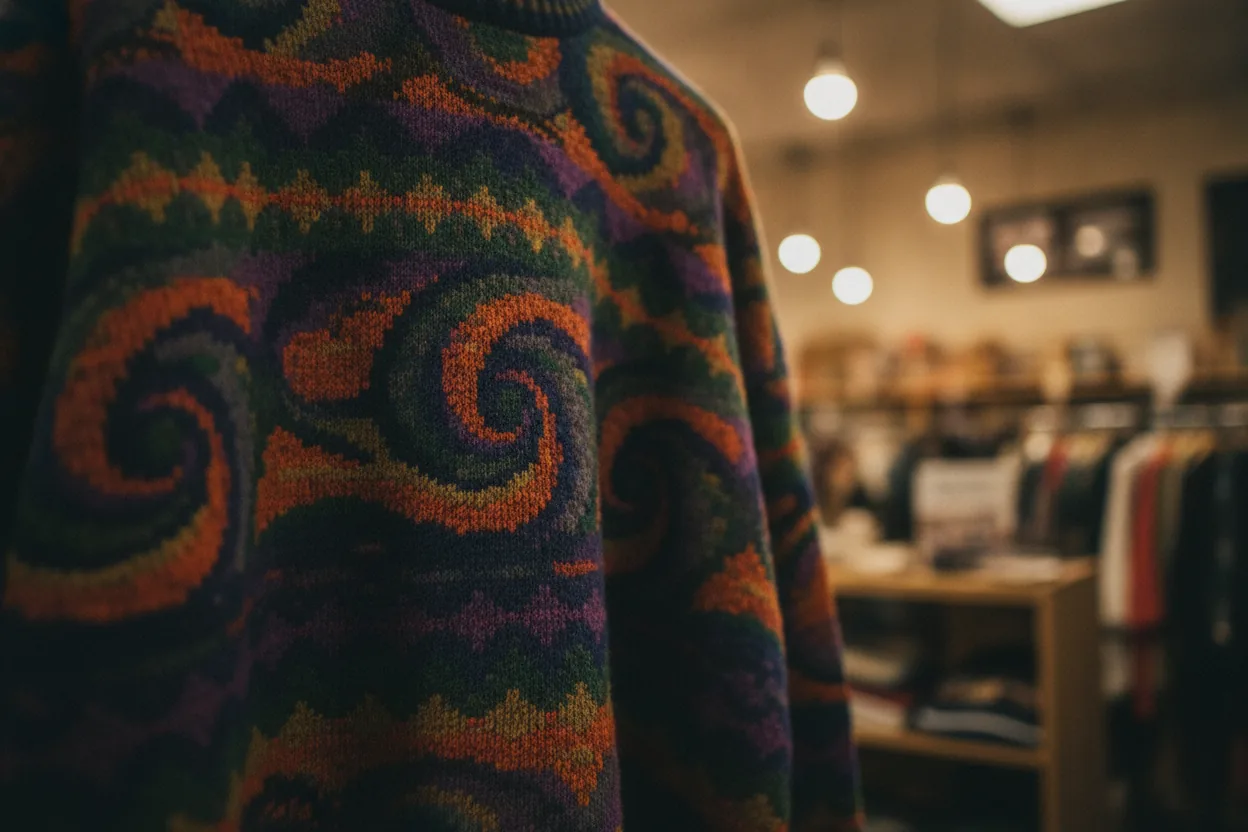
Spend any time in Instagram or TikTok thrift culture and you notice a pattern. The most celebrated finds aren’t just cheap. They’re unlikely. The $2 Issey Miyake pleats at Goodwill. The vintage Coogi sweater at an estate sale in suburban Ohio. The deadstock Nikes at a church rummage. The thrill isn’t just the item. It’s the story of finding it, recognizing it, knowing what it was when everyone else walked past.
That recognition is real skill. I don’t want to diminish it. Knowing a fabric by touch, spotting a cut that dates a garment to a specific decade, understanding which labels got bought out or discontinued: that’s knowledge built over years of looking. It’s labor. It matters.
But here’s the thing I keep chewing on. That skill, the ability to identify and style and transform, gets distributed unevenly. If you grew up around fashion references, if you went to art school, if you have the kind of free time and transportation access that lets you hit six stores in a day, you’re going to develop that eye faster. And if you have the social media literacy to photograph and narrate your finds in a way that reads as original, you get the recognition. The follows. The brand deals. The reputation as someone with taste.
Meanwhile, someone shopping the same store out of necessity, wearing the same blazer without the Instagram grid behind it, doesn’t get called original. They just get called thrifty. Or worse, they don’t get called anything at all.
This is about class. It’s about income. I don’t think it’s anyone’s fault exactly, but I think naming the dynamic matters more than dancing around it. The Instagram thrift scene has built its own status economy, and in that economy, the currency isn’t just the clothes. It’s the performance of discovery. The “I found this and I knew what to do with it” narrative. And that narrative rewards a very particular kind of cultural literacy that not everyone has equal access to — because access to cultural literacy tracks with access to money, education, and time.
Charity shops and the people who never left them
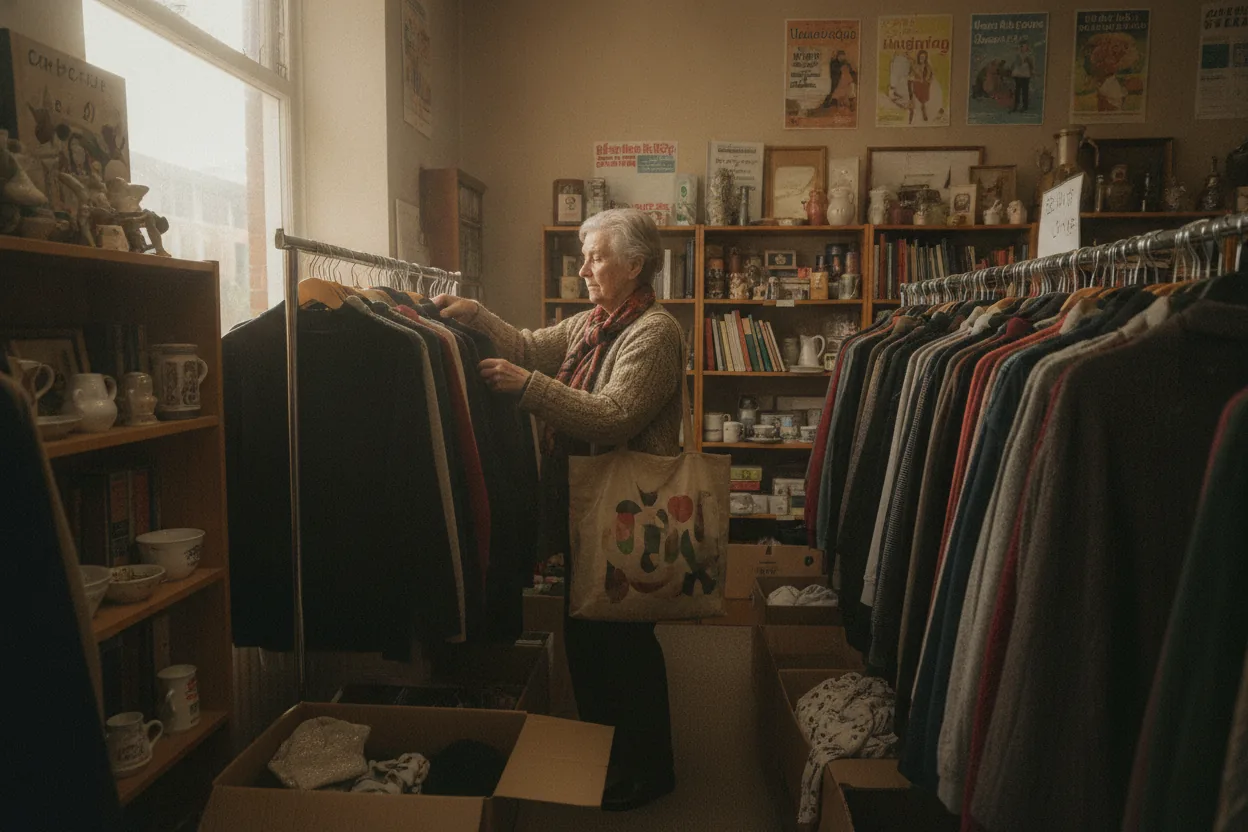
I want to talk about the other end of this for a minute, because I think it gets erased in a lot of thrift content.
There are people for whom the charity shop is just the store. Not a treasure hunt. Not a weekend hobby. Just where you buy clothes. Full stop. And for those people, the recent wave of thrift culture content can feel strange. Maybe even alienating.
I talked to a woman at a Goodwill in Richmond, Virginia last year. She was probably in her sixties. She told me she’d been shopping there since the 1980s and that prices had gone up noticeably in the last five years. She wasn’t wrong. Goodwill has adjusted pricing in a lot of markets, partly in response to resale demand. When flippers and content creators clean out a store’s best stock, the supply shifts. When thrifting becomes trendy, the stores themselves sometimes respond by pricing higher or pulling items for their own online auctions.
This isn’t a reason to stop thrifting. I want to be clear about that. Buying used is still the best way I know to dress without feeding the cycle of overproduction and disposal that fast fashion runs on. But I think anyone who takes this seriously has to sit with the fact that our participation in these spaces changes them. And that change doesn’t affect everyone equally.
When a college student with a ring light and a following pulls a $4 leather jacket and turns it into a viral haul video, the jacket leaves the ecosystem. It enters a different one. And the person who would have bought that jacket next Tuesday because they needed a coat for winter doesn’t get it. That’s a real thing. I’m not saying it makes the college student a villain. I’m saying it’s a dynamic worth being honest about.
Resale alt communities and the politics of knowing
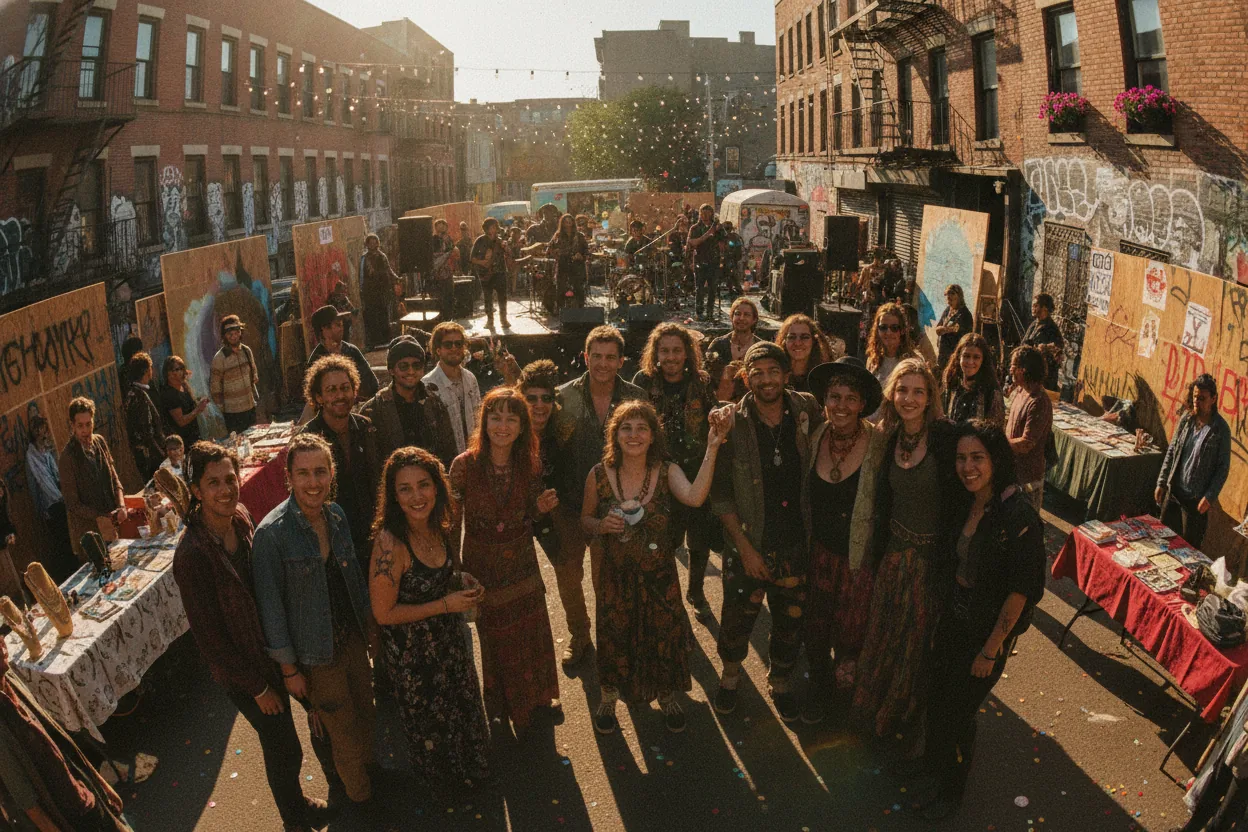
Now let’s talk about a third space, because thrift culture isn’t just Instagram grids and charity shops. There’s a whole world of resale-driven alternative communities where used clothing carries a different kind of weight entirely.
In punk scenes, in goth circles, in the kinds of alt communities that have always treated mainstream fashion as something to reject, thrifted clothing has never been about saving money or performing discovery for an audience. It’s been about refusal. Wearing someone else’s discarded military jacket isn’t a style choice in the way a fashion blog might frame it. It’s a statement about who you aren’t. It’s anti-conformity made material.
Scholars who study this stuff, people like Nicky Gregson and Louise Crewe, who wrote about secondhand cultures in the UK, have pointed out that used dress has carried political meaning for decades. Anti-capitalist. Anti-war. Anti-poverty. Sometimes anti-racist. The choice to wear pre-owned clothing, especially visibly worn clothing, has been a way of opting out of the status systems that new clothing reinforces. Wearing a ratty flannel in 1992 wasn’t just grunge. It was a class statement, even when the person wearing it came from money.
And that’s where it gets complicated. Because in alt communities, the meaning of a thrifted piece doesn’t just depend on the piece itself. It depends on who’s wearing it and what they know. If you’re wearing a band tee from a 1987 Melvins tour, the question isn’t “where’d you get that?” It’s “do you actually listen to them?” The item becomes a test of cultural fluency. And if you pass the test, you’re in. If you don’t, you’re a tourist.
This is its own kind of gatekeeping. I’ve experienced it. I once wore a Discharge shirt I found at a flea market in Austin, $5, perfectly trashed, and a guy at a show asked me to name three songs. I could. But the fact that I had to prove myself to wear a shirt I found fair and square at a folding table next to a box of old Playboys tells you something about how originality gets policed in these spaces.
And I’ve seen it go the other way too. At a punk flea market in Richmond, I met a vendor who told me she’d stopped posting her finds online because resellers kept swooping the spots she’d spent years cultivating. She’d show up to her regular Goodwills and the bins would already be picked clean by people who’d tracked her posts. “I built that knowledge over fifteen years,” she said. “And some kid with a Depop store just screenshots my haul and reverse-engineers my route.” Her frustration wasn’t abstract. She’d lost real access because the thing she knew — which stores restocked when, which donation cycles were worth hitting — had been turned into someone else’s sourcing strategy.
A friend of mine in Chicago’s DIY scene told me something similar. He’d been wearing thrifted workwear — Dickies, old Carhartt, gas station jackets — since high school, not because it was a look but because that’s what was at the thrift store near his mom’s house. When that same aesthetic blew up on TikTok, he said it felt like watching someone get credit for your life. “I didn’t style this,” he told me. “I just got dressed.” The gap between living a thing and performing a thing — that’s where the politics of knowing actually sit.
The transformation question and who gets credit
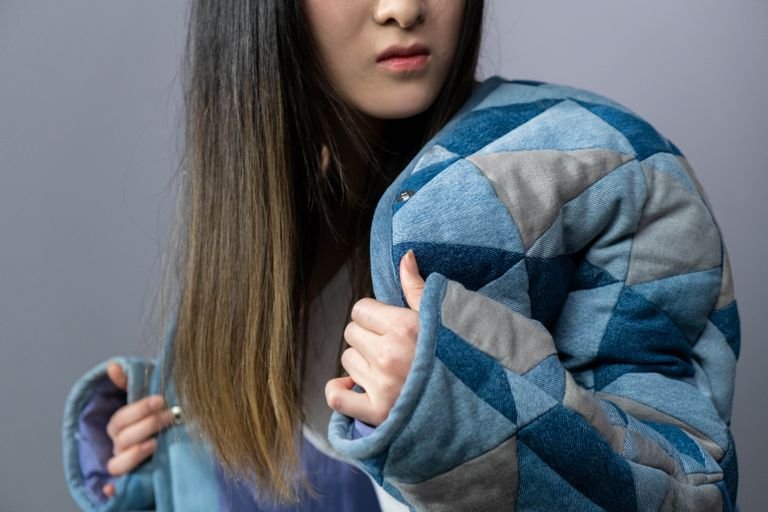
One of the things that cuts across all these scenes is the idea of transformation. Taking a thrifted piece and making it yours through alteration, restyling, or just wearing it in a context nobody expected. This is the heart of a lot of thrift content, and honestly, it’s the part I love most. The labor of reimagining something is real. It’s creative. It deserves respect.
But again: who gets credit for transformation depends on who’s watching and what platform they’re on.
On TikTok, a before-and-after where someone chops a men’s XXL dress shirt into a corset top gets millions of views. The creator gets called innovative. And they might be! That’s genuinely cool work. But the technique isn’t new. People have been altering used clothes out of necessity for as long as used clothes have existed. My grandmother took in every dress she bought from the thrift store in the 1960s because nothing fit her right off the rack. She wasn’t innovating. She was just getting dressed.
The difference is visibility. The difference is platform. The difference is class. When alteration is a necessity, it’s invisible. When it’s a content strategy, it’s art. I don’t think we have to choose one framing over the other, but I think collapsing them into the same thing is dishonest.
I’ve been working on a pair of wide-leg Levi’s I found at a Habitat for Humanity ReStore for $4. They were a 38 waist, way too big, but the denim was that perfect faded-but-not-destroyed weight. I’ve been slowly taking in the waist by hand, no machine, because I like the slightly uneven stitch line it leaves. Is that transformation? Sure. Is it original? I don’t know. Someone’s probably done the exact same thing this week in a city I’ve never been to. Originality is a weird thing to claim when you’re working with someone else’s pants.
Access shapes everything about what thrifting means
Here’s something that doesn’t get said enough in thrift content: your experience of thrifting is shaped massively by where you live, what stores are near you, what transportation you have, how much time you can spend looking, and what body you’re in.
If you live in a city with a dense population of people who donate high-quality clothing, your local thrift store is going to be stocked differently than a store in a rural area where donations skew toward worn-out basics. If you can drive to five stores in an afternoon, you’re going to find more than someone who relies on a bus that runs once an hour. If you wear a size that the used-clothing market has in abundance, you’re going to have options that someone in a less common size simply won’t.
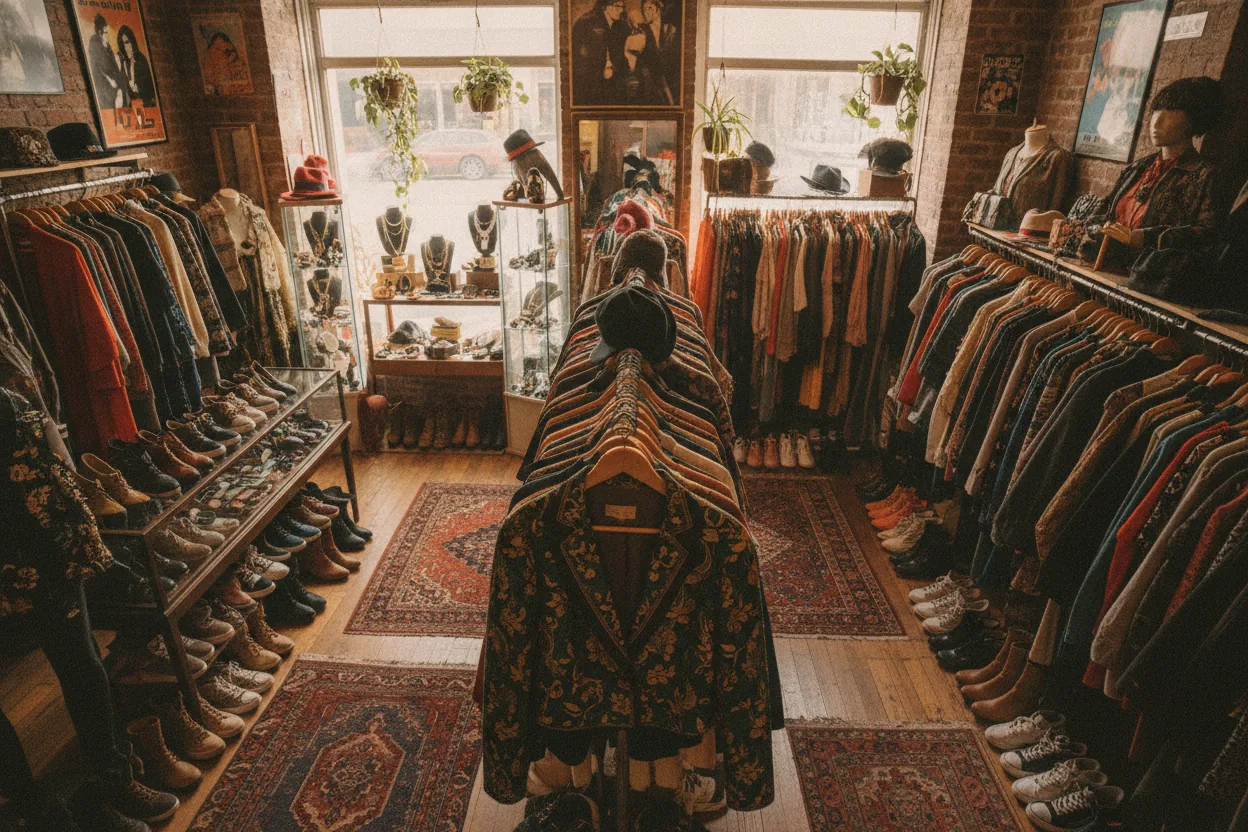
I’ve thrifted in Portland, Austin, Richmond, Chicago, and a handful of smaller towns in between. The difference is stark. A Goodwill in a wealthy Portland neighborhood is basically a department store — I’ve pulled cashmere there without even trying. A Goodwill in a small town in central Oregon might have three racks and a shelf of VHS tapes. Both are thrift stores. The experience isn’t the same.
And online resale platforms like Depop and Poshmark add another layer. They open up access in one sense: you can find almost anything if you search long enough. But they also create a marketplace where pricing reflects demand, not charity. A vintage Carhartt jacket on Depop isn’t $8. It’s $85. A pair of 501s from the early ’90s isn’t $5. It’s $60. The used-clothing market, once defined by low prices, now has its own high-price tier. And that tier is often built by people who sourced those items cheaply from physical thrift stores and marked them up for online buyers.
I’m not against resale. I’ve sold things on Depop myself. But I’ve watched Depop and Poshmark turn thrifting into a market, and I’ve got mixed feelings about what that means for the people who were already there. Resale works like regular retail — prices go up when demand does. The prices are lower, the items are used, but the dynamics of who profits and who pays are familiar.
[Internal link: Depop pricing culture]
So who gets to claim originality?
This is the question I keep coming back to. And I don’t have a clean answer. But I have some thoughts.
Originality in thrifted style isn’t about finding something nobody else has. It’s about the relationship between you and the piece. What you see in it. What you do with it. How it fits into the way you move through the world. That’s real regardless of whether anyone sees it on a screen.
But social recognition of originality, the kind that gets likes and followers and “where did you find that?” comments, is distributed unevenly. It goes to people who can narrate their finds effectively. Who have the visual literacy to photograph them well. Who have the cultural references to contextualize them. Who have the time and access to source them consistently. These are skills, yes. But they’re also privileges. And when we celebrate them without acknowledging that, we risk turning secondhand style into another arena where taste becomes a class marker dressed up as creativity.
I think about that blazer from the Salvation Army a lot. Six dollars. Wool. Fits perfectly. I love it. I wear it constantly. But the fact that I get to call it a “find” and frame it as an expression of my personal style, while someone else might have worn the same blazer out of the same store without any of that language or recognition, tells me something about how thrift culture works that I can’t ignore.
[Internal link: vintage vs. secondhand distinction]
Making thrifting a habit without losing the plot
If you’re reading this, you probably already thrift. You probably already know the rhythm: check in regularly, know your stores, know your sizes in different decades’ cuts, feel the fabric before you look at the label. You know the basics.
But here’s what I’d add, based on everything I’ve been chewing on.
Go to the stores that aren’t cool. The ones without a vintage section sorted by decade. The ones where the lighting is bad and the racks are crammed and nothing is organized by color. Those are the stores where the people who need affordable clothing actually shop, and your presence there should feel like participation, not extraction. Buy what you’ll actually wear. Leave the rest.
[Internal link: thrift store etiquette]
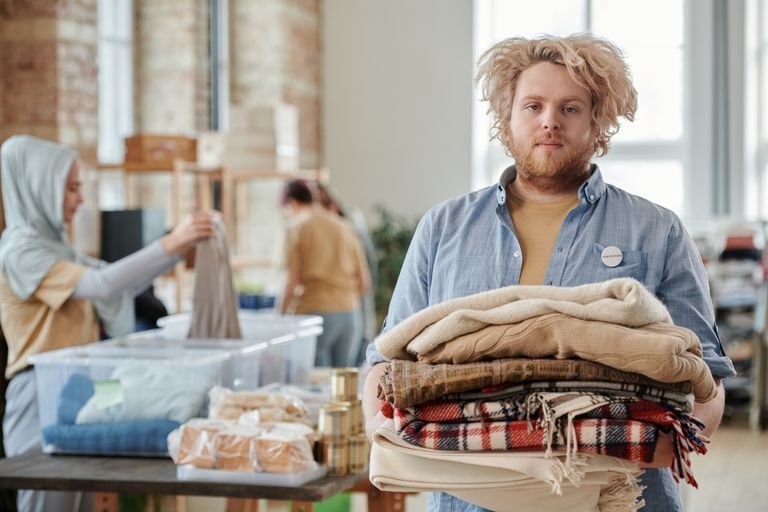
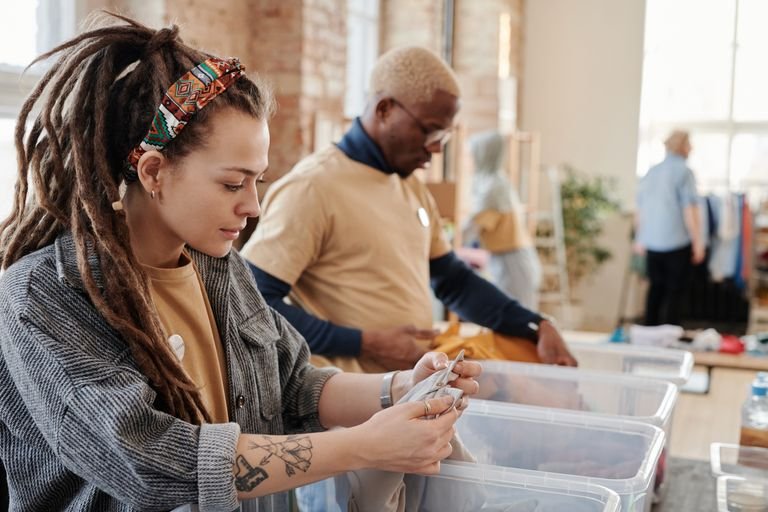
Talk to the people around you. The woman checking out ahead of you with a cart full of kids’ clothes knows things about that store you don’t. The volunteer sorting donations in the back has seen what comes in before it hits the floor. These are communities, not content mines.
When you post your finds, be specific about what you paid and where you got it. Not to flex, but because specificity is honesty. Say “I found this at the Goodwill on Division Street for $6” instead of “thrifted this gem.” The detail matters. It tells people what’s actually possible and where.
And sit with the contradictions. You can love thrifting and acknowledge that it’s complicated. You can celebrate a $3 score and recognize that the reason it was $3 is because someone donated it, probably without a tax receipt, probably because they needed to clear space, probably without thinking about where it would end up. The whole chain of secondhand is built on other people’s letting go. That’s not a problem to solve. It’s a reality to respect.
I’m still wearing that blazer. It’s still the best thing in my closet. But I’ve stopped calling it a discovery. I just call it what it is: a piece of clothing that had a life before me and will probably have one after. What I do with it in the middle is the only part that’s mine.