Skip the App, Hit the Bins: What Secondhand Actually Means
I didn’t start thrifting because I read an article about landfills. I started because I was broke, bored, and the mall made me feel like a mannequin somebody forgot to undress. That was before local thrift vs resale apps became a debate anyone cared about. Back then, the Goodwill rack was where I could actually become somebody. Not somebody a brand designed. Somebody I assembled, piece by piece, from racks that smelled like dust and somebody else’s decade. That distinction matters more now than it ever has, because secondhand fashion is fracturing into two very different things, and I’m not sure one of them is what it says it is.
The split nobody asked for but everybody feels
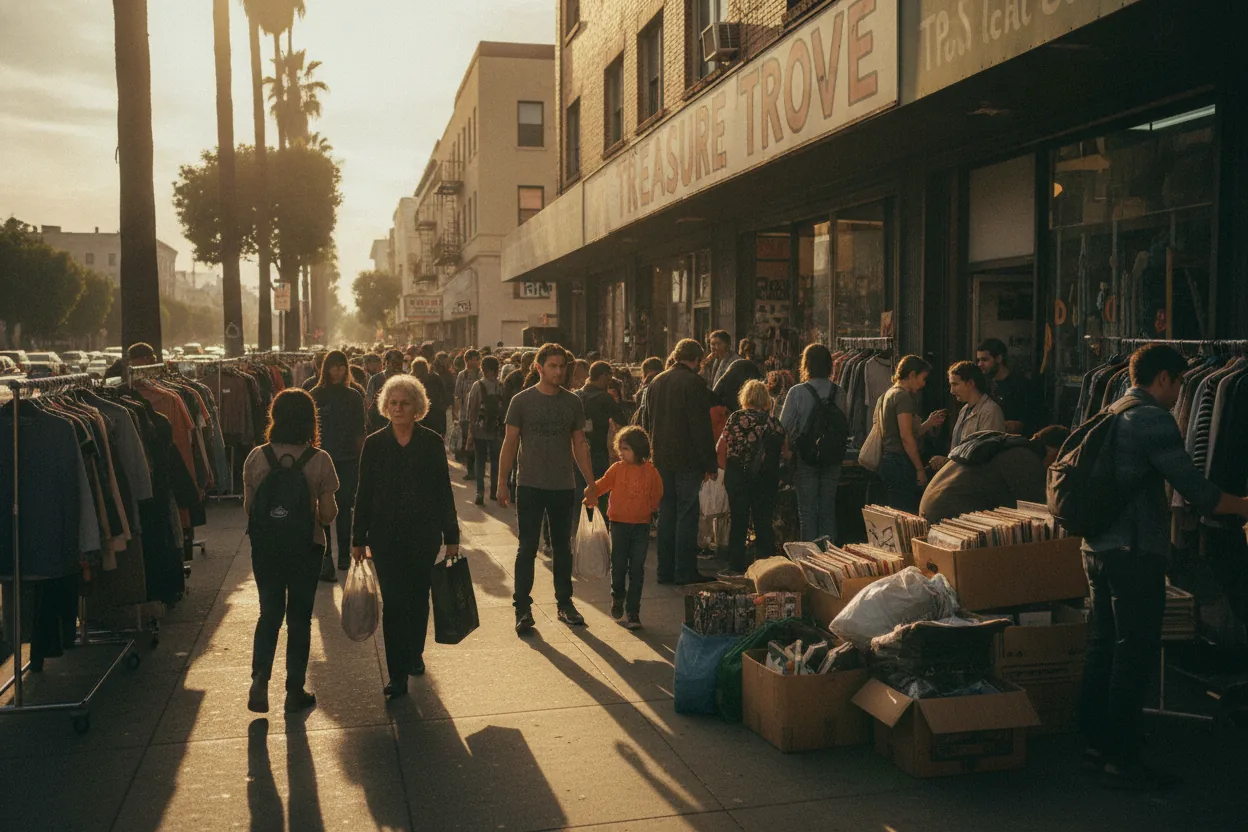
Here’s what’s happening. Secondhand culture used to be one thing: you went to a store, you dug, you found something weird, you wore it out. Maybe you told your friends. Maybe you didn’t. Now there are two distinct lanes. There’s local thrift, meaning the Goodwills, the Salvation Army stores, the indie consignment shops, the church rummage sales where somebody’s grandma is selling a silk blouse for seventy-five cents. And then there’s platform resale, meaning Depop, Vinted, Poshmark, ThredUp, the whole scroll-and-ship universe.
Both call themselves secondhand. Both technically keep clothes out of a landfill for at least one more wear. But the mechanics underneath are so different that lumping them together feels dishonest. Like calling a home-cooked meal and a meal kit the same thing because both use onions.
The question I keep turning over isn’t which one is better in some abstract moral sense. It’s simpler than that. Which one actually does what secondhand is supposed to do? Which one slows things down instead of speeding them up?
The carbon number that made me pause
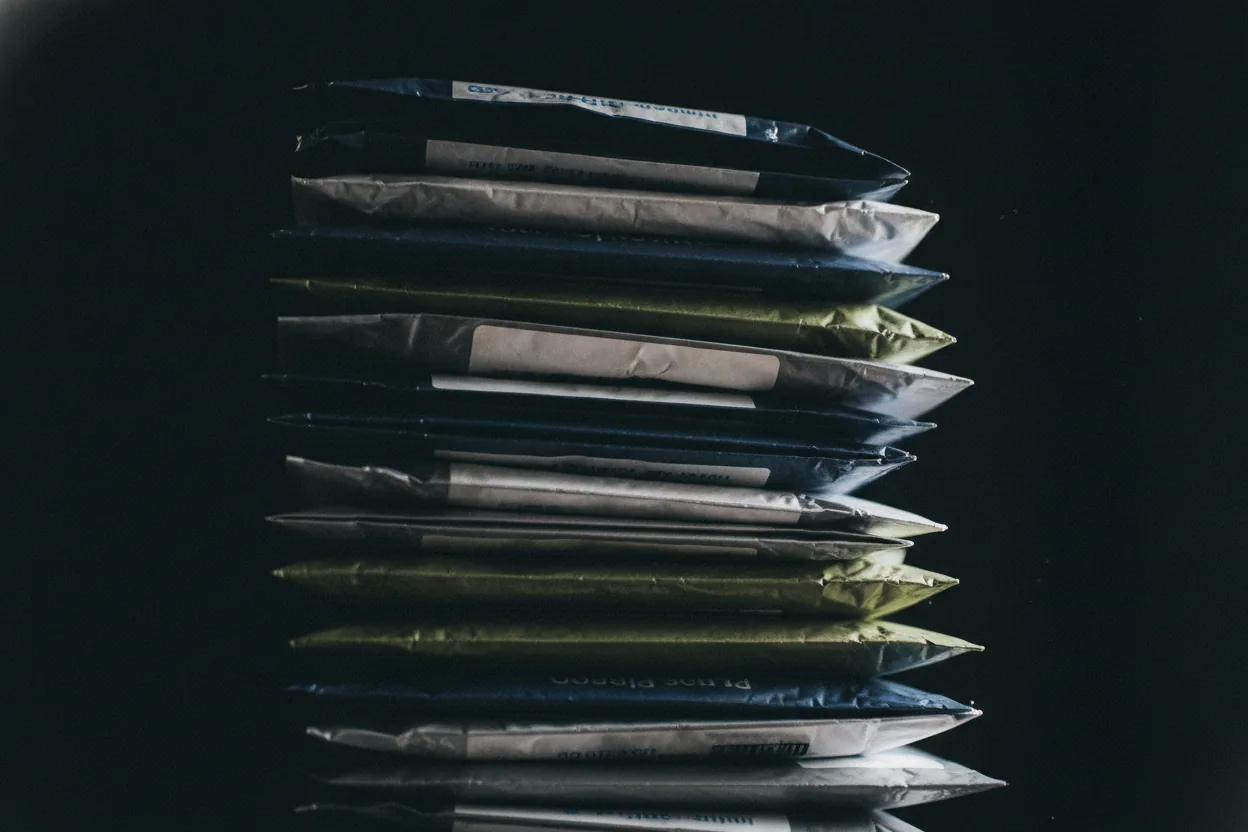
A report linked to Oxfam put some estimates on this, and the gap is wide enough to sit in. They cited thrift-store sales at roughly 0.6 kg of CO₂ per 5 kg of clothing. Platform resale, specifically apps like Vinted, came in around 3.1 kg for the same weight. That’s more than five times the emissions.
Think about what’s included in that second number. Individual packaging. Usually a poly mailer, sometimes a box inside a box. A delivery vehicle making a single stop for a single item. Maybe a return, which means the whole trip again in reverse. Possibly international shipping if you scored that Y2K baby tee from a seller in Lithuania. Every step adds a layer of carbon that a brick-and-mortar thrift store just doesn’t have, because the clothes are already there. They got donated in bulk. They got sorted on-site. You drove or biked or walked over, pawed through a rack, and carried your find home in whatever bag you already owned.
I’m not saying platform resale is evil. I’ve bought from Depop. I’ve sold on Depop. But I stopped pretending the two experiences carry the same environmental weight, because they obviously don’t.
When secondhand starts to feel like regular shopping
This is the part that gets uncomfortable, and I want to be honest about my own behavior before I point at anyone else’s.
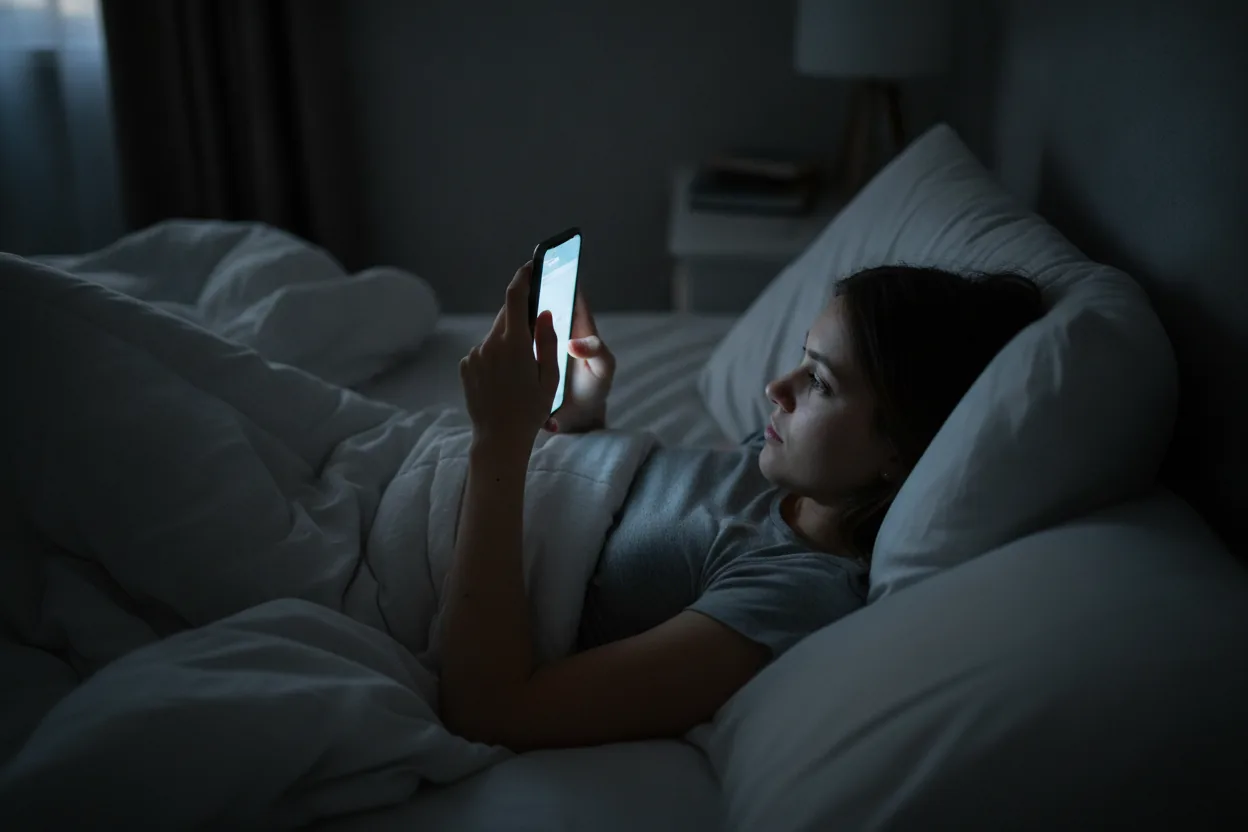
I’ve opened Depop at midnight. Not because I needed anything. Because I was bored and the algorithm knows what I like and the scroll felt good. I favorited twelve items, messaged two sellers, and bought a pair of wide-leg trousers I didn’t need from someone in Portland. When they arrived six days later I tried them on, decided the rise was weird, and listed them again. The whole cycle took two weeks and involved two shipments and zero moments of actual intention.
That’s not thrifting. That’s shopping with a secondhand label on it.
And I don’t think I’m alone. Consumer commentary and reporting are increasingly pointing at this pattern: resale platforms are designed to feel like shopping apps because they are shopping apps. The infinite scroll, the push notifications (“someone liked your item!”), the deal framing (“price drop!”), the algorithm-tailored feeds that mirror Instagram more than they mirror a thrift store aisle. They make it easy to browse, impulse-buy, flip, and buy again in a loop that looks a lot like the consumption cycle secondhand was supposed to interrupt.
A study published in Frontiers found that while people in the study actually thought their secondhand shopping was environmentally beneficial, they also flagged concerns about transportation emissions, packaging, and the sheer ease of buying more when everything’s a tap away. The awareness is there. The behavior hasn’t caught up.
The thrift store forces you to slow down and that’s the feature
Here’s what a Goodwill run does that no app can replicate: it makes the process inconvenient enough to be intentional.
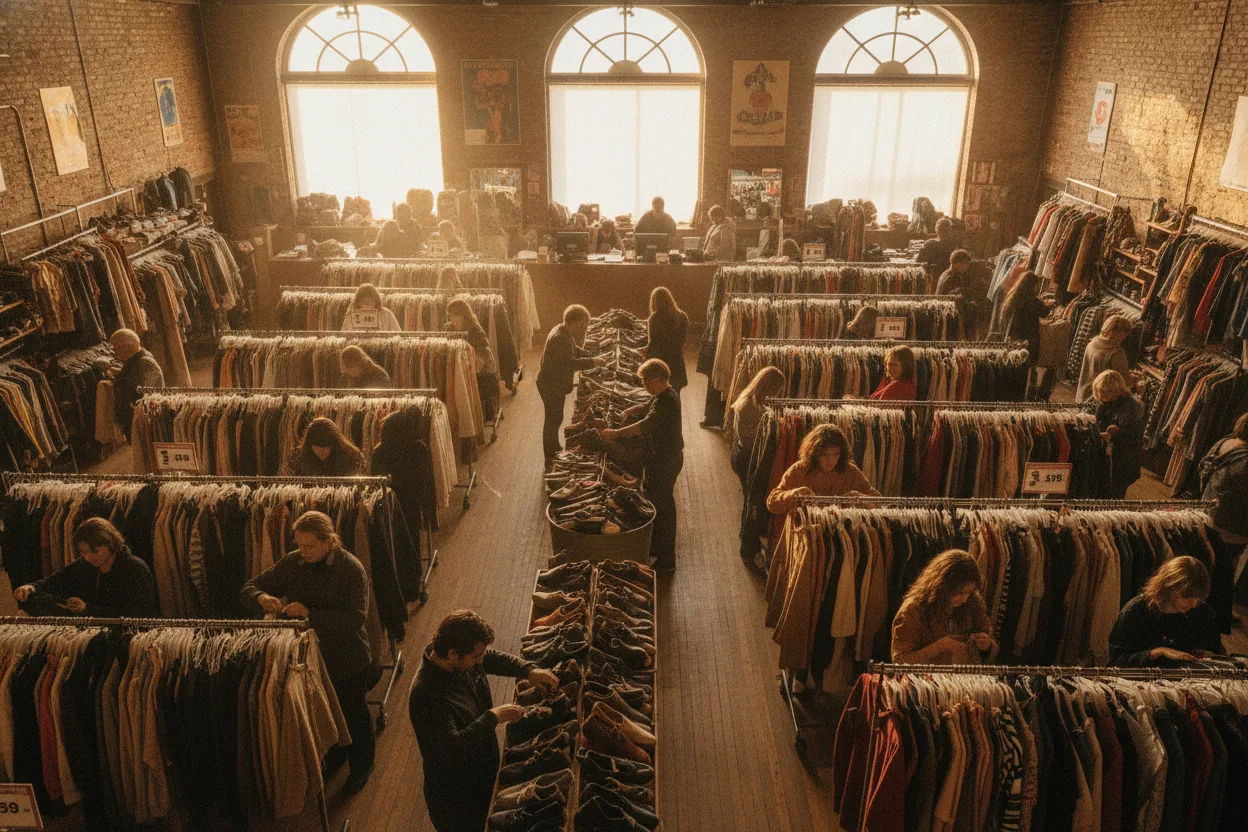
You have to go there. You have to stand in front of the rack. You have to touch fabric, check seams, flip collars, hold things up to fluorescent light and squint. There’s no filter for size, no sort-by-brand, no algorithm whispering that you’d also love this other thing. You’re on your own with your hands and your eye and whatever patience you brought with you.
Last month I spent forty minutes at a Volunteers of America in southeast Portland. I found exactly one thing: a black linen button-down, no tag, a few pulls in the weave near the left cuff, $4.99. I held it up. I put it back. I picked it up again. I bought it. That decision had friction. It had physical reality. I could feel the weight of the linen and see the imperfection and make a choice based on actual contact with the object.
On an app, I would’ve seen a photo, probably styled on someone with a different body, and either swiped past or bought it in under ten seconds. The speed is the problem. Not because fast is inherently bad, but because speed and volume go together. When buying is frictionless, you buy more. When buying takes effort, you buy what you actually want.
Identity is the real engine and both lanes know it
Let’s talk about why people thrift in the first place, because it’s not just about price and it’s definitely not just about waste.
Gen Z thrifting coverage in 2025 keeps landing on the same point: secondhand is an identity practice. “Thrift flipper” and “Depop girl” aren’t just descriptions of shopping habits. They’re cultural roles. They come with aesthetics, content formats, community signals, and a whole set of values about what it means to dress well without participating in the new-production pipeline.
I recognize myself in that. The way I dress is a statement about what I refuse to participate in as much as it’s a statement about what I like. And the stuff I find at the rack-digging experience of a physical store feels different from the stuff I find on apps. Not better, necessarily. Different. A local find has a physical origin story. I can picture the shelf, the store, the neighborhood. I can remember the moment I spotted it between two things I didn’t want. That specificity is part of the identity.
Erin, a 23-year-old who makes thrift content out of a Goodwill Outlet in Chicago, told me something that stuck: “On Depop I’m shopping someone else’s style. At the bins I’m building mine. Nobody pre-sorted it for me. Nobody told me it was cool. I decided it was cool.” That’s the difference in a sentence. The physical store makes you the author. The app makes you the editor.
Platform resale builds identity differently. It’s more about the seller’s taste, their storytelling, their feed. When I buy from a Depop seller who’s styled a vintage Carhartt jacket with a description that reads like a short story, I’m buying into their eye as much as I’m buying the jacket. That’s not nothing. But it’s a mediated experience. Someone else already did the digging. I’m just approving their work.
Thrift flips work in both lanes but the intentions diverge
Thrift flip content isn’t going anywhere. It performs because it delivers what people want: proof that a $3 item can become something nobody else has. The transformation is the content. The before-and-after is the hook.
But I’ve noticed a split in flip culture too. There’s the local-store flipper who finds a men’s XXL dress shirt at Savers for $2.49 and takes it home and turns it into a corset top on a Singer from 1987. The whole story is about resourcefulness. The constraints are the creativity. The machine might skip stitches. The fabric might not cooperate. The result is imperfect and personal and unrepeatable.
Then there’s the platform-resale flipper who buys underpriced items in bulk from ThredUp mystery boxes or Goodwill Outlet bins, cleans them up, photographs them well, and lists them at a markup. That’s a business. I don’t have a problem with it being a business. But let’s not pretend it’s the same impulse as someone turning a thrift find into something they’ll actually wear. One is about making clothes personal. The other is about making clothes marketable. Both have a place. They’re just not the same place.
The supply chain question nobody wants to untangle
A thing I keep thinking about: where does the stuff in your neighborhood thrift store actually come from?
The Frontiers study mentioned earlier surfaced something that gets left out of most thrift conversations. People in the study raised concerns about imported thrift flows and their effects on local textile industries, particularly in the Global South. The bales of unsold donations that get shipped overseas. The secondhand markets in Ghana and Kenya and Chile that are overwhelmed with clothes that started as someone’s Goodwill reject.
Here’s a concrete example of how tangled this gets on the platform side. ThredUp’s own 2024 transparency data showed that items listed on their platform get handled an average of three to four times before reaching a buyer — intake, sorting, photographing, warehousing, shipping — and that roughly 15-20% of items sent in by sellers don’t meet listing standards and get rerouted to textile recyclers or, in some cases, to those same overseas bale markets. So even on the resale app side, the supply chain doesn’t end cleanly at checkout. It loops back into the same global textile flow that physical thrift stores feed.
This is where I have to be honest about what I don’t know. I don’t fully understand the chain that connects my donation bin to a market in Accra. I don’t know what percentage of what I donate actually gets resold locally versus baled and exported. I’ve read conflicting numbers. Some say 10-20% of donations make it to the floor. Others say it’s higher, depending on the organization. The honest answer is: I’m not sure, and I think most thrifters aren’t sure either.
What I do feel confident saying is that the local-thrift model at least keeps the first transaction short-distance. The clothes came from the community. They go back to the community. The transportation footprint is small. Whether what doesn’t sell ends up in a responsible place is a harder question, and one I think we should keep asking without pretending we already have the answer.
What I actually do now and why
I haven’t quit resale apps entirely. I still check Depop when I’m looking for something specific, like the time I needed a 1990s Columbia fleece in a particular shade of green for a costume project and the local stores didn’t have it. That’s a focused search with a clear end point. I can justify the shipping because I’m not browsing. I’m hunting.
But my default has shifted. My weekends are back to physical stores. I hit the bins at Goodwill Outlet on Division Street, where everything is $2.49 a pound and the chaos is the whole point. I go to Red Light Vintage on Hawthorne when I want to see what someone with a sharp eye already pulled. I check the free pile on my neighbor’s curb because sometimes the best find is the one that costs nothing at all.
The shift wasn’t moral. I didn’t read the Oxfam numbers and have a conversion experience. It was more like noticing how I felt after each type of shopping. After a Depop binge, I felt the same low-grade guilt I used to feel after buying fast fashion. After a thrift store trip, even when I came home empty-handed, I felt like I’d spent my time doing something real. The difference is in the body. Not in the brain.
Imperfection is the point and always was
The black linen button-down I mentioned earlier has those pulls near the cuff. I could fix them. I probably won’t. When I roll the sleeves, they’re visible, and someone at a bar last week asked me about them. “Is that intentional?” she said. I told her I didn’t know. Maybe whoever owned it before me snagged it on something. Maybe it came off the loom that way. The mystery is part of why I like it.
A $4.99 shirt with flaws I can’t explain, from a store I can bike to, worn by someone before me whose life I’ll never know. That’s what secondhand means to me. Not a cleaner version of shopping. Not an eco-friendly alternative pitched in a cute font. Just clothes that already existed, finding another body to live on.
I don’t think you need to pick a side in this debate forever. I think you need to notice which version of secondhand makes you feel like you’re building something and which version makes you feel like you’re just buying again. The answer might change week to week. That’s fine.
The case against new is also a case against new habits dressed in old clothes
If secondhand becomes another channel for the same behavior — if we scroll and ship and return and re-list at the same pace we used to cycle through Zara and H&M — then we haven’t changed anything. We’ve just changed the label on the bag.
The case against new was never just about refusing to buy from a retail store. It was about refusing the speed, the volume, the disposability, the idea that identity comes from acquisition rather than attention. Physical thrift stores, with their inconvenience and their chaos and their weird lighting and their racks that don’t make any sense, are the last place where that refusal feels embodied. Where you have to slow down because the environment demands it.
I love my flawed, cheap, local finds. I love that I don’t know their stories. I love that they cost less than a latte and they’ll outlast whatever’s trending on a resale app this week. I love that nobody packaged them in tissue paper for me or wrote a thank-you note on a branded card.
The cheapest, most flawed, least photogenic thing in your closet might be the most honest thing you own. Wear it. Don’t apologize. And maybe, next weekend, skip the app and go to the store. See what’s in the bins. Touch the fabric. Smell the dust. Take your time. That slowness isn’t a sacrifice. It’s the whole reason this works.