That $6.99 Velvet Blazer Broke Every Goth Template I Had
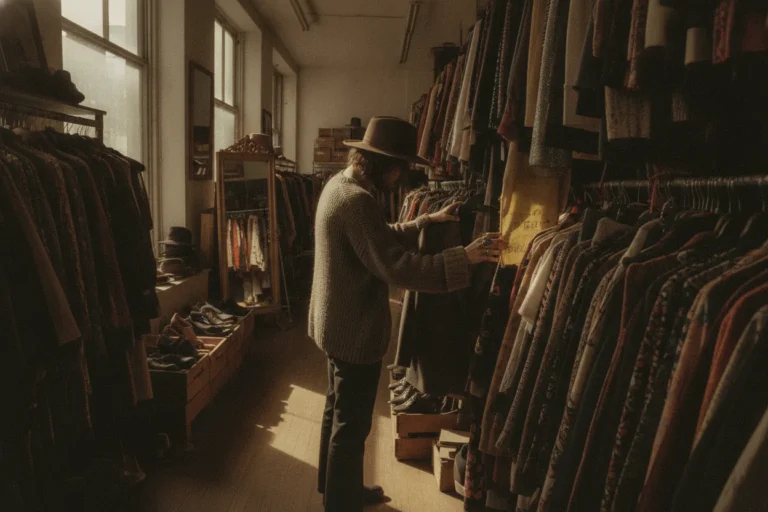
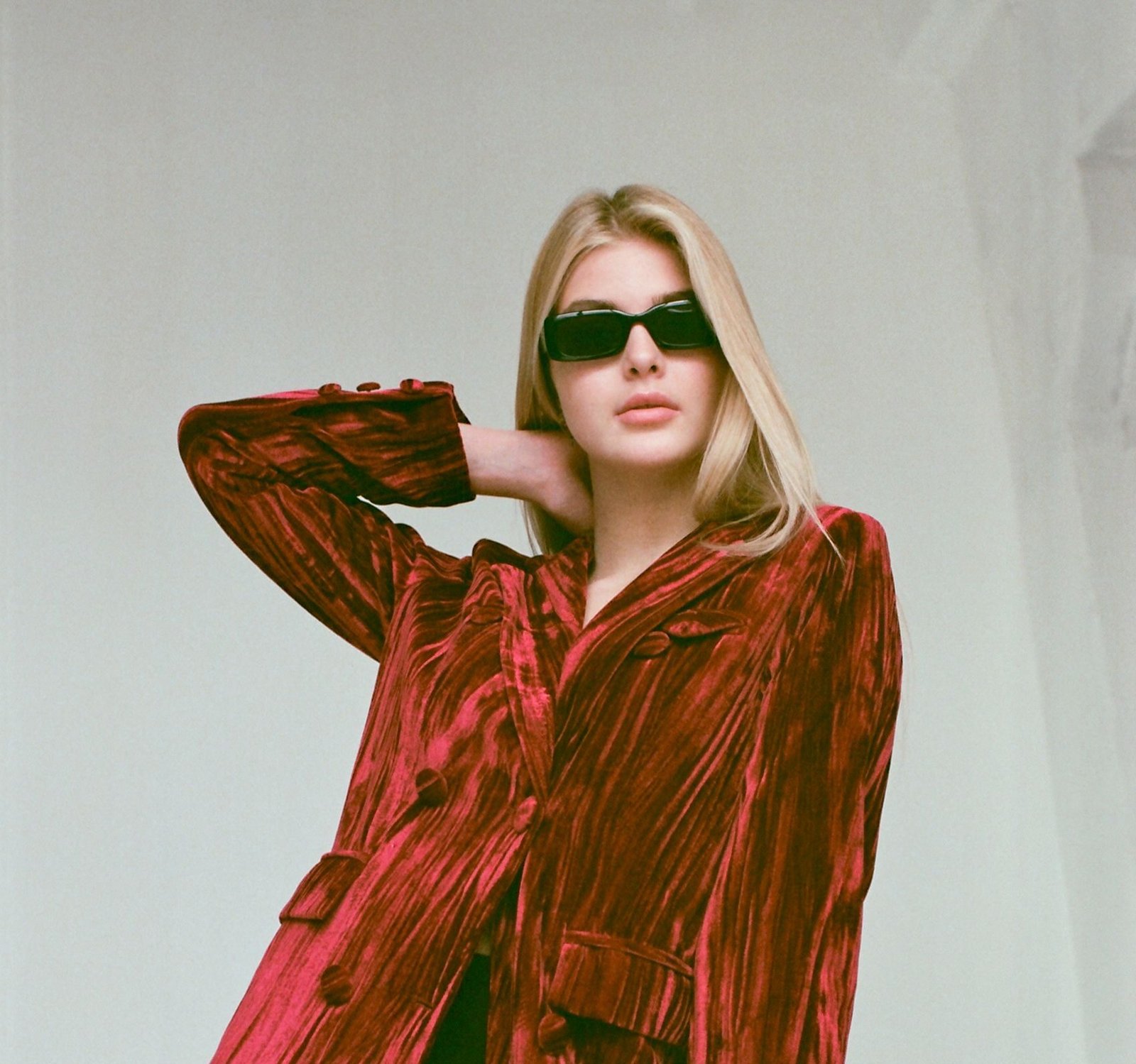
I found a men’s black velvet blazer at a Salvation Army in Tacoma, Washington, for $6.99. It was oversized by at least two sizes, the lining was this wild dark purple paisley, and one of the buttons was missing — someone had replaced it with a smaller brass button that didn’t match the others at all. That blazer didn’t just save me money. Thrifted alt fashion is the phrase I keep coming back to because it describes something the feed genuinely can’t mass-produce: a look that only exists because you were there, in that store, on that day, and you saw the thing nobody else saw.
Real goth isn’t a Pinterest board with fourteen identical outfits pinned from Shein. It’s a ripped slip dress you found crammed between Hawaiian shirts at a church sale, dyed blacker in your bathtub because the original black had faded to something closer to dried blood. Real punk isn’t a $48 pre-distressed tee with a safety pin graphic printed on it. It’s the actual safety pin holding your actual jacket together because the lining ripped three years ago and you liked how it looked so you never fixed it.
But the feed doesn’t want that. The machine wants you goth the same way.
How Alt Style Got Flattened Into a Template
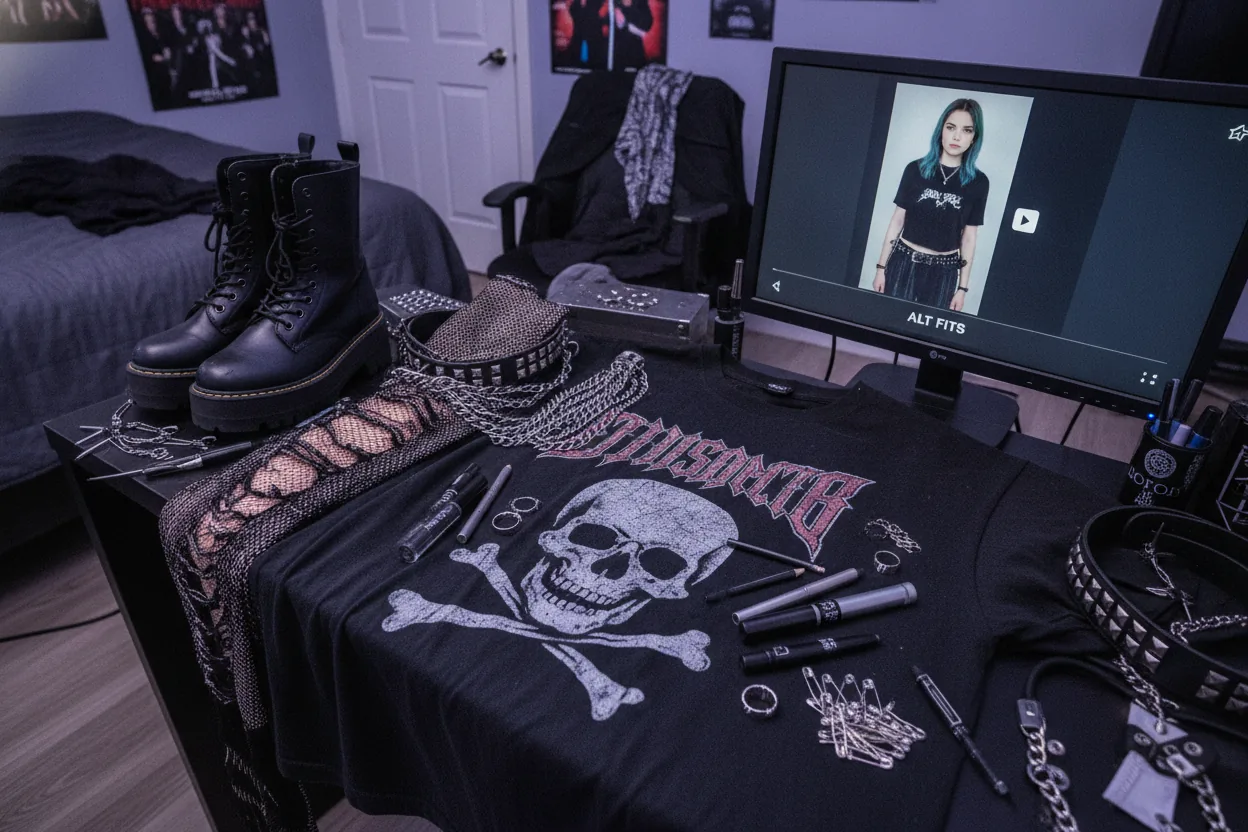
Here’s what happened. Around 2020, 2021, TikTok started sorting alternative fashion into neat little boxes. “Dark academia.” “Goblincore.” “Indie sleaze.” “Grunge aesthetic.” Each one got a starter pack. Platform boots, fishnet tights, oversized band tee, black eyeliner, chain belt. Done. You could buy the entire look from one fast-fashion drop and film a “get ready with me” that hit every visual checkpoint the platform needed to push your video to the right audience.
And it worked. That’s the problem. It worked so well that alt fashion started looking like a uniform instead of a rebellion. Scroll through #gothfashion on TikTok right now and count how many outfits you could swap between creators without anyone noticing. The feed rewards recognizability. It needs your look to be legible in the first half-second of a scroll. So the goth look became a formula. The punk look became a formula. The grunge look, the indie look, the Y2K look. All formulas.
The irony is thick enough to choke on. Subcultures that were built on rejecting mainstream taste got optimized into mainstream content categories. The recommendation engine didn’t care that [goth started in Batcave clubs in the early ’80s](https://www.theguardian.com/music/2014/may/14/goth-subculture-batcave-siouxsie) or that punk was half political rage and half boredom. It just needed a recognizable silhouette and a consistent color palette so it could serve your video to people who’d already watched forty videos that looked exactly the same.
I watched a creator with 200k followers post a thrifted look that broke every goth rule — layered textures, clashing decades, nothing matching on purpose — and her comments were full of people saying she wasn’t really goth. Meanwhile, the girl in the $200 Dolls Kill haul doing the exact same platform-boots-and-fishnets combo got 2 million views. The platform decided which version of goth was valid by boosting what it recognized and burying what it didn’t. That’s the real flattening. Not that people are wearing the wrong clothes, but that the machine is deciding which clothes count.
This is what I mean by feed-optimized alt style. It’s not that the clothes are wrong. Platform boots are great. Fishnet is great. But when every “alternative” look is assembled from the same ten items bought new from the same three websites, you’re not building an identity. You’re filling a template.
Why Thrifted Alt Fashion Feels Different From the Feed Version
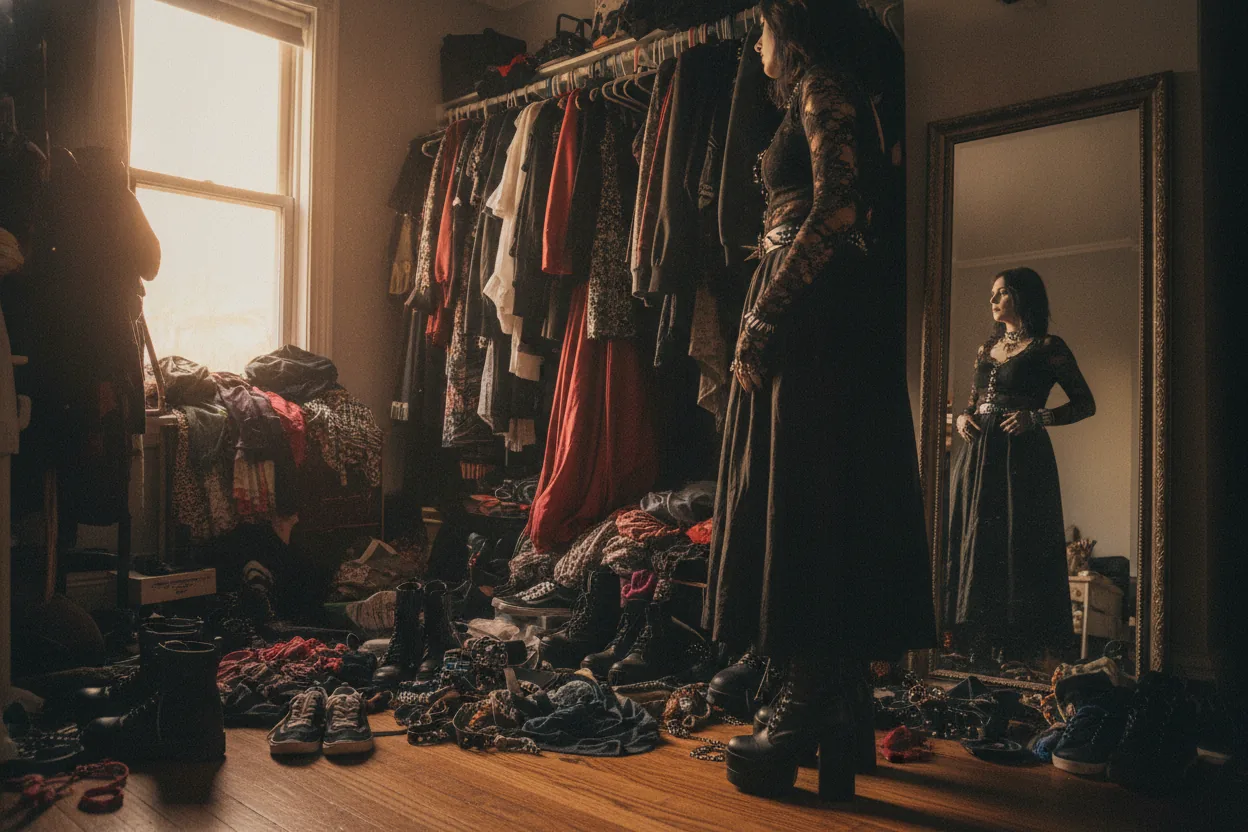
I was stuck on this for a while. Not philosophically. Literally stuck, like, my closet had a problem. I’d been building a goth-adjacent look for about two years and it was boring me. Black pants, black top, silver jewelry, boots. Fine. Functional. But it looked like every other feed-friendly goth outfit because I’d been unconsciously copying what performed well online instead of trusting my own instincts about what felt right on my body.
The rescue piece was that Tacoma blazer. I almost put it back. Then I tried it on over a threadbare Bauhaus tee I’d thrifted the previous summer for $2, and something clicked. It didn’t look polished. It didn’t look optimized. It looked like mine.
That blazer broke the template for me because it introduced chaos. The mismatched button. The too-big shoulders. The velvet nap worn smooth on the elbows. None of that would survive a flat-lay photo or a perfectly lit try-on. It’s the kind of piece that only makes sense in motion, in context, on a specific body. The feed can’t do anything with it because it doesn’t fit the visual shorthand for “goth outfit.”
And that’s exactly the point. Secondhand goth and punk pieces carry history. They carry weird fit. They carry someone else’s wear patterns. A thrifted leather jacket doesn’t creak the same way a new one does. A vintage fishnet top from 1994 has a different knit density than a 2024 reproduction. You can feel it. Other people who know can see it. And the platform, which processes images as flat visual data, can’t tell the difference, which means it can’t reward you for it, which means you’re not performing for it anymore. You’re just dressed.
The DIY Instinct Is the Whole Point
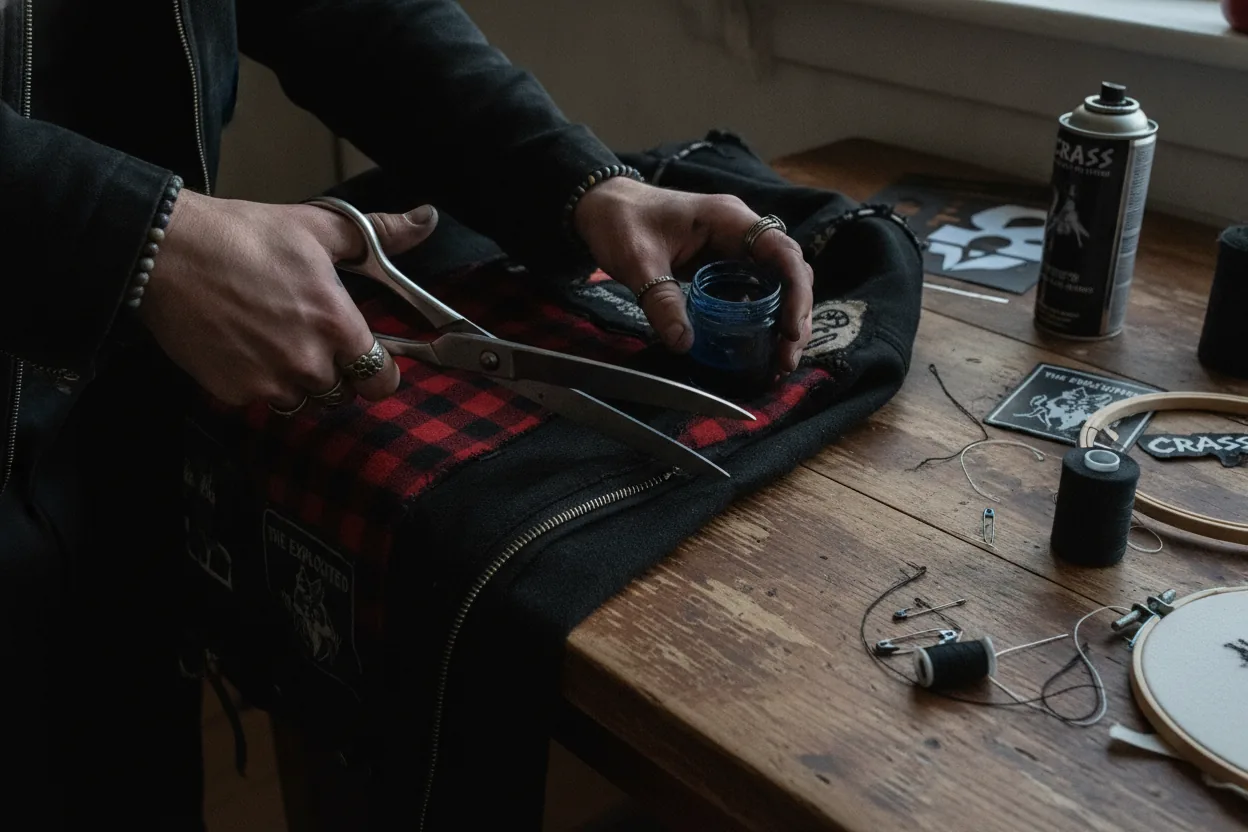
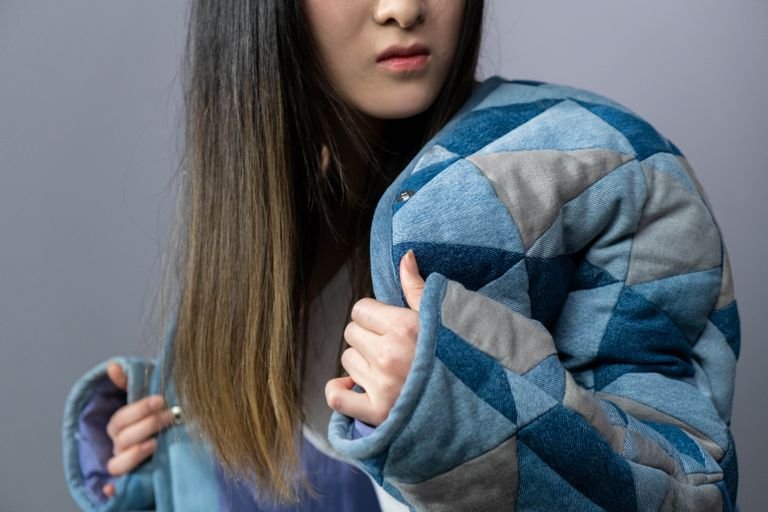
The kids pushing back against this aren’t just buying secondhand. They’re reworking what they buy. That’s the crucial part. The thrift haul is step one. Step two is the kitchen table with the fabric scissors and the Rit dye and the dental floss you’re using as thread because you don’t own a sewing kit.
I talked to a nineteen-year-old on Depop who goes by rot_angel and sells reworked goth and punk pieces she sources from Goodwill bins. She buys men’s dress shirts for a dollar each, dyes them black, cuts the collars into asymmetrical points, and adds hand-sewn patches from old band merch she finds in the same bins. She told me, “I don’t want my stuff to look like a product. I want it to look like someone made it because they needed it to exist.” That line stuck with me.
This is the difference between feed-optimized alt style and the real thing. The recommendation engine needs products. It needs items that can be identified, tagged, linked, and sold. When you dye a men’s Oxford shirt black and slash the sleeves off and sew a Siouxsie patch on the back pocket, you’ve created something that can’t be linked. There’s no product page. There’s no affiliate code. The machine literally doesn’t know what to do with it, so it buries it, which is a form of freedom if you think about it the right way.
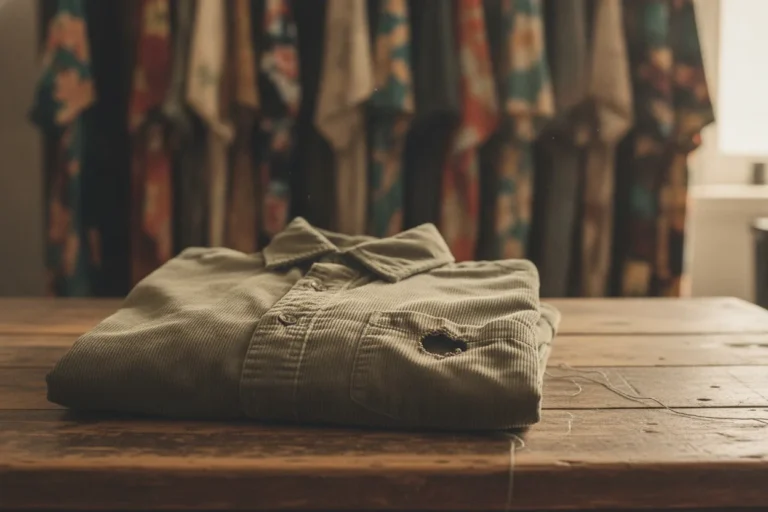
The DIY instinct in thrift-based alt fashion isn’t an add-on. It’s the engine. Every time someone takes a $1.50 flannel and distresses it with sandpaper and bleach, they’re authoring a piece that didn’t exist before. It’s not reworked in the sanitized way that brands do “upcycling.” It’s rough. It’s sometimes ugly. It’s always specific.
Finding the Right Fabric Changes Everything
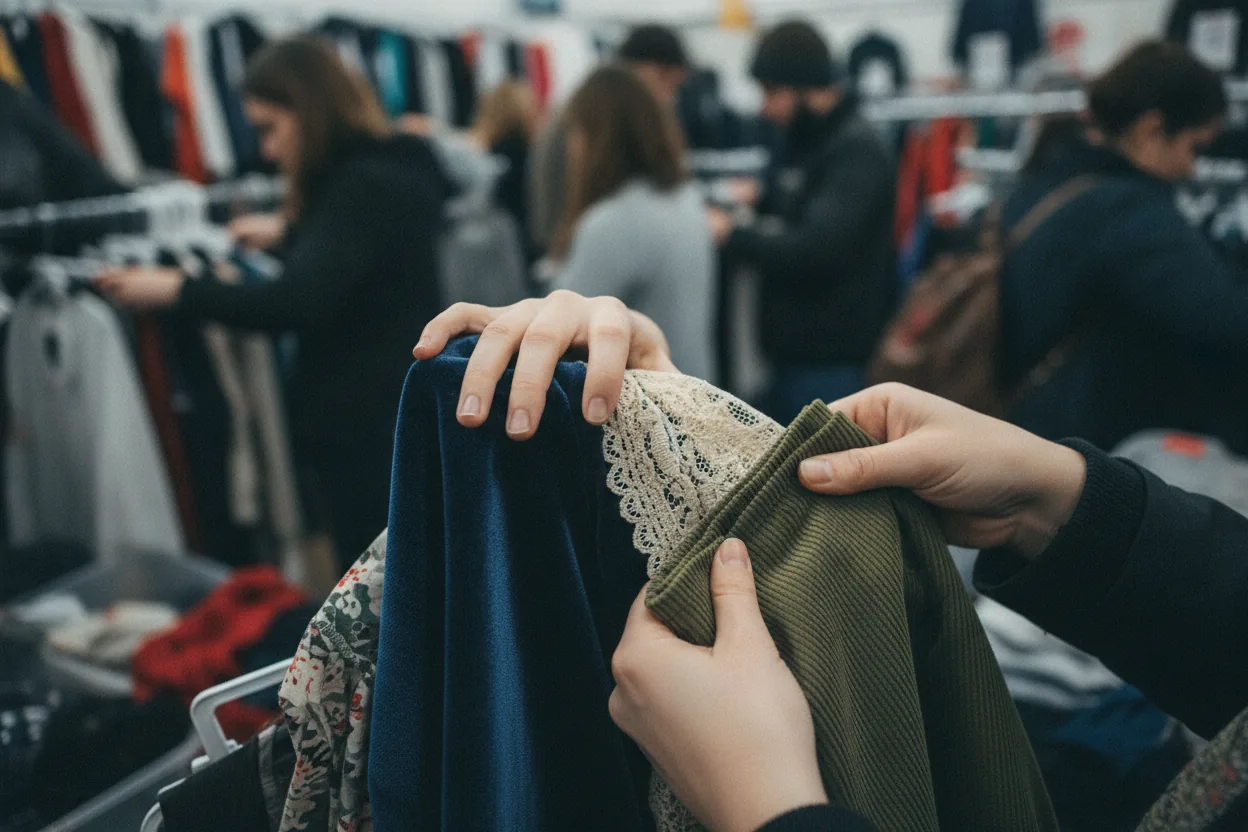
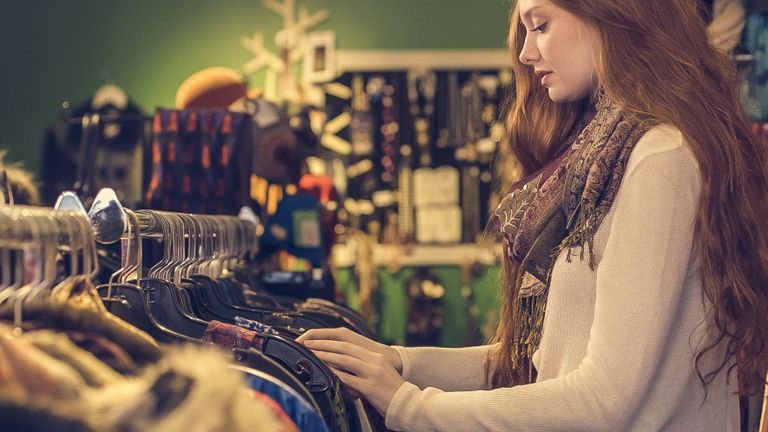
One thing I’ve noticed in how serious secondhand alt shoppers talk about their process: they lead with materials, not brands. Nobody’s hunting for a specific label at the thrift. They’re hunting for velvet, lace, leather, mesh, flannel, corduroy, raw denim, and wool. The texture matters more than the tag.
This makes sense when you think about it. Goth and punk and grunge aren’t defined by logos. They’re defined by surface. The way light eats into black velvet. The way fishnet stretches across skin. The way a flannel shirt bunches when you shove the sleeves up. These are identities built by touch. You form them by putting your hands on things in a store and knowing instantly if the weight and drape are right.
My Tacoma blazer worked because the velvet had this specific crushed quality that you only get from actual wear. A new velvet blazer off a rack would’ve been too smooth, too even. I’ve stood in thrift stores running my hand across racks for twenty minutes without pulling a single hanger because nothing felt right, and then found exactly the right piece shoved behind a bunch of polyester blouses. A black lace camisole, real lace, probably from the late ’80s, with a subtle floral pattern and a tiny tear at the hem. $3.49. I layered it under the blazer with the Bauhaus tee visible underneath, and the whole outfit suddenly had depth instead of flatness. Three textures, three time periods, one look that no recommendation engine would ever suggest to anyone because it doesn’t fit a category.
Searching for specific textures is slower than buying a preset outfit. That’s a feature, not a bug. The slowness is where the identity forms. You learn what you actually like instead of what performs well. You develop opinions about fabric weight and stitching and collar shape that are yours alone. That’s how personal style works. Not from a mood board. From repetition and touch and failed experiments in fitting rooms that smell like someone’s grandma’s house. If you’re just getting started with this kind of hunting, our [beginner’s guide to thrift shopping](https://secondhandself.com/thrift-shopping-guide) breaks down how to train your eye and your hands.
The Outfit That Killed My Template
Let me lay out the full look because I think the specifics matter more than the concept.
The blazer: men’s black velvet, thrifted Salvation Army Tacoma, $6.99, oversized, mismatched brass button on the lower left, purple paisley lining, elbows worn smooth.
Underneath: a Bauhaus “Bela Lugosi’s Dead” tee, thrifted at a record store sidewalk sale in Olympia the previous July, $2, faded to a charcoal grey, neck stretched out from years of someone else wearing it, the print cracked in a way that makes Peter Murphy’s face look like it’s disintegrating.
Under that: the black lace camisole, thrifted at a Value Village in Seattle, $3.49, real lace with a subtle floral, tiny tear on the left hem that I left alone because it adds a vulnerability to the layer that I like.
Pants: black wide-leg trousers from a Goodwill in Portland, $4, men’s, cuffed twice at the ankle, no brand I recognized, heavy cotton twill with a slight sheen.
Shoes: my own beat-up Doc Martens 1461s that I’ve had for six years. Not thrifted. Not everything has to be.
Accessories: a silver chain I found loose in a jewelry dish at an estate sale for fifty cents, and three rings I’ve accumulated from various bins and trays over the past year, none of which match, total cost maybe $2.
The whole outfit cost me under $20. But what matters is that no one else has this outfit. Not because the items are rare or expensive, but because the combination is the product of my specific path through specific stores on specific days. It’s an identity, not an aesthetic. There’s no tutorial. You can’t recreate it from a screenshot. The worn-smooth elbows on the blazer, the cracking ink on the tee, the tiny tear on the camisole: these are details that only exist because the clothes lived before I found them. That’s the whole argument against new, right there, in one outfit that costs less than a sandwich in most cities.
The Template Is an Entry Point, Not a Destination
I want to be clear about something. I’m not blaming anyone who built their first goth or punk wardrobe from fast-fashion hauls. Entry points matter. If a sixteen-year-old in a suburb with no thrift stores nearby sees a Shein haul tagged #altfashion and it helps them figure out that they’re goth, that matters. Identity discovery is real even when it starts with a template.
But the template is where it should start, not where it should stay. The problem is that the feed incentivizes staying. If your goth outfit gets 50,000 views because it matches the visual pattern the platform is currently boosting, the rational move is to keep posting that same outfit type. The machine rewards repetition. It punishes deviation. Post a weird look that doesn’t fit the template and watch your views drop by 90%. That’s not a conspiracy theory, that’s just how recommendation engines work. They optimize for engagement, and engagement is driven by familiarity.
So you get a thousand creators posting the same goth outfit with minor variations and calling it personal style. The subculture that was supposed to be about rejecting conformity becomes, ironically, one of the most conformist spaces online. And the kids who notice this, the ones who feel the friction between what goth or punk is supposed to mean and what it looks like on their feed, those are the kids who end up at the thrift store on a Saturday morning with $15 and a refusal to look like everyone else.
Building a Look the Feed Can’t Replicate
This is what I keep seeing from the secondhand alt community online, especially on the more chaotic corners of TikTok and in niche Depop seller communities. People aren’t just thrifting to save money, though they are. They’re thrifting to become illegible to the machine. They want looks that can’t be categorized. They want outfits that make the “shop similar” feature break.
One creator I follow — who posts under a name I won’t share without permission — does what she calls “anti-hauls.” She goes to Goodwill, buys five or six items under $5 each, brings them home, and then spends the rest of the video altering them live. Cutting, dyeing, adding hardware, hand-sewing patches, sometimes combining two garments into one. The finished pieces look nothing like what she bought. And the comments are always the same: “I can’t find this anywhere.” “Where’d you get that?” “You can’t, I made it.” That exchange is the whole philosophy in three lines.
The secondhand alt community is building something the feed can’t scale. When your look is dependent on one-of-a-kind found objects and personal alterations, it resists replication by design. You can screenshot it, but you can’t recreate it. You can try to copy it, but you’ll end up with different pieces from different stores with different wear patterns and different textures, and the copy will become its own thing, which is actually fine. That’s how subculture is supposed to work. Not as a uniform, but as a shared language with infinite personal dialects. We’ve written before about [how one piece can anchor an entire wardrobe](https://secondhandself.com/one-loud-piece-everything-else-quiet), and this is the alt fashion version of that same principle.
Your Rescue Piece Is Out There Somewhere
The blazer saved my look. But more than that, it saved my relationship to how I dress. It reminded me that style isn’t something you download. It’s something you dig for, literally, with your hands in a rack of stuff that smells like dust and old cologne, in a store where the fluorescent lights are slightly yellow and the fitting room doesn’t have a lock.
I know some of you have a piece like that. Something that broke you out of a template you didn’t realize you were stuck in. A pair of pants that fit wrong in exactly the right way. A jacket with a stain you decided was a feature. A shirt you bought for the fabric and turned into something the original owner wouldn’t recognize.
I want to hear about it. Drop your rescue finds in the comments below, or tag us on TikTok and Instagram with [#ThriftedAltFashion](https://secondhandself.com/community) so we can find you. Tell me where you found it, what you paid, what you did to it, and what it replaced in your rotation. The more specific the better. Name the store. Name the city. Name the price. That’s how we keep this real and keep it ours. The feed can have its templates. We’ve got thrift stores, scissors, and the stubborn belief that getting dressed should feel like making something, not downloading it.