Secondhand Bargain Math: The Real Cost of a $4 Shirt
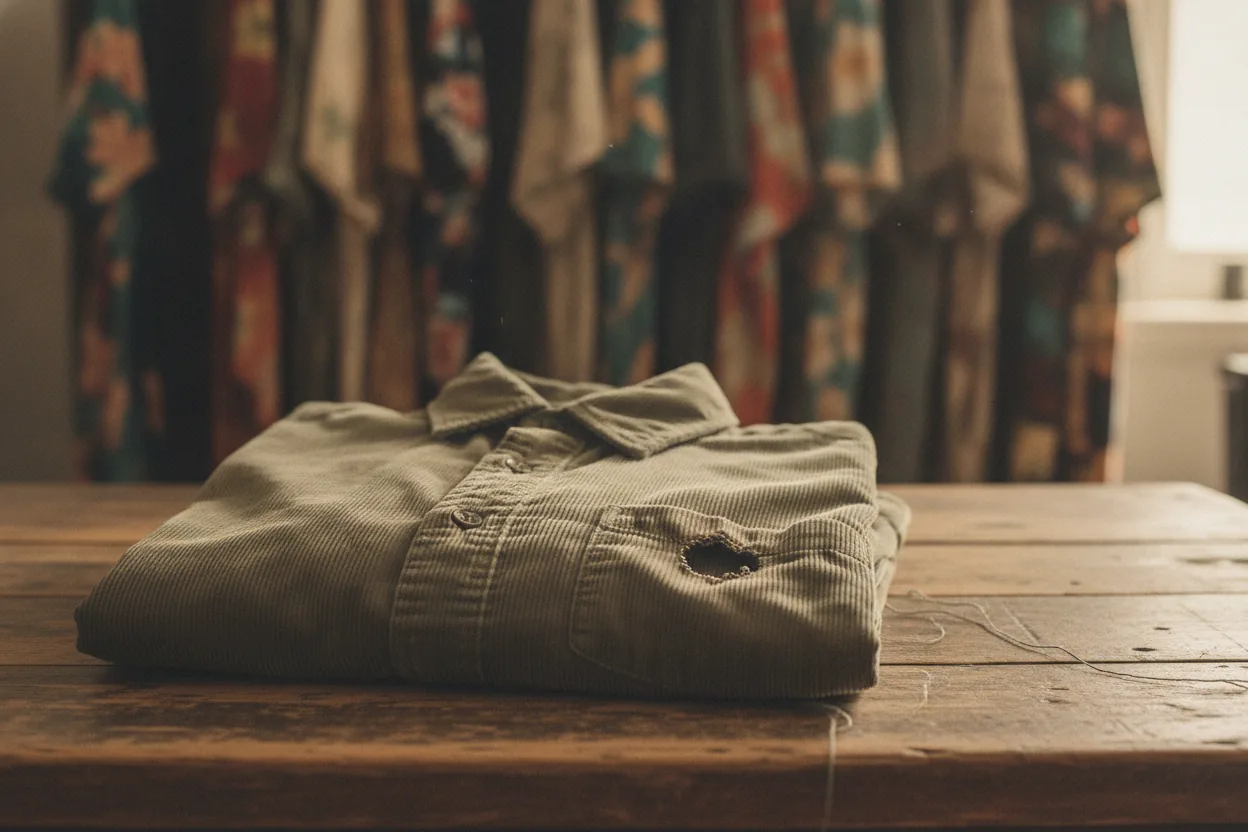
The cigarette burn on the chest pocket of this $4 corduroy shirt is the size of a pinky nail, and I’ve never once tried to hide it. Found it at a St. Vincent de Paul in southeast Portland, crammed between two XXL Hawaiian shirts that smelled like a garage. The burn is clean, almost intentional looking, and it sits right where a pocket square would go if I were the kind of person who wore pocket squares. I’m not. I’m the kind of person who sees a tiny hole in brown corduroy and thinks, yeah, that’s mine now.
But here’s the thing nobody told me when I started shopping secondhand seven years ago: that $4 shirt didn’t cost $4. Not really. The secondhand bargain math is changing, and the distance between a sticker price and the real cost matters more than most of us admit. I drove twelve minutes to the store. I spent forty-five minutes digging. I took it home, soaked it in a basin with OxiClean and white vinegar for two hours because it smelled like someone else’s decade. I ironed the collar flat because corduroy collars curl after enough wash cycles. I checked the seams and tightened one loose button with thread I already had. All in, if I’m honest about my time and supplies, that shirt cost me closer to $9 or $10. Still a win. Still way under what a comparable corduroy button-down runs at a retail store or on a resale platform. But the distance between $4 and the real number matters, and pretending it doesn’t is how people burn out on secondhand shopping or convince themselves every rack find is automatically a steal.
If you’re the kind of person reading this, the kind who actually does the work of finding, cleaning, fixing, and styling used clothes, you already know it in your gut even if you haven’t put numbers to it yet.
The Sticker Price Is Just the Opening Bid
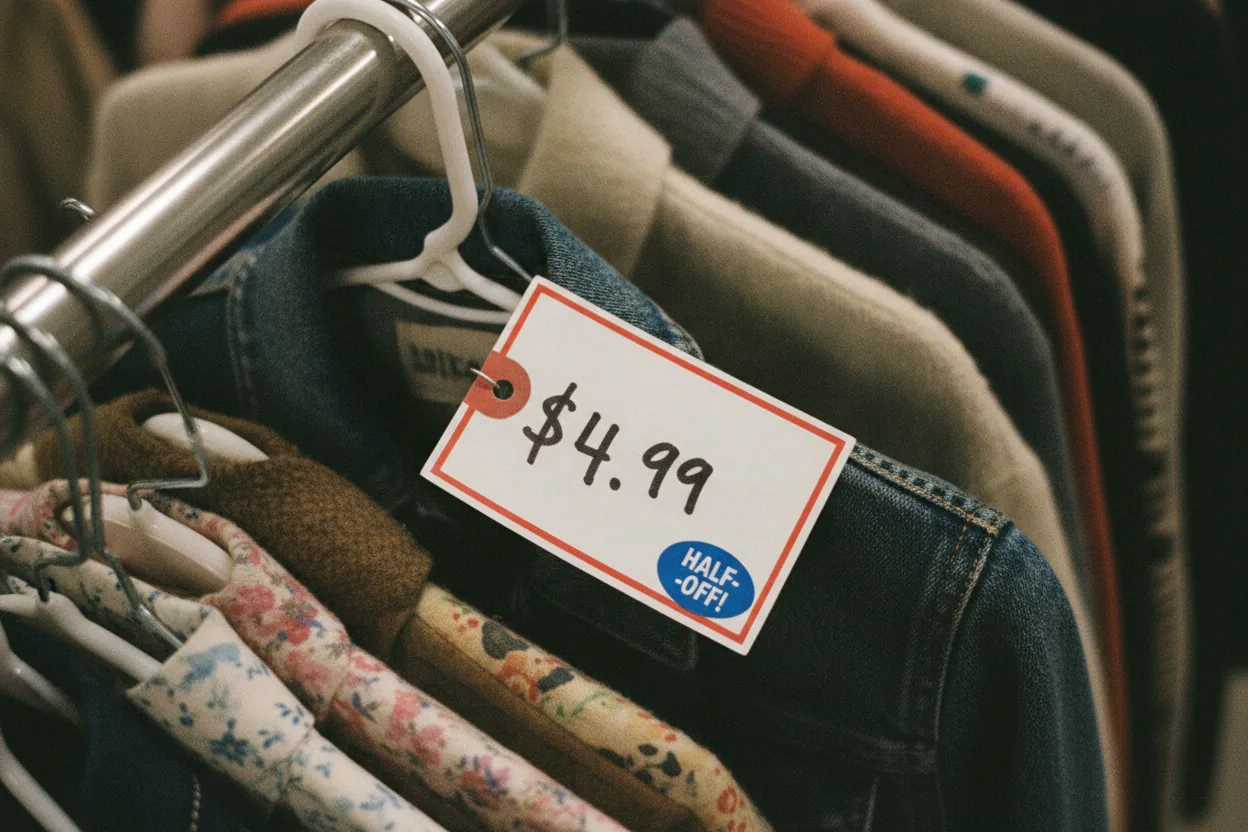
Let’s talk about what a price tag at a secondhand store actually represents. It’s the price of the item sitting on a hanger in a fluorescent-lit room, priced by someone who may or may not know what it’s worth. That’s it. That’s the opening bid.
The real cost of owning that item includes everything that happens after you hand over cash. Cleaning is the big one. Some pieces need a basic wash, sure. But others need dry cleaning, spot treatment, or a full overnight soak. Dry cleaning a blazer runs $8 to $15 depending on where you live. That $7 blazer from the rack just became a $15 to $22 blazer. Still potentially a good deal, but now you have to actually think about it instead of assuming.
Repairs are next. Missing buttons, blown-out seams, stuck zippers, small tears. If you can sew, your cost is thread and time. If you can’t, a tailor charges $5 to $15 for basic fixes, more for anything structural. I once found an incredible pair of wool trousers at a Goodwill for $6. Perfect color, great weight, my size in the waist. The inseam was blown out on both legs. A tailor quoted me $18 to fix them. I did the math, decided $24 all-in for wool trousers was still worth it, and went ahead. Those trousers became one of the hardest-working pieces in my closet — I wore them nearly every week for two winters straight, and the tailor’s repair held up better than the original stitching. But that’s a $24 pair of pants, not a $6 pair. The difference matters for the budget, even if the outcome is still a win.
[IMAGE: The wool trousers after tailoring, close-up of the repaired inseam]
Then there’s time. Your time has value even if you don’t assign a dollar figure to it. An hour spent digging through racks is an hour you didn’t spend doing something else. I’m not saying you should bill yourself $25 an hour for browsing — that would kill the joy of it, and the browsing is half the point. But when people compare sticker prices to retail prices and act like the secondhand version is automatically cheaper by the full margin, they’re ignoring the labor that goes into making a used piece wearable. That labor is real. It’s part of why your closet looks the way it does and mine looks the way mine does. We earned it.
Online Resale Adds a Whole New Layer of Costs
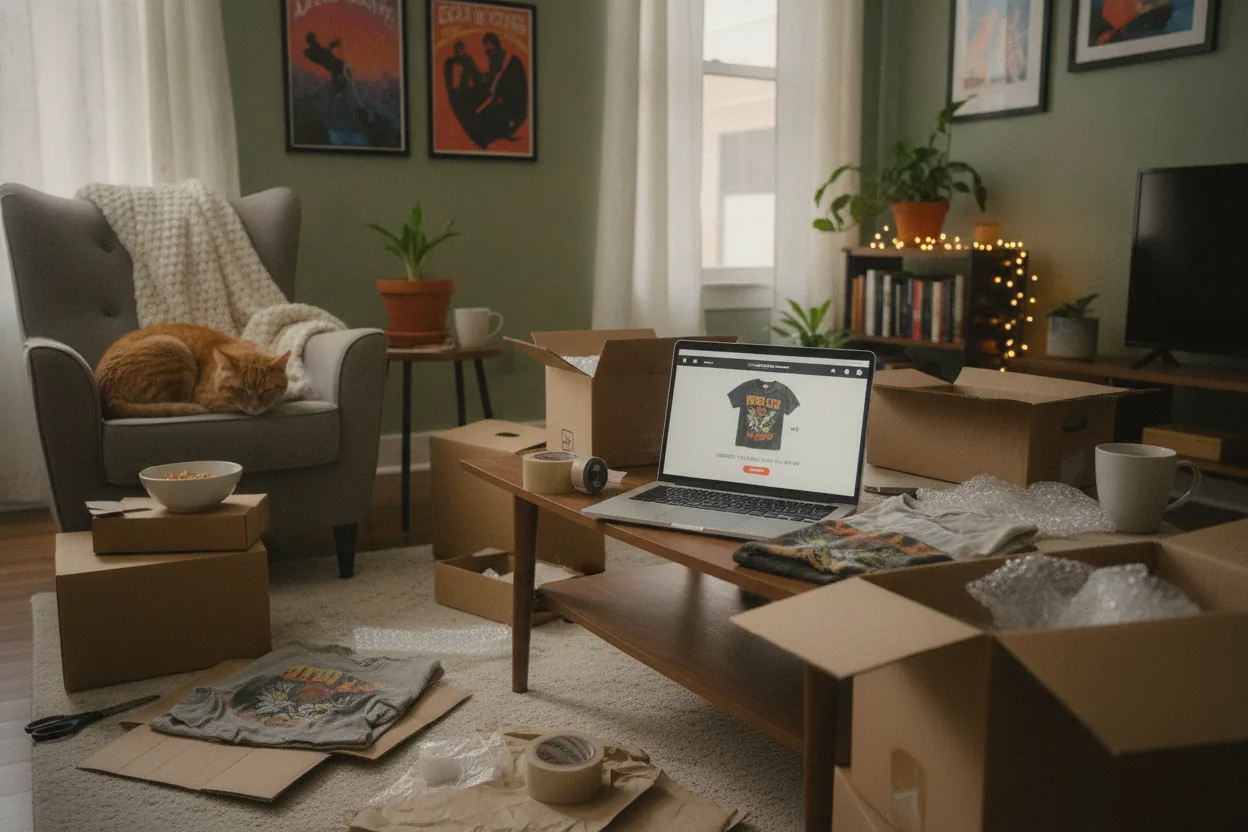
If you’re buying used clothing online instead of in a physical store, the math gets more complicated. Platforms like Depop, Poshmark, ThredUp, and eBay all carry costs that sit on top of the listed price.
Shipping is the obvious one, and it hits harder than most people expect. A $12 vintage tee on Depop might come with $5.99 shipping, which means you’re actually paying $18 for a t-shirt that looked like a steal in your search results. Still interesting, maybe still a bargain depending on the piece, but not a $12 bargain. Some sellers build shipping into the price, which just means the sticker is higher and the math is already done for you; others don’t, and you find out at checkout.
Platform fees hit the seller side but ripple to buyers in ways worth understanding. Poshmark takes 20% on sales over $15, Depop takes a percentage plus payment processing, and eBay’s fee structure is its own universe. Sellers who are doing this as a side hustle or a full-time gig price their items to cover these fees, which means the buyer is effectively paying a portion of the platform’s cut. That’s not evil — it’s how marketplaces work. But it means a piece that’s been sourced from a rack and resold online carries overhead that a direct find doesn’t.
Then there’s the uncertainty tax. Buying online means you can’t feel the fabric, check the seams, or smell the thing before committing. Returns on resale platforms range from easy to nonexistent depending on the seller and the platform. ThredUp offers returns on most items but charges a restocking fee on some. Poshmark’s return policy is limited. Depop is basically buyer-beware unless the item is grossly misrepresented. So you factor in a risk margin — maybe 10 to 20% of the time you get something that doesn’t work and you’re stuck eating the cost or re-listing it yourself.
I bought a pair of Levi’s 501s on eBay last year for $28 shipped. The listing said “great condition, minor fading.” What showed up had a crotch blowout that wasn’t visible in the photos and fading so heavy the denim felt thin. I could have returned them, but the hassle of filing a claim and shipping them back felt like more work than they were worth. So I kept them, patched the crotch with denim scraps, and turned them into cutoffs. All in, I spent about $32 when I count the patch material and thread. They’re fine. I wear them. But they weren’t the deal the listing made them look like.
[IMAGE: The patched Levi’s 501s, now cutoffs, draped over a chair]
When Secondhand Still Crushes Retail on Price
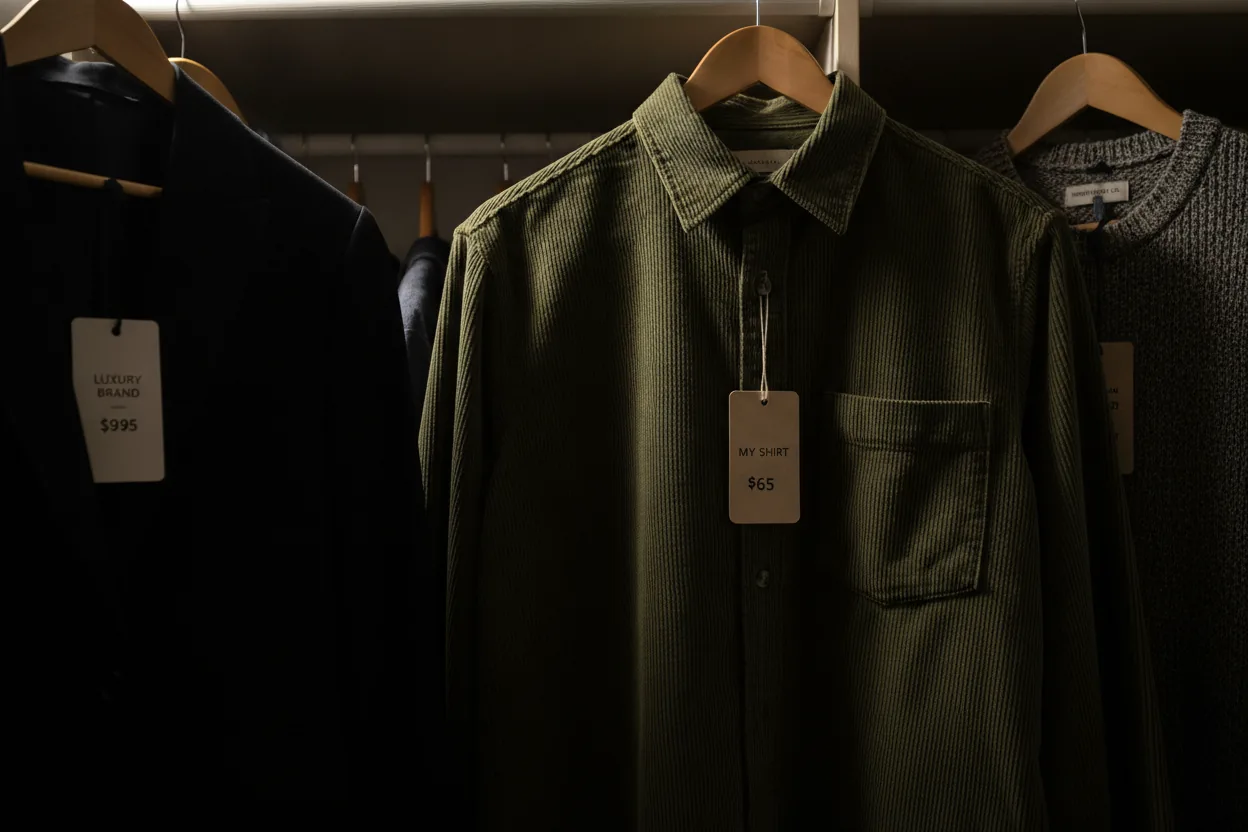
Here’s where I don’t want to lose the thread, because the math still works out in favor of buying used more often than not. The point isn’t that secondhand is secretly expensive. The point is that the cost comparison deserves honesty instead of blind faith.
A new corduroy shirt at a mid-range retailer runs $45 to $80. My $4 shirt, even at $10 all-in, is still 75 to 87% cheaper. That’s a massive gap. A pair of wool trousers at retail is $60 to $150 or more. My $24 all-in pair is still dramatically cheaper than anything comparable bought new. The margins are real. They’re just not as wide as the sticker price alone would suggest.
Where the hunt really crushes retail is on categories where retail markup is highest. Outerwear, denim, wool, leather, and anything with genuine material quality tends to hold up well secondhand and carries enormous retail premiums. A leather jacket at a secondhand store for $15 to $30 versus $200 to $500 new? That math doesn’t need a spreadsheet. A heavy denim chore coat for $8 versus $90 new? Same story. Cashmere sweaters for $6 that would run $120 at retail? Even after dry cleaning, you’re spending a quarter of the retail price.
The categories where the math tightens up are basics and commodity items. A plain cotton tee at a secondhand shop for $3 to $5 isn’t dramatically cheaper than a $7 to $10 tee from a discount retailer, especially once you factor in the time spent hunting for it and the wash cycle to get someone else’s deodorant residue out. Socks and underwear, which most people buy new anyway, are the extreme example. But even with t-shirts, the used version still has something the retail version doesn’t: it’s already broken in, it’s already survived some wash cycles, and if it’s still in decent shape, that’s a quality test the new one hasn’t passed yet.
The Hidden Labor Nobody Wants to Admit
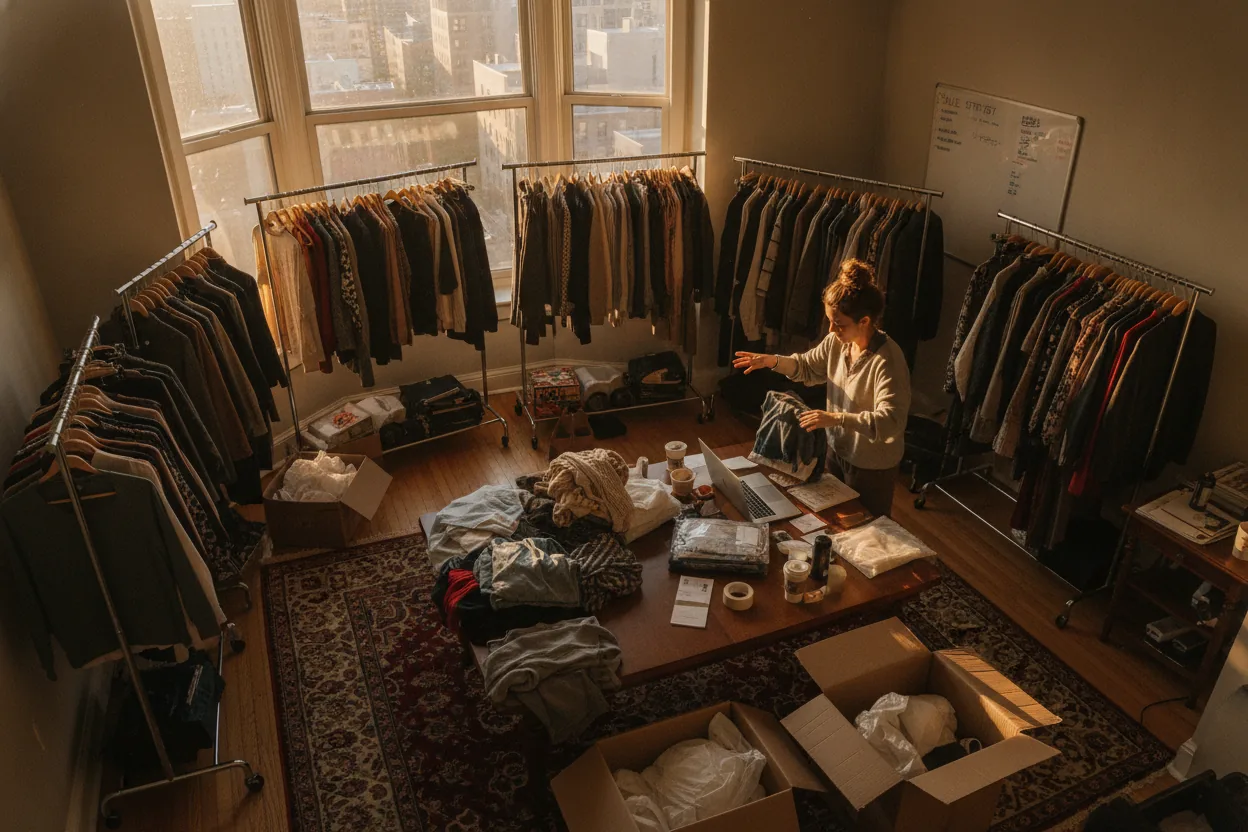
Talk to anyone who flips secondhand clothes for resale and they’ll tell you the same thing: the work is real and it’s constant.
My friend Jess runs a Depop shop out of her apartment in Chicago. She sources from three Goodwill locations and one independent shop on the south side. On a good sourcing run, she spends three hours in stores and comes home with twelve to twenty pieces. Then she spends another four to six hours steaming, spot-cleaning, photographing in natural light, editing photos, writing descriptions, measuring, and listing. She prices to cover platform fees, shipping supplies, and her time, and she says her effective hourly rate is somewhere around $11 after all costs. She’s not getting rich. She does it because she loves the hunt and because she’s good at spotting pieces that photograph well and sell to a specific audience.
The flip side is that if you’re buying from someone like Jess, you’re paying for all that labor. And you should, because it’s real work. But it means the item is no longer a raw find. It’s a processed, marketed, shipped product that happens to be secondhand. The cost reflects that processing.
For personal shopping, the hidden labor is less about money and more about energy. Digging through racks takes stamina. Evaluating fabric, construction, fit, and condition on the fly is a skill. Knowing when a stain will come out and when it won’t is learned knowledge. I’ve ruined two pieces trying to remove stains with bleach-based cleaners when I should have used enzyme cleaners. That’s a cost — both the lost pieces and the learning curve.
And then there’s the labor nobody photographs for their feed. I once spent three hours on a Sunday night de-pilling a cashmere sweater I’d found for $5, working a disposable razor over every inch of it because I didn’t own a fabric shaver yet. My fingers cramped. The sweater looked brand new afterward, and I wore it constantly, but those three hours were real. Another time I hand-washed a silk blouse in my kitchen sink at midnight because the care label said no machine wash and I needed it for the next day. Stood there in my underwear, gently agitating it in lukewarm water, then rolled it in a towel and hung it from the shower rod. That blouse cost me $3 at the register and about forty-five minutes of my night. These are the stories that don’t make the haul posts.
There’s also the mental load of secondhand shopping. Retail stores organize by size, color, and category. Most used clothing stores organize by chaos, with maybe a loose system of shirts here, pants there, jackets over there. Online resale is search-dependent, and anyone who’s tried to find a specific piece on Depop knows the keyword game is inconsistent at best. You’re doing more cognitive work per item in secondhand spaces than in retail spaces. That’s part of the appeal — the treasure hunt is genuinely fun — but it’s also part of the cost.
Why the Math Alone Will Never Capture the Full Value
So after all this talk about real costs and hidden labor, here’s where I land: the math is important, and you should do it, but the math alone will never explain why you bought that thing.
I didn’t buy the corduroy shirt because it was $4. I bought it because it was brown corduroy with a cigarette burn and a collar that curled slightly at the tips and it felt like something a divorced English professor would have worn in 1978. It fit a picture in my head. It matched a version of myself I wanted to project. That’s not a cost calculation. That’s identity.
The research backs this up, and I don’t mean that in a sterile academic way. I mean that when people study why Gen Z and millennial shoppers go secondhand, the top reasons aren’t just about saving money. They’re about being different. Wearing something nobody else at the party has. Owning a piece with a history you can feel, even if you don’t know the specifics. It’s about building a closet that looks like you instead of looking like a store display.
The secondhand bargain math matters because it keeps you honest and helps you avoid dumb purchases. But the real reason buying used wins isn’t that it’s the cheapest option in every scenario. It’s that it’s the only option that reliably delivers uniqueness, texture, and story alongside the price savings.
A new shirt from a fast-fashion retailer costs $15 and looks like every other shirt in the store and every other shirt on the website and every other shirt that ten thousand other people bought that same week. A secondhand shirt costs $4 to $12 all-in and looks like nothing else on earth because it’s been worn, washed, faded, burned, patched, and lived in by someone whose life you’ll never know. That difference isn’t something you can spreadsheet.
Who Owned This Corduroy Before Me
I think about this more than I probably should. The cigarette burn tells me they smoked. The slight stretch in the elbows tells me they wore it a lot, leaning on tables or desks. The label is Arrow, which was a big brand in the 70s and 80s for men’s dress shirts and casual button-downs. The size is a medium, but it fits generous, the way clothes used to be cut before everything got slim and tight.
I imagine a guy in his thirties, maybe forties. A teacher or a middle manager. Someone who wore this shirt on weekends with jeans and maybe a pair of beat-up desert boots. He smoked at the kitchen table while grading papers or reading the newspaper. He eventually quit smoking, or his wife made him smoke outside, and the shirt went to the back of the closet. Twenty or thirty years later, someone cleaned out the closet, maybe after he moved, maybe after he died, and the shirt ended up in a donation bag.
I don’t know any of this for certain. That’s the point. The story fills itself in. The burn, the stretch, the fading — these are all evidence of a life I’m inheriting, and every time I put the shirt on, I’m adding my own chapter. That’s not something a cost comparison can account for, and it’s not something you can buy new.
[IMAGE: Close-up of the Arrow label inside the corduroy shirt collar, slightly faded]
How to Do the Honest Secondhand Math
If you want to actually run the numbers on your finds, here’s how I do it. I don’t track every item obsessively, but for pieces I’m uncertain about, this helps me decide.
Start with the tag price. Add cleaning costs: $0 for a basic home wash, $2 to $4 for specialty treatment (OxiClean, enzyme spray, etc.), $8 to $15 for dry cleaning. Add repair costs: $0 if you can fix it yourself and already have supplies, $5 to $20 for a tailor or cobbler. Add transport costs: gas and time for in-store shopping, shipping fees for online. For online purchases, add the risk margin — figure one in five or six items might not work out, and spread that loss across your other buys.
Then compare the all-in number to what a similar item costs at retail or on a resale platform. If your version is 50% or more below retail, it’s a strong deal. If it’s 30 to 50% below, it’s still a deal but only if the piece brings something unique — a better fabric, a better fit, a better story. If it’s within 20 to 30% of retail, I’d probably skip it unless I’m in love with it, because at that point the convenience of buying new might tip the scale.
For resale comparison, check what the same item or brand sells for on Depop, Poshmark, or eBay. If you found it at a store for significantly less than the resale price, you either got a genuine find or the resale market is inflated for that item. Both happen regularly.
The important thing is not to let the math kill the fun. Do it quickly, do it in your head or on your phone, and then make the call. The spreadsheet is a tool, not a religion.
Finding Your Own Corduroy Shirt
If you want to find pieces like my Arrow corduroy, with that same weight and character, here’s what I’d suggest. Hit stores that aren’t picked over. The Goodwill on the main drag near a college campus has been raided by every reseller within thirty miles. The St. Vincent de Paul in a residential neighborhood three towns over hasn’t. Salvation Army stores in suburban strips, independent church shops, estate sale leftovers donated in bulk — these are where the good stuff still sits.
Go on weekday mornings if you can. Tuesday and Wednesday are restocking days at a lot of chain locations. The racks are fullest and the competition is lightest.
Feel fabrics before you look at labels. Corduroy, wool, heavyweight cotton, linen, silk, leather. Your fingertips are faster than your eyes. If the fabric feels good, pull it out and look. If it doesn’t, move on.
Check the seams, the buttons, the zippers, the collar, the cuffs. These are the failure points. If all five are solid, the piece has life left. If two or more are shot, you’re buying a project, which is fine as long as you know that going in.
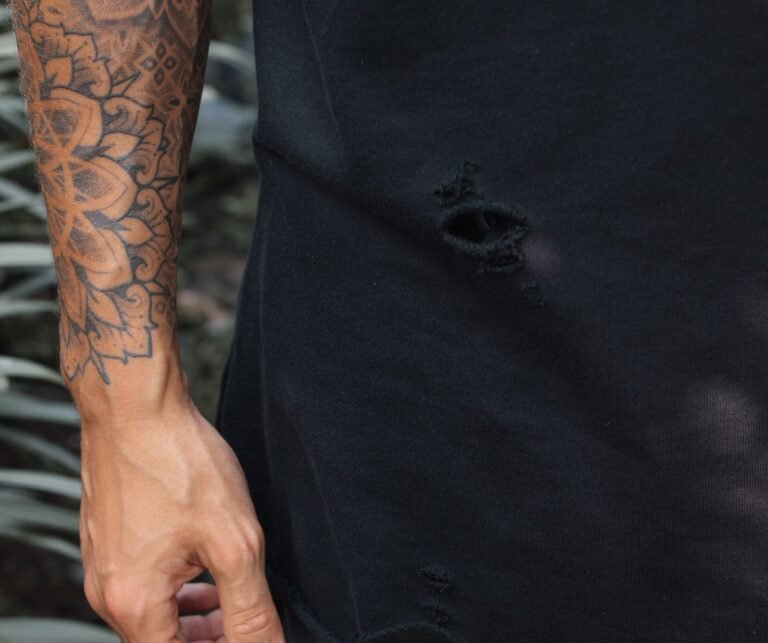
And look for the imperfections that make a piece yours instead of anyone’s. The burn. The patch. The faded spot on the shoulder where someone’s bag strap rubbed for years. The hand-stitched repair on the inside of a pocket. These are features, not flaws. They’re the reason this piece costs $4 instead of $40, and they’re the reason it’ll look like nothing else in your closet or anyone else’s.
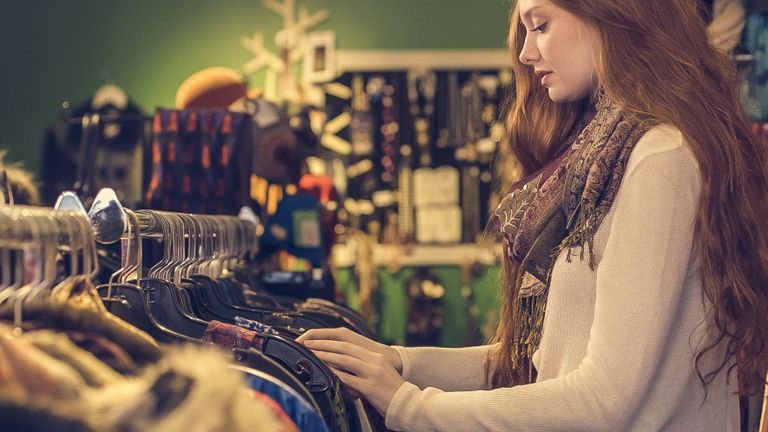
[IMAGE: A rack at a neighborhood St. Vincent de Paul, tightly packed, mid-dig]
The real secondhand bargain isn’t the cheapest thing you can find. It’s the thing that costs you less than it’s worth to you — in money, in time, in fit, in story, in the way it makes you feel when you put it on and catch yourself in the mirror and think, yeah. That’s it.
Go find your corduroy shirt. Do the math. Wear the burn.