I Don’t Know Who Made My Best Blazer (That’s the Point)
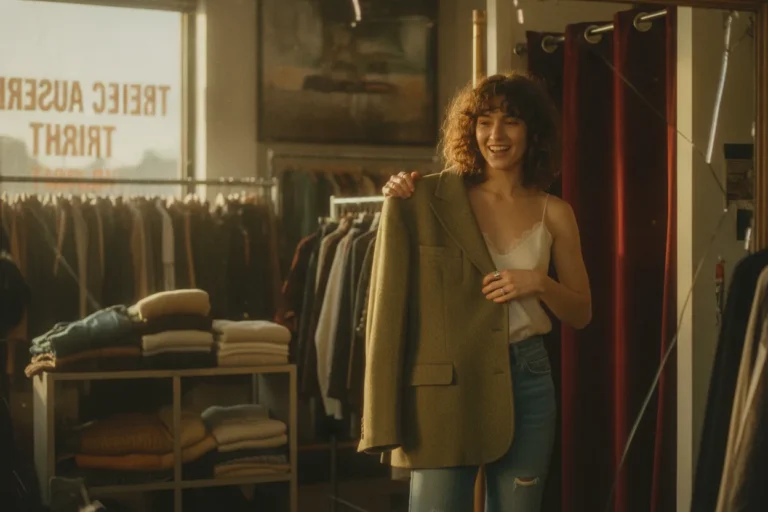
Real alt-fashion doesn’t come with a hang tag and a return policy. It comes with a mystery. A stain you can’t fully explain. A label printed in a font that hasn’t existed since 1987. The best piece in my closet right now is a wool-blend blazer I pulled from a Goodwill in Tucson for $3, and I don’t know who made it. The interior tag is half-torn, the stitching is flat-felled in a way that suggests someone who actually understood garment construction, and the shoulder pads have that slightly aggressive slope that screams late ’80s. I don’t know the brand. I know the blazer is older than me. And that’s why I love it more than anything I could order online tonight.
Provenance-driven vintage is quietly replacing brand-name chasing in secondhand fashion circles, and if you’ve been paying attention to what’s blowing up on Depop, TikTok, and the better corners of Instagram, you already feel it. The question people care about isn’t “what brand is that?” anymore. It’s “where did you find that?” and “what era is it from?” and “how do you know?” That shift changes everything about how we shop, what we value, and why secondhand keeps winning against new.
Brand Names Lost the Plot a Long Time Ago
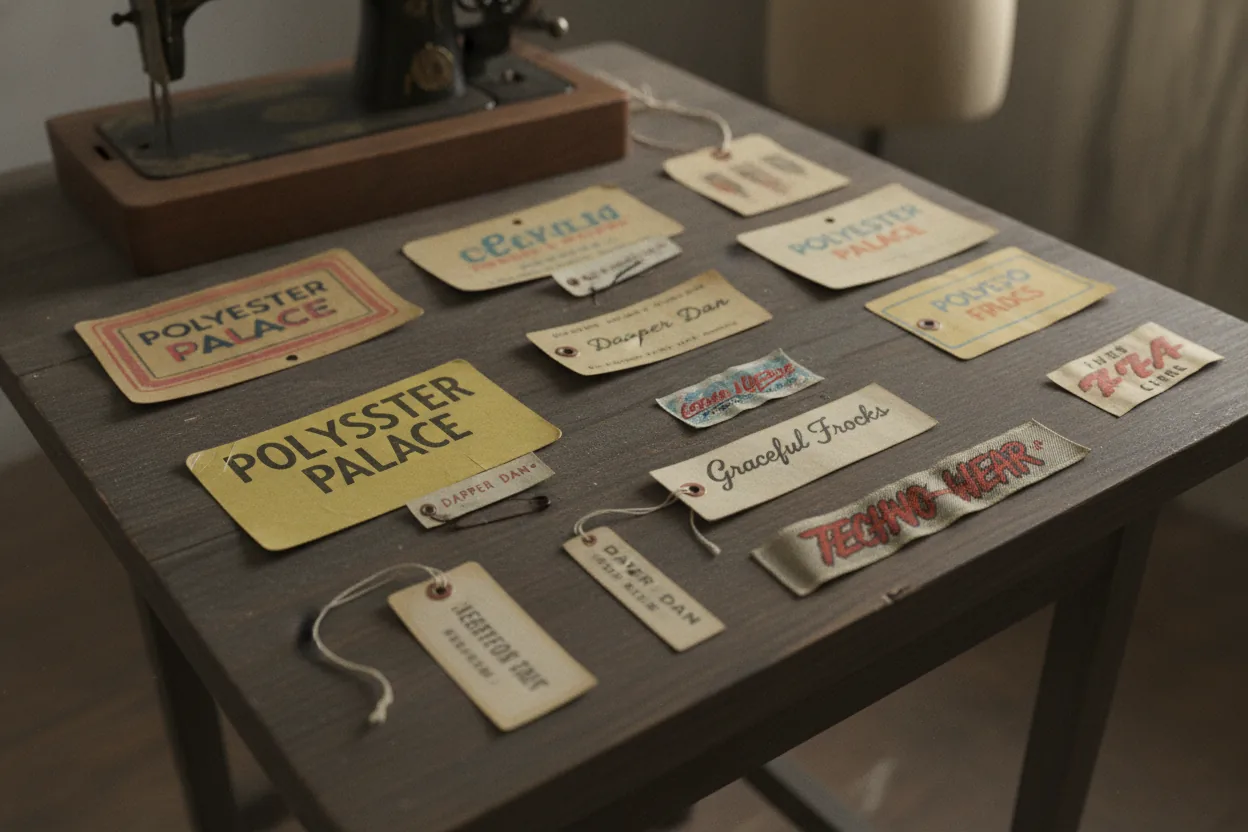
Here’s the thing about labels: they used to mean something specific. A tag from a particular decade told you about the factory, the country of origin, the union that stitched it, the era’s fabric preferences. Now most labels just tell you which holding company owns which brand and which contract manufacturer in which country pumped out 40,000 identical units. The information density of a modern tag is almost zero.
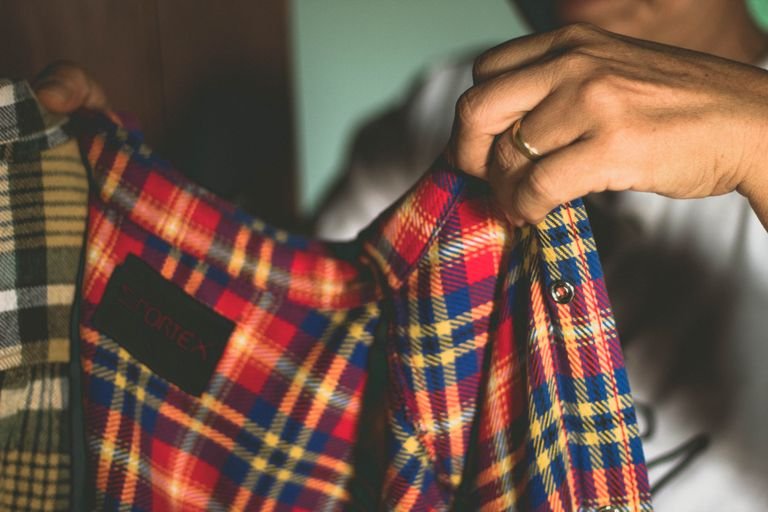
Compare that to what you learn from a vintage tag. I’ve got a flannel from a seller on Depop, listed at $18, that has a “Made in USA” tag with a now-defunct company name and a lot number printed directly on the care label. The seller — a guy in Ohio who’d inherited a closet-full from his uncle — DMed me unprompted to say the uncle had been a pipefitter in Toledo and wore the shirt on job sites through the mid-’80s. I don’t know if that’s true. But the shirt backs it up. The weave is tighter than anything you’d find at a mall. The buttons are mismatched, which means someone replaced one at some point, which means someone wore this shirt long enough and hard enough to pop a button and cared enough to fix it. That’s a biography written in thread.
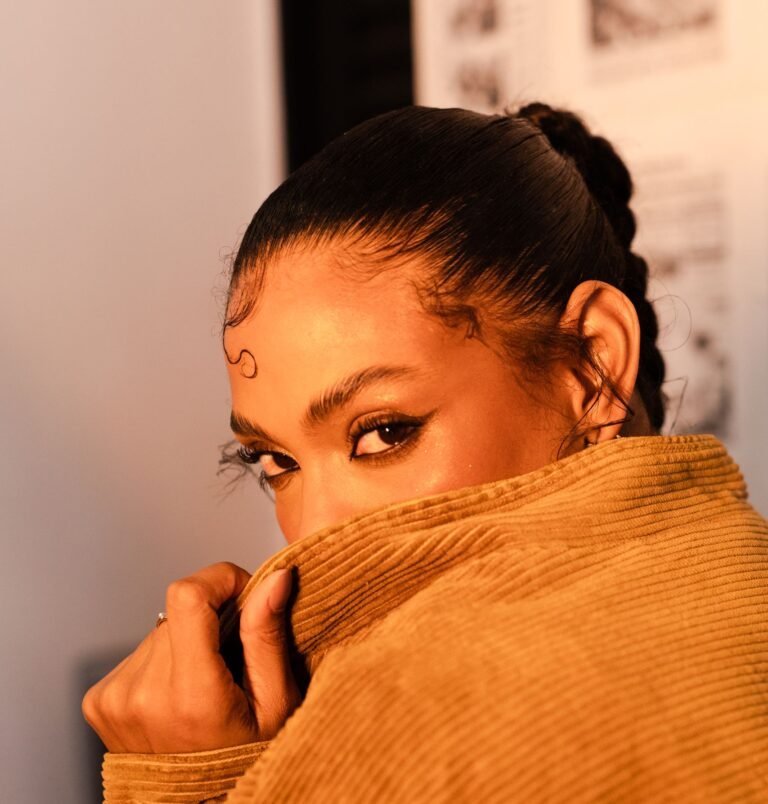
When people in the secondhand community talk about provenance, they’re talking about this kind of legibility. Not a certificate of authenticity from a resale platform. Not a blockchain receipt. They mean: can I read this garment? Can I hold it up and understand something about where it’s been? The appeal isn’t nostalgia for nostalgia’s sake. It’s that a piece’s history gives it weight. Literal and figurative. A 1970s corduroy jacket feels different in your hands than a 2024 reproduction of one, and that difference isn’t just about fabric quality. It’s about the fact that the original survived five decades of someone’s life before landing in yours.
Older-Than-Me Vintage and the New Status Game
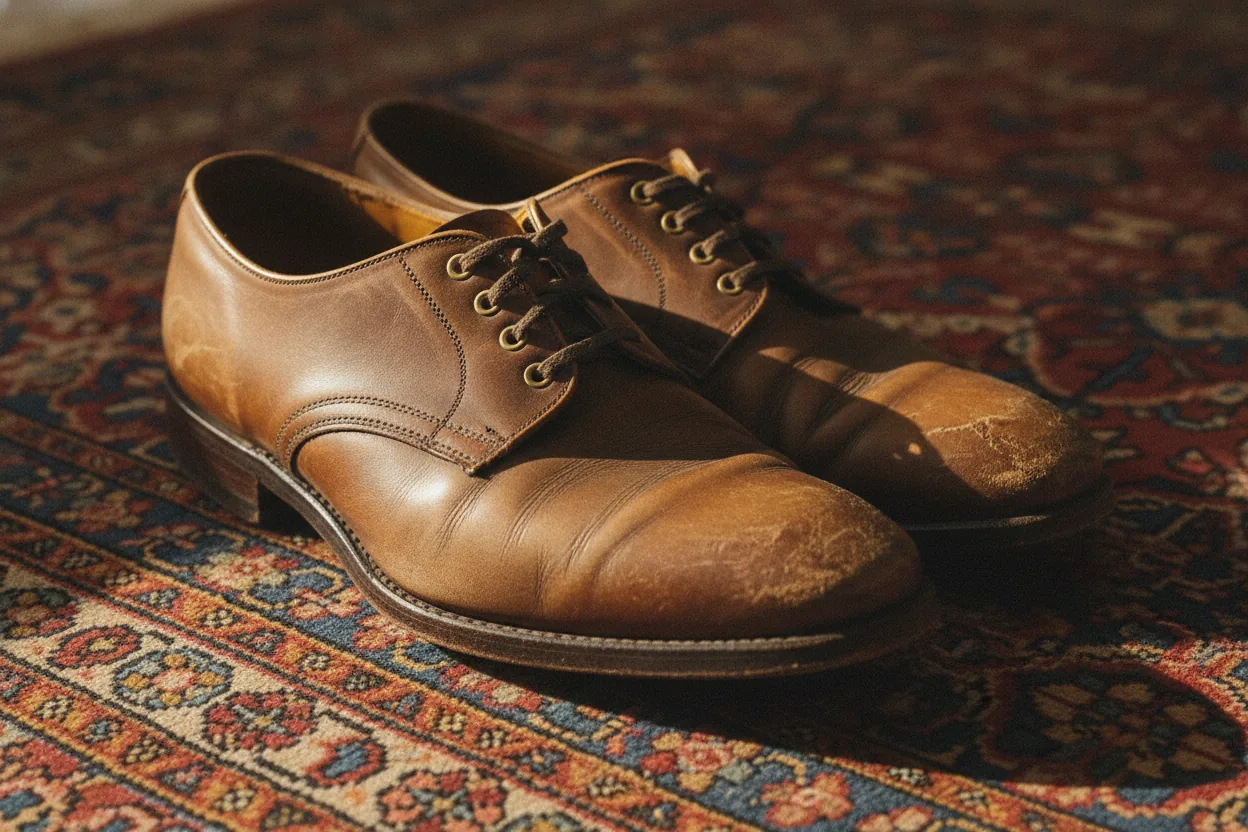
There’s a specific thrill to owning something that predates your own existence. It’s hard to articulate without sounding pretentious, but I’ll try: it makes the piece feel like it belongs to a longer timeline than your own wardrobe. It’s not just yours. It was someone else’s first. Maybe several someone elses. And the fact that it still works, still fits, still looks good, says something about the garment’s construction and about your eye for spotting what holds up.
“Older-than-me vintage” has become a quiet marker of taste in alt-fashion circles. It’s not an official category on any resale platform, but scroll through enough thrift haul videos and you’ll notice the pattern. Creators hold up a piece and say “this is from the ’70s, I was born in 2001” and the comment section lights up. The age gap between the wearer and the garment is part of the flex. It signals that you’re not just shopping the recent castoffs of fast-fashion cycles. You’re reaching further back, past the stuff that was trendy three years ago, into eras that require actual knowledge to identify and style.
Where Scarcity Gets Real
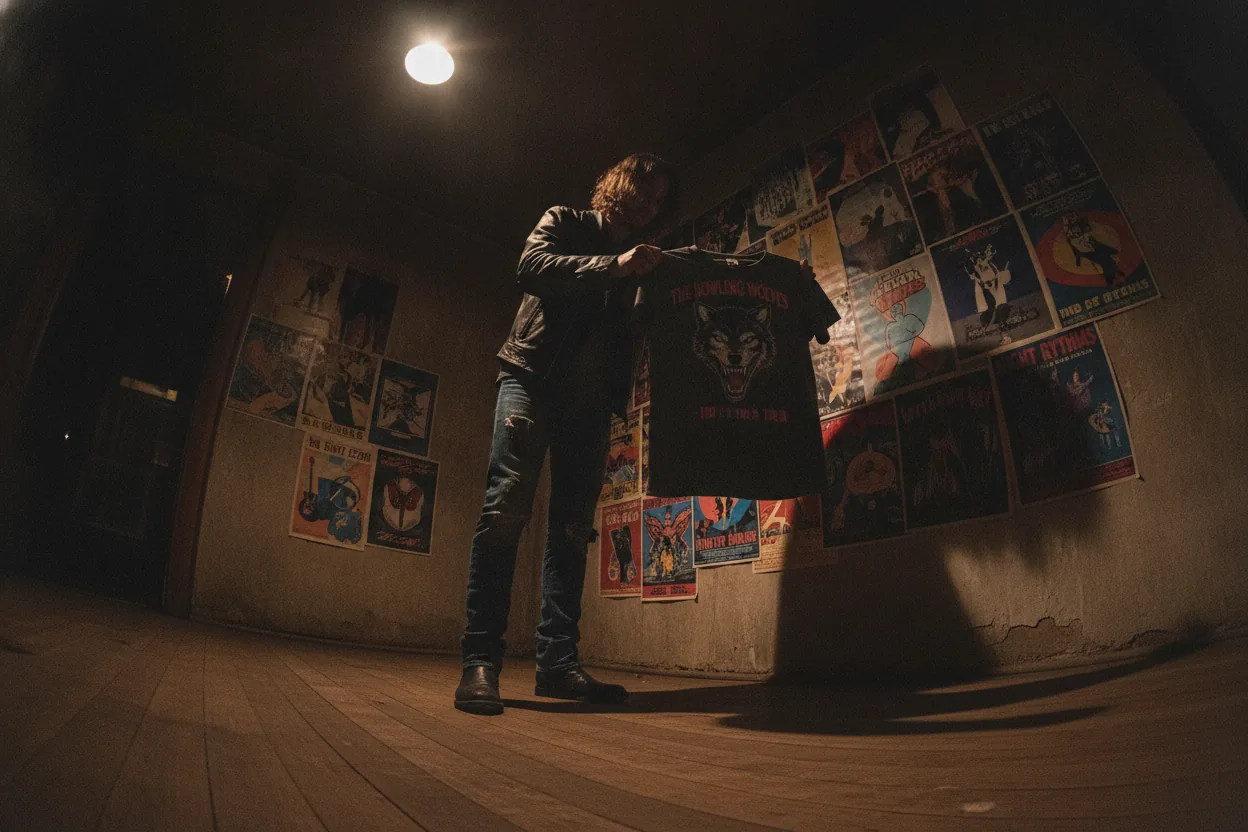
This is where it gets interesting for anyone who thinks secondhand is just about saving money or diverting clothes from landfills. Both of those things are real and they matter. But the cultural energy right now is somewhere else entirely. It’s about scarcity. It’s about the fact that a 1985 band tee from a tour that only hit twelve cities is genuinely one-of-one in a way that no “limited drop” from a contemporary brand can replicate. You can’t restock the past. You can’t do a second run of a shirt that was printed in someone’s garage four decades ago. That kind of scarcity isn’t manufactured. It’s just true.
And truth, it turns out, is a pretty strong aesthetic.
The Hunt Is the Point, Not Just the Find
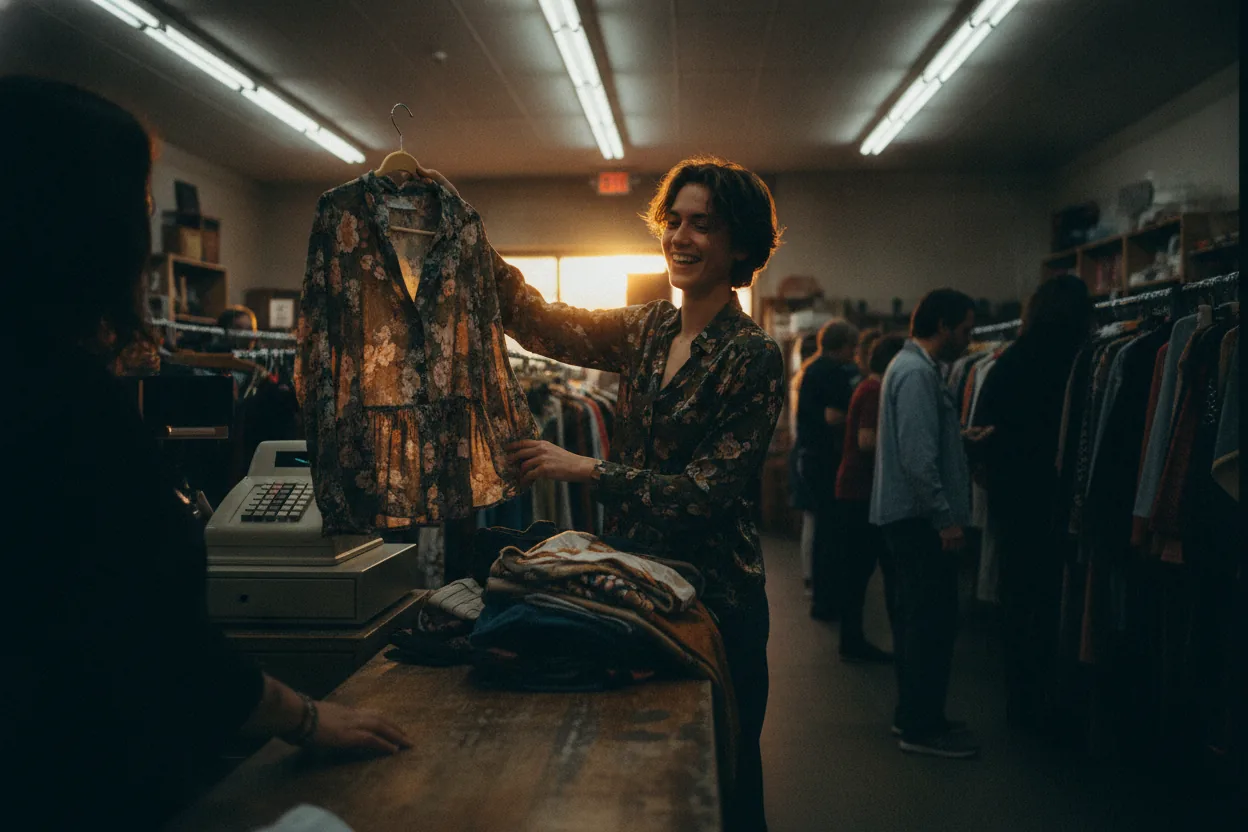
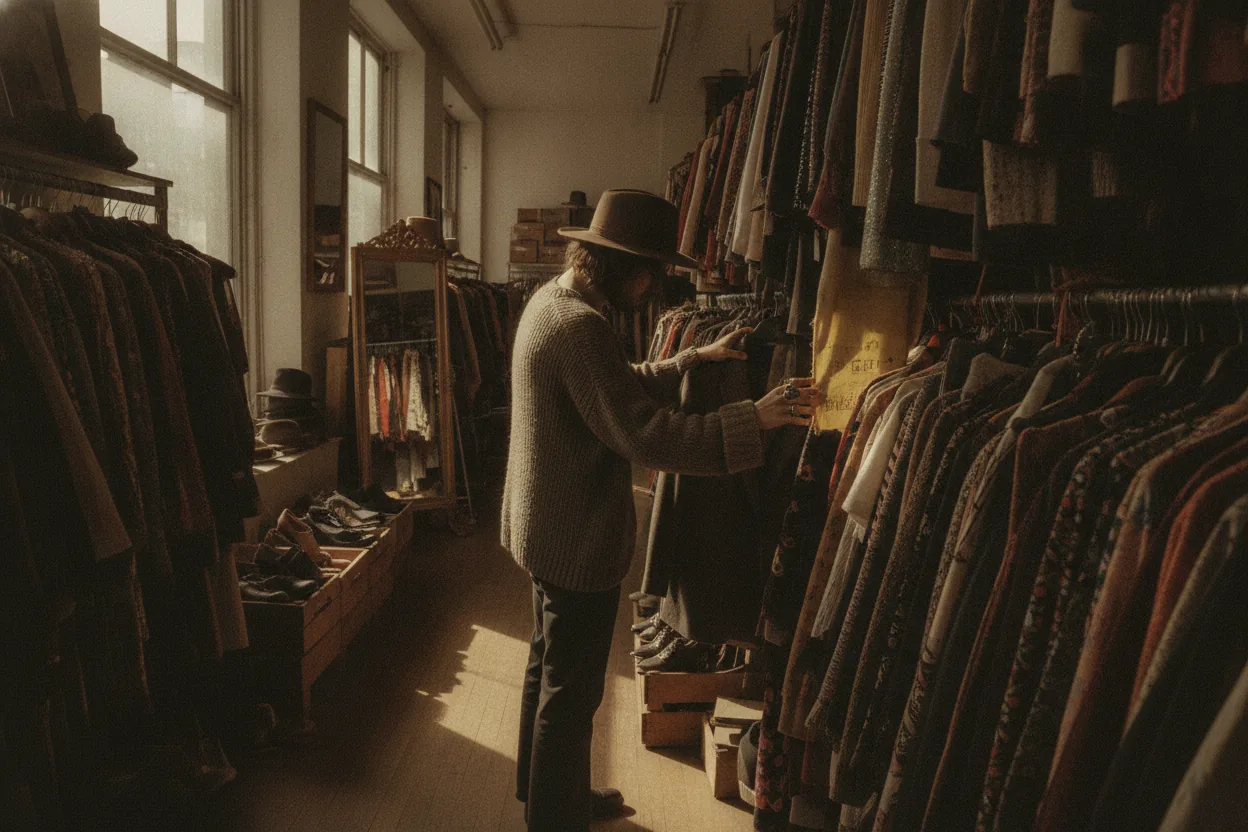
I spent three hours last Saturday in a Salvation Army outside Portland. Walked out with one piece: a silk-blend blouse with a mandarin collar, hand-stitched buttonholes, no brand tag at all, priced at $4. Three hours for one blouse. Was it efficient? Absolutely not. Was it the best part of my weekend? Without question.
The hunt itself has become a core part of secondhand culture’s appeal, and it’s worth understanding why. When you shop new, even from brands you like, the process is fundamentally passive. You scroll. You filter by size. You add to cart. The algorithm already knows what you want because it’s been tracking your behavior for months. There’s no discovery. There’s recognition. You see a thing that looks like other things you’ve already liked, and you click.
Thrifting is the opposite. You walk into a store with no idea what’s there. The racks are chaotic. The sizing is inconsistent. The organization, if it exists, follows a logic that only the store’s volunteers understand. You have to touch things, flip through hangers, check seams, read tags, hold fabric up to the light. You’re using skills. Pattern recognition. Material knowledge. Era identification. The ability to look at a garment that’s ugly on the hanger and imagine what it becomes when it’s tailored, tucked, or layered.
That process is genuinely satisfying in a way that online shopping never replicates. It’s why thrift haul content works so well on TikTok and why the #thrifttok community keeps growing. The content isn’t just “look what I bought.” It’s “look what I found.” The difference between those two sentences is the entire point. Buying is transactional. Finding is personal. It implies effort, taste, and a little bit of luck, and that combination is magnetic to watch.
How to Read a Garment Like a Story
If provenance is the new currency, then learning to read garments is the skill that pays off. Here’s what I look for when I’m digging through racks, and none of this requires a fashion degree. It requires attention.
Start with the tag. Vintage tags often list the fabric content differently than modern ones. If you see “50% Dacron” or “100% Fortrel,” you’re looking at synthetic brand names that were common in the ’60s and ’70s but fell out of use. If the care instructions are printed rather than on a separate sewn-in label, that’s often pre-1990s. If the tag says “Made in USA” or “Made in West Germany” or “Made in Yugoslavia,” you’ve got a geographical timestamp. Countries change names. Factories close. That tag is a fossil record.
Next, look at the construction. Flat-felled seams, the kind where the raw edge is enclosed and stitched down twice, are more common in older garments and in higher-quality production. Serged edges, where the raw fabric is just overlocked with thread, became standard as manufacturing sped up. Neither is inherently better, but flat-felled seams take more time and more skill, and they tend to show up in pieces that were made to last rather than made to sell quickly.
Check the buttons. Plastic buttons that feel light and hollow are usually post-1980s mass production. Heavier buttons with visible texture, slight color variation, or metal shanks suggest older or better-made garments. Shell buttons, the ones with a slight iridescence, are a good sign. And if the buttons don’t all match perfectly, that often means they’ve been replaced over time, which tells you the garment has been worn and maintained, not just stored.
Feel the fabric. This is the hardest thing to teach through a screen, but older fabrics, especially cottons and wools, often have a density and hand-feel that’s different from modern equivalents. A vintage cotton tee feels thicker and slightly stiffer than a modern one because the cotton was spun differently and the fabric was often piece-dyed rather than garment-dyed. A vintage wool sweater will sometimes have a slight scratchiness that modern merino blends have been engineered to eliminate, and honestly, that scratchiness is part of the character.
Finally, look at the wear patterns. Where has the fabric thinned? Where are the creases? A pair of vintage jeans with fading on the left front pocket tells you the previous owner was right-handed and kept their phone (or before that, their keys or cigarettes) in that pocket. Collar wear on a dress shirt tells you it was worn with a tie. Elbow patches that have been sewn on by hand tell you someone sat at a desk in this jacket for years and cared enough to repair it rather than replace it.
Every one of these details is a chapter in the garment’s story. And when you learn to read them, thrifting stops being bargain hunting and becomes something closer to archaeology.
One-of-One Finds and Why Mass Anything Falls Flat
The phrase “one-of-one” gets used a lot in sneaker culture and streetwear, usually to describe something custom or extremely limited. In secondhand fashion, the term means something different and, I’d argue, something more honest. A thrifted piece is one-of-one not because a brand decided to make only one. It’s one-of-one because time, wear, repair, and chance made it unique. The fading is specific to how it was washed. The fit is specific to how it was worn. The fact that it ended up in this particular store, in this particular city, on this particular day when you happened to walk in, is unrepeatable.
That kind of scarcity hits different than a “limited edition” drop where 500 people get the same jacket. Those 500 jackets are identical. Your thrifted one-of-one is singular. Not because someone in a marketing department decided it should be, but because fifty years of existence made it that way.
This is why a garment’s lineage matters more than its brand to a growing number of secondhand shoppers. A no-name blazer with hand-finished buttonholes and a torn-out tag from a defunct department store in Memphis is more interesting than a contemporary designer piece that 10,000 other people also own. The no-name blazer can’t be googled. It can’t be compared to other listings. It exists only as itself, and that makes it feel genuinely personal in a way that branded fashion, no matter how expensive, rarely achieves.
I picked up a pair of wide-leg trousers at a flea market in Austin last spring. $12. No tag whatsoever. The waistband is hand-finished with a hook-and-bar closure instead of a button or zipper fly. The fabric is a heavy linen blend that wrinkles beautifully. My best guess is that they were made by a home sewer in the late ’70s or early ’80s, based on the construction techniques and the fabric weight. I’ve worn them probably forty times since then. Every time someone asks where they’re from, I get to tell that story instead of naming a brand. The story is better than any brand name could be.
Making the Shift: From Label-First to Story-First Shopping
If you’re reading this and thinking about how to move your own shopping habits in this direction, here’s what I’d suggest, and none of it costs anything.
Stop filtering by brand on resale apps. Seriously. When you search Depop or Poshmark or ThredUp by brand name, you’re recreating the same shopping experience you’d have at a mall, just with lower prices. Instead, search by item type, era, or material. Search “70s corduroy” or “hand-stitched wool” or “vintage silk blouse.” You’ll find things you never would have looked for, and that’s the point.
When you’re in a physical thrift store, skip the sections that are organized by brand or color and go straight to the unsorted racks if the store has them. The stuff that hasn’t been picked over by resellers is where the real finds live. Goodwill Outlets, the ones where you dig through bins and pay by the pound, are chaotic and exhausting and the absolute best places to find genuinely unusual pieces. I found a hand-embroidered Mexican wedding shirt at a Goodwill Outlet in Albuquerque for $1.79 a pound. It’s one of the most beautiful things I own.
Learn one new identification skill per month. This month, learn how to date jeans by their tag style and rivet construction. Next month, learn how to identify natural fibers by burn test (carefully, outside, with a lighter and a metal tray). The month after that, learn the difference between screen printing and heat transfer on vintage tees. Each skill makes you a better reader of garments, which makes every thrift trip more productive and more interesting.
Take photos of tags and construction details, not just the finished outfit. Post those. Talk about them. The secondhand community is hungry for this kind of content because it teaches people how to see what they’re looking at. A close-up of a hand-rolled hem is more useful than a mirror selfie, and honestly, it’s more interesting too.
The Quiet Confidence of Wearing a Mystery
There’s an energy to wearing something that can’t be identified by anyone who sees you. No visible logo. No recognizable silhouette from a current collection. Just a piece that fits well, feels good, and has a texture and patina that only decades of existence can produce. People notice. They don’t always know what they’re noticing, but they feel it. The garment has presence because it has history.
That’s what provenance-driven secondhand shopping gives you. Not a sustainability pitch — there’s no version of “keep buying things” that saves the planet by itself, and anyone who tells you otherwise is selling something. Not a moral high ground. Just clothes that feel like they belong to you specifically, because no one else went through the same racks, recognized the same details, and pulled the same piece off the same hanger.
The best alt-fashion has always been about refusal. Refusing the obvious choice. Refusing the marketed option. Refusing to look like everyone else who scrolled through the same algorithm-sorted feed and clicked “add to cart” on the same trending piece. Provenance shopping is that refusal made tangible. It says: I’d rather wear a mystery than a billboard. I’d rather know where my clothes have been than where they were made last Tuesday. I’d rather spend three years hunting a dusty store’s racks for one perfect find than thirty seconds online for something forgettable.
The labels stopped telling the story a long time ago. The clothes themselves never did.